

What Causes Those Oily-Looking Sheens on My Calm Water?
 |
Summary:
Finding a shimmering, rainbow-colored film on the surface of your lake can be alarming, as it often looks exactly like a gasoline or oil spill. While man-made pollution is always a possibility, these "oily" sheens are frequently a natural byproduct of the life cycle within your lake’s soil.
Specialized bacteria that live in the oxygen-poor muck at the bottom of the lake produce iron-rich or organic oils as they process minerals.
When the water is calm, these oils rise to the surface and form a microscopic film.
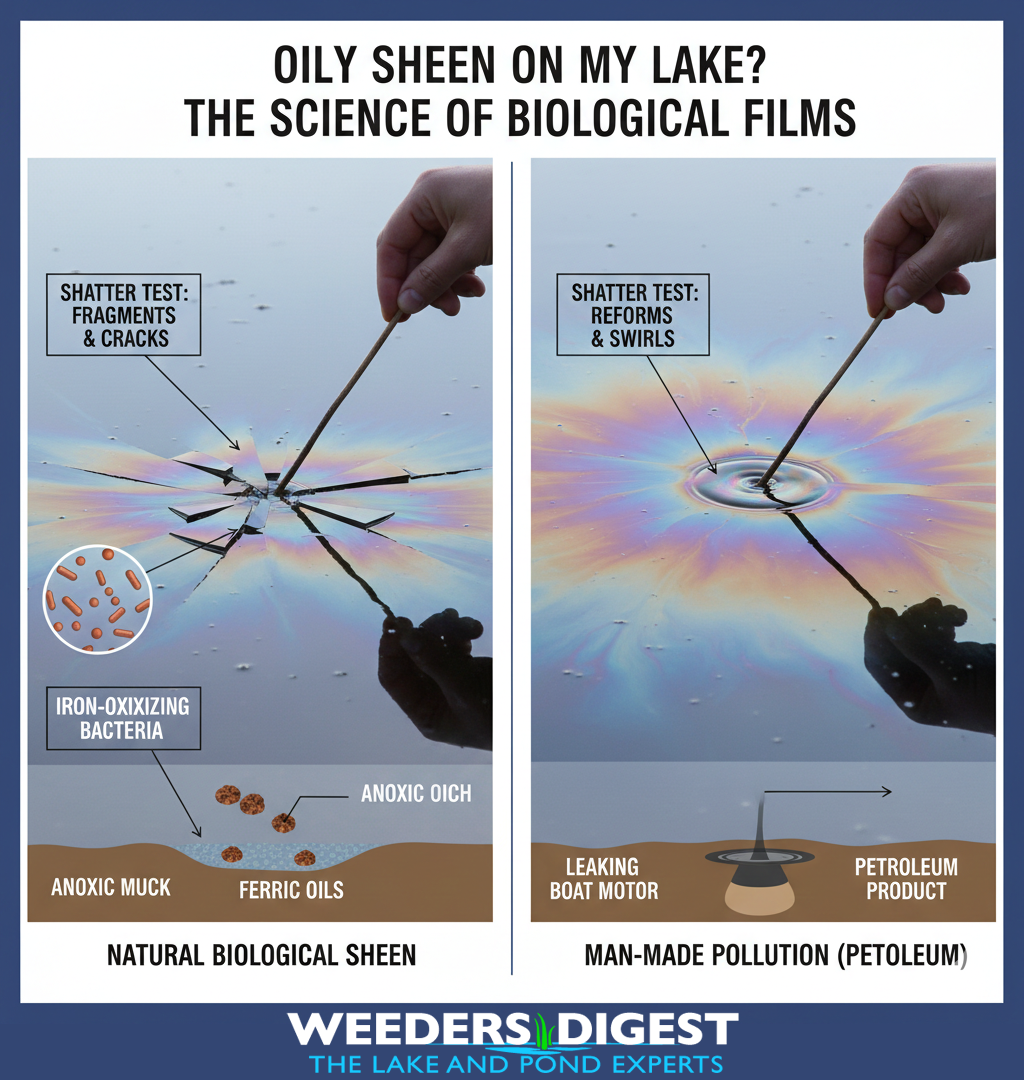
If you poke the sheen with a stick and it shatters like glass, it’s a natural biological process; if it flows back together, it’s likely a petroleum product.
The Science Behind It:
The most common cause of natural sheens is a group of microorganisms known as iron-oxidizing bacteria, such as Leptothrix ochracea. These bacteria thrive in the "transition zone" between oxygen-rich water and the anoxic (oxygen-depleted) sediments of the lakebed. As these bacteria "eat" dissolved iron found in the groundwater and sediment, they create a byproduct of ferric iron. This process results in the formation of a thin, brittle film of iron oxides and hydroxides that floats to the surface. Because this film is only molecules thick, it refracts light in a process called thin-film interference, creating the same iridescent, rainbow effect seen in oil.
Beyond iron bacteria, sheens can be caused by the decomposition of organic matter, specifically lipid release. Aquatic plants, algae, and even dead insects contain natural fats and oils (lipids). As these organisms decompose in the "benthic zone," these light-weight oils are released and float upward. On a windy day, wave action keeps these oils dispersed, but during periods of extreme calm—often called "glassy" conditions—these lipids congregate on the surface to form a neuston film. According to research in Microbial Ecology, this film creates a unique micro-environment that supports its own community of specialized bacteria and protozoa.
Distinguishing between these natural films and petroleum is a matter of molecular cohesion. Petroleum products have high surface tension and "elasticity"; when disturbed, they will swirl and quickly reform into a continuous sheet. Natural bacterial films, however, are non-cohesive and brittle. When the surface tension is broken by a stick or a rock, the film will shatter into jagged, sharp-edged plates that do not reform. This "shatter test" is a standard field observation used by limnologists to determine if a shoreline needs environmental remediation or if it is simply experiencing a natural surge in bacterial activity.
Furthermore, the presence of these sheens often correlates with the "red muck" or orange staining seen in shallows or near springs. This is the same iron-oxidation process at work. Scientific studies from the U.S. Geological Survey (USGS) indicate that these films are more prevalent after heavy rains, which push iron-rich groundwater toward the lake surface. While they may look unappealing, these sheens are actually a sign that the lake’s "decomposer" community is actively recycling minerals and organic carbon, maintaining the essential chemical balance of the sediment-water interface.