

Why Does My Lake Turn Green Every Summer? (And Is It Always Algae?)
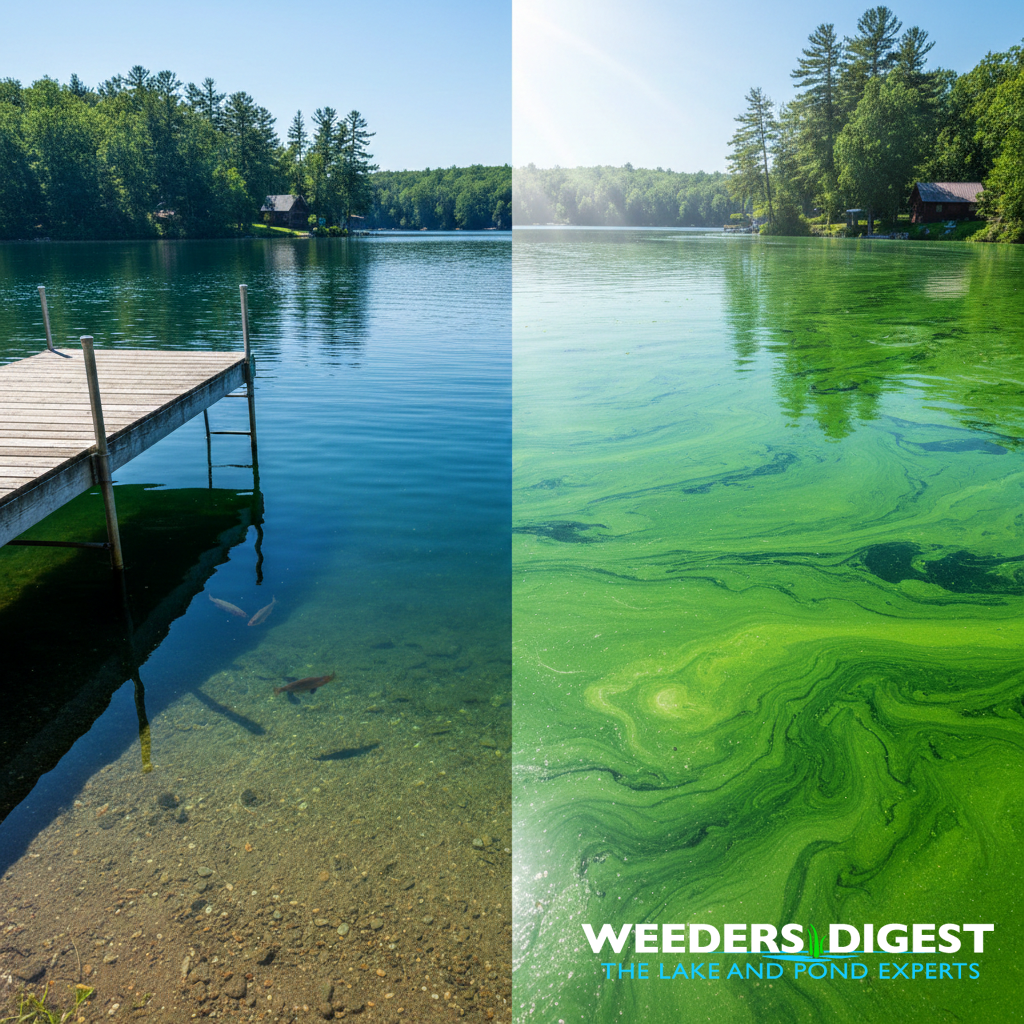 |
Summary:
If you live on the water, you likely know the routine: the ice melts, the spring is clear, and then, like clockwork, your beautiful blue view turns into a thick, pea-soup green mess by July. It is a frustrating cycle that can ruin a weekend of swimming or fishing, and it often leaves you wondering if your lake is "sick." You might instinctively blame "algae," and while you are often right, the reality is a bit more complex.
That green hue is usually the result of microscopic organisms having a massive "party" in your water. While true algae are often the culprit, many homeowners are actually dealing with Cyanobacteria, which are technically bacteria that behave like plants. These organisms thrive when the sun is hot and the water is still, turning your shoreline into a vibrant, sometimes smelly, emerald carpet.
The reason this happens every summer is tied to a perfect storm of temperature, light, and "food"—specifically nutrients like phosphorus and nitrogen that have washed into the lake from the surrounding land. When these conditions align, the population of these organisms explodes. This isn't just a cosmetic issue; it is a biological response to the environment around your lake.
Understanding whether you are looking at harmless green algae or potentially toxic cyanobacteria is the first step in managing your water. While they both look green to the naked eye, their impact on the ecosystem and your health can be vastly different. By diving into the biology of your lake, we can move past the frustration and start looking at the real causes of the "summer green-up."
The Science Behind It:
The seasonal transition of lacustrine ecosystems from clear-water states to high turbidity is primarily driven by the phenomenon of cultural eutrophication. This process is characterized by an over-enrichment of limiting nutrients, specifically orthophosphates and dissolved inorganic nitrogen. According to research published by the University of Florida's IFAS Extension, phosphorus is typically the primary limiting nutrient in freshwater systems; when concentrations exceed specific thresholds, it triggers rapid primary production. This surge in biomass is what observers perceive as the "summer bloom."
While the term "algae" is used colloquially to describe this greening, a significant portion of summer blooms consist of Cyanobacteria, or blue-green algae. Unlike eukaryotic green algae, Cyanobacteria are prokaryotic organisms capable of buoyancy regulation through gas vesicles. This physiological adaptation allows them to migrate vertically within the water column to optimize light harvesting and nutrient uptake. The Journal of Lake and Reservoir Management notes that as thermal stratification occurs in the summer, the epilimnion (warm upper layer) becomes isolated, providing a stable, high-temperature environment that favors Cyanobacteria over beneficial diatoms.
The "green" color itself is a result of high concentrations of Chlorophyll-a, the primary photosynthetic pigment found in these organisms. In addition to Chlorophyll-a, Cyanobacteria contain accessory pigments like phycocyanin, which can give the water a bluish or "spilled paint" appearance. These blooms are often exacerbated by internal loading, where phosphorus stored in bottom sediments is released back into the water column under anoxic conditions, fueling further growth even if external nutrient inputs are reduced.
The ecological consequences of these blooms extend beyond aesthetics. As the massive biomass of algae or Cyanobacteria begins to die off, aerobic bacteria consume dissolved oxygen during the decomposition process. This can lead to localized hypoxia, stressing or killing fish and other aquatic life. Furthermore, certain genera of Cyanobacteria, such as Microcystis and Anabaena, have the genetic potential to produce secondary metabolites known as cyanotoxins, which pose significant risks to mammalian hepatic and neurological systems.