

Why I Stopped Reaching for the Gallon Jug: Is Mechanical Weed Removal Better for Your Waterfront?
Summary:
Deciding how to manage the greenery creeping across your shoreline can feel like a choice between two evils, but over the years, I’ve found that getting hands-on with mechanical removal often beats the chemical alternative. When you spray a herbicide, you are essentially creating a graveyard at the bottom of your pond. Those dying weeds sink, rot, and release a massive surge of nutrients back into the water, which frequently leads to an even nastier algae bloom just a few weeks later.
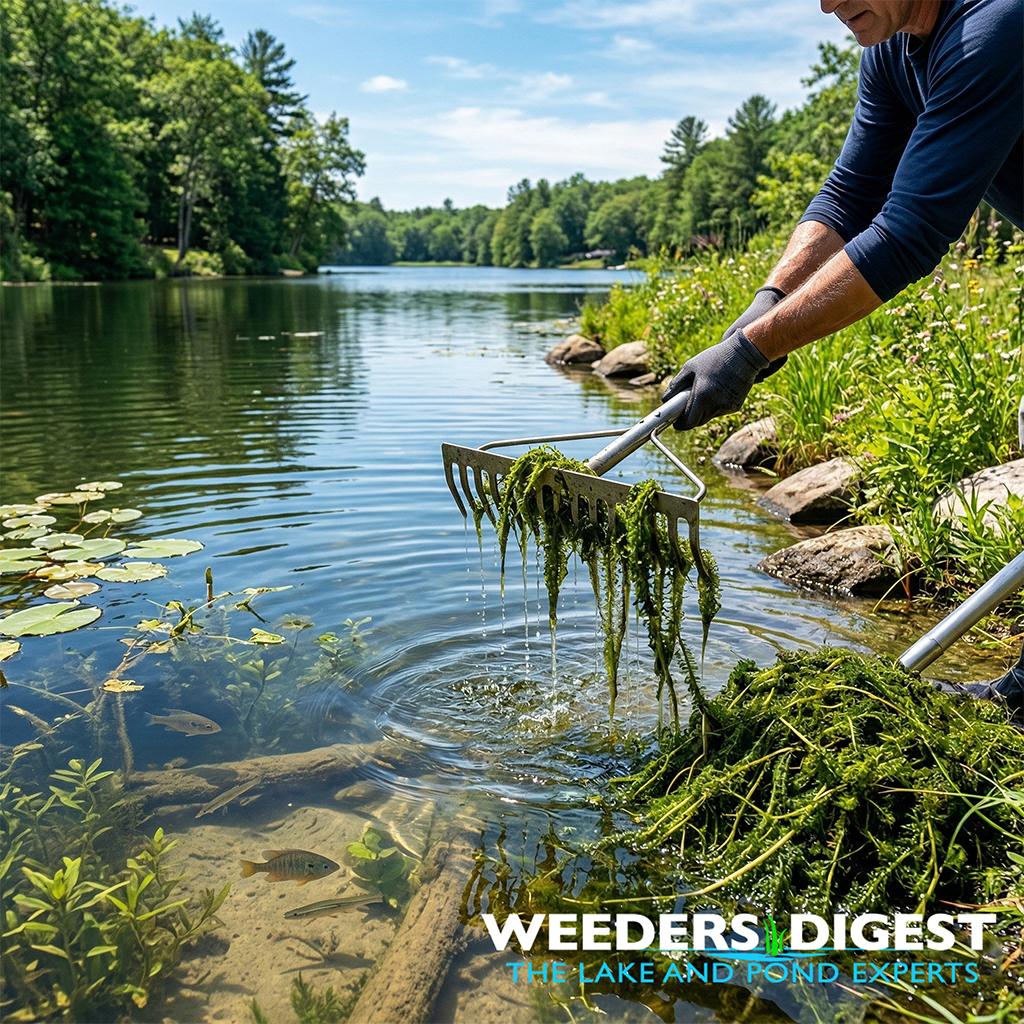
I prefer mechanical methods because they offer what I call "instant gratification with a bonus." When you physically pull or cut the weeds and remove them from the water, you are taking the problem—and the excess phosphorus and nitrogen fueling it—completely out of the ecosystem. It is the difference between cleaning your house and just pushing the dirt under the rug. While it requires more physical effort than a quick spray, the long-term health of your water usually thrives when you skip the harsh additives.
Furthermore, using mechanical tools gives you surgical precision. If you have a beautiful patch of native lilies you want to keep while clearing out the invasive milfoil, a rake or cutter lets you choose exactly what stays and what goes. Chemicals aren't always that picky, and the "drift" can often damage the plants you actually enjoy looking at. For most homeowners, the peace of mind knowing the kids and dogs can swim immediately after a cleanup is the biggest win of all.
The Science Behind It:
The efficacy of mechanical versus chemical control in aquatic ecosystems is fundamentally a question of nutrient cycling and biomass management. Research indicates that chemical herbicides, while effective at inducing rapid plant mortality, do not address the underlying cause of eutrophication. According to studies published through the University of Florida’s IFAS Extension, when aquatic macrophytes are killed in situ by herbicides, the subsequent decomposition process by aerobic bacteria consumes significant levels of dissolved oxygen. This localized hypoxia can lead to fish kills and the rapid release of orthophosphates from the decaying tissue back into the water column, effectively "fertilizing" the next generation of nuisance vegetation or cyanobacteria.
Mechanical harvesting, by contrast, functions as a form of nutrient "mining." By extracting the physical biomass from the system, the manager removes the nitrogen and phosphorus sequestered within the plant tissue. A study by the Journal of Aquatic Plant Management highlights that consistent mechanical harvesting can significantly reduce the internal nutrient loading of a water body over time. This method disrupts the feedback loop that typically sustains invasive species like Myriophyllum spicatum (Eurasian Watermilfoil), which thrives in high-nutrient environments.
From a selective pressure standpoint, mechanical removal allows for the preservation of non-target species that provide essential habitat for macroinvertebrates and juvenile fish. Chemical applications often lack this specificity, potentially leading to "bare-bottom" scenarios where the lack of competition allows for the rapid colonization of even more aggressive pioneer species. Furthermore, the development of herbicide resistance in certain aquatic biotypes is a growing concern in limnology; physical removal bypasses these genetic adaptations entirely, ensuring the long-term viability of the management strategy.
The ecological stability of a pond is also dependent on the sediment-water interface. While mechanical harvesting must be done carefully to avoid excessive turbidity or the spread of fragments (in species that reproduce via fragmentation), it avoids the introduction of complex surfactants and active ingredients into the benthos. Peer-reviewed data suggests that maintaining a balanced, mechanically managed littoral zone fosters higher biodiversity and more resilient dissolved oxygen profiles compared to systems subjected to repeated, large-scale chemical treatments.
Sources / References:
- University of Florida IFAS: Aquatic Herbicides and Nutrient Cycling
- Journal of Aquatic Plant Management: Mechanical Harvesting Effects