

Why I Use Benthic Barriers to Reclaim My Shoreline

Summary:
If you have ever waded into your favorite swimming spot only to be met by the slimy, tangled grip of underwater weeds, you know how quickly a lake can feel "ruined." When I look for ways to manage my waterfront, I want something that works immediately without constantly pouring chemicals into the water. This is where benthic barriers, often called lake bottom blankets, become a game-changer for my shoreline maintenance.
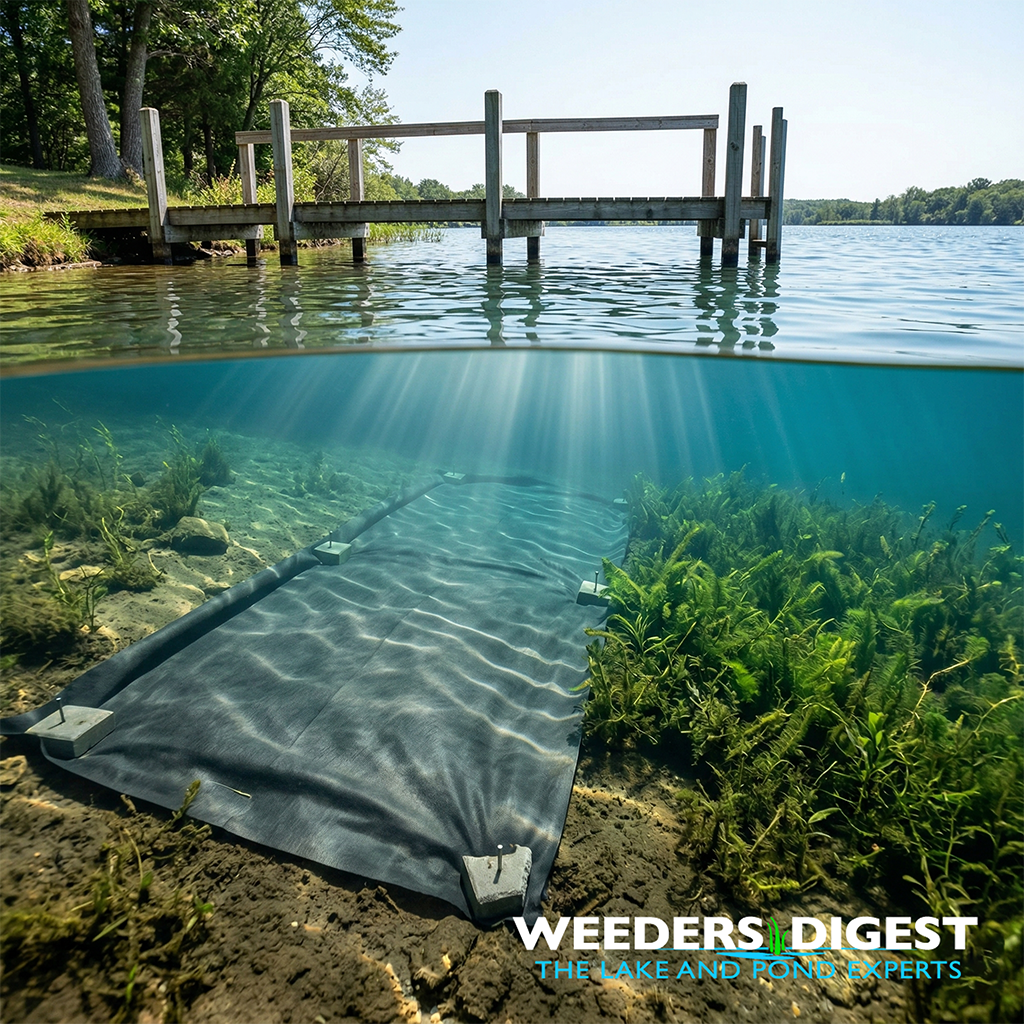
These barriers work on a surprisingly simple principle: they act like a blackout curtain for the bottom of the lake. Just like the grass in your yard would die if you left a heavy tarp over it for a few weeks, aquatic plants cannot survive when they are pinned to the sediment and stripped of sunlight. By creating a physical shield between the lake floor and the water column, I can effectively "starve" the weeds in a specific area, such as a beach or around a dock.
What makes this method so appealing is that it is non-toxic and highly targeted. Instead of treating the entire pond, I can place a barrier exactly where I want a clear swimming path. Once the plants underneath have withered away, the barrier can often be moved to a new spot or removed entirely, leaving behind a firm, weed-free bottom that makes getting into the water much more enjoyable.
It is a mechanical solution to a biological problem. While it does require some physical effort to install and occasionally clean, the result is a clear, sand-like feel underfoot without the wait time or environmental concerns associated with other treatments. It gives me back control over my water access without disrupting the broader ecosystem of the lake.
The Science Behind It:
The efficacy of benthic barriers is primarily rooted in the disruption of the photic zone at the sediment-water interface. Aquatic macrophytes, whether invasive species like Myriophyllum spicatum (Eurasian watermilfoil) or native pondweeds, are photoautotrophic organisms that rely on specific wavelengths of light to drive photosynthesis. By deploying an opaque, high-density polyethylene or geotextile fabric over the benthic zone, the barrier achieves near-total light attenuation. According to research published by the University of Florida’s IFAS Extension, the resulting lack of solar radiation prevents the synthesis of chlorophyll and leads to the rapid depletion of the plant’s stored carbohydrate reserves in its root system or rhizomes.
Beyond simple light exclusion, benthic barriers provide a physical compression that inhibits the vertical elongation of plant stems. This physical pressure, combined with the barrier's role as a gas-permeable or vented layer, creates a microenvironment that is inhospitable to further vegetative growth. Scientific assessments conducted by the Washington State Department of Ecology indicate that most benthic organisms and macroinvertebrates can recolonize the area once the barrier is removed, but the target macrophytes typically experience a 90% to 100% mortality rate within 30 to 60 days of continuous coverage.
The technical success of these blankets is also dependent on the management of benthic gasses. As organic matter decomposes underneath the barrier, anaerobic bacteria release gases such as methane and hydrogen sulfide. Professional-grade barriers are engineered with venting mechanisms or are constructed from materials with specific Darcy’s Law permeability ratings to allow these gases to escape. Without proper venting, the accumulation of gas can create "pillowing," where the barrier floats off the bottom, allowing light to penetrate the edges and compromising the structural integrity of the installation.
Furthermore, benthic barriers serve as a preventative measure against the germination of oospores and the rooting of vegetative fragments. Many invasive aquatic species propagate through fragmentation; a single broken stem can drift into a new area and take root. The barrier creates a sterile physical boundary that prevents these fragments from making contact with the nutrient-rich substrate. Research in the Journal of Aquatic Plant Management suggests that while benthic barriers are a localized solution rather than a lake-wide eradication tool, they represent one of the most effective ways to manage biomass in high-use littoral zones where chemical sensitivity is a priority.
Sources / References:
- https://plants.ifas.ufl.edu/manage/control-strategies/physical-control/
- https://archive.epa.gov/water/archive/web/html/vwm_ch4.html