

Why I’ve Stopped Calling Them "Weeds": How Aquatic Plants Save Your Lake’s Clarity
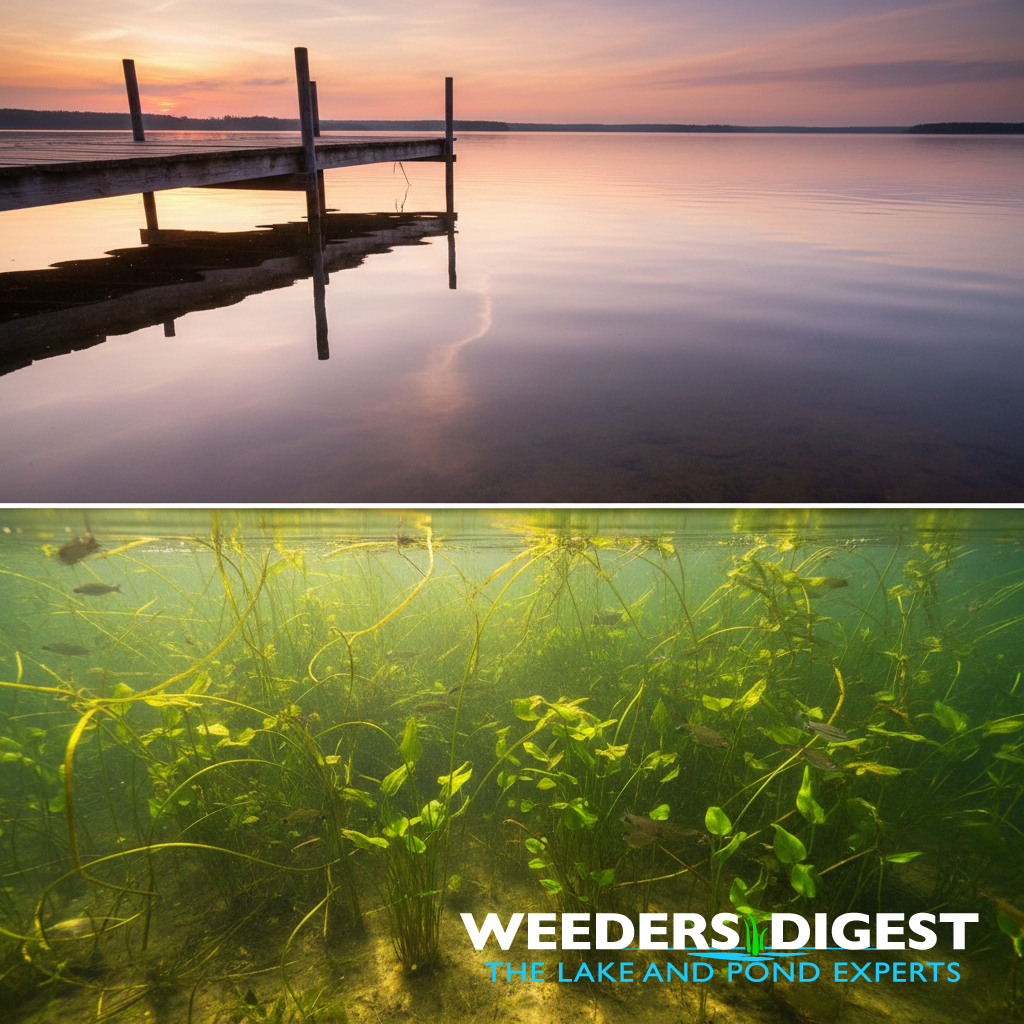 |
Summary:
When you look out at your shoreline and see a tangle of green stems reaching for the surface, your first instinct might be to reach for a rake. I’ve spent years studying these ecosystems, and I can tell you that what looks like a nuisance is actually your lake’s most powerful natural filtration system. While it seems counterintuitive, removing all the vegetation from your waterfront is often the fastest way to turn your clear water into a cloudy, pea-soup mess.
Think of these aquatic plants, or macrophytes, as the "lungs" and "anchors" of your pond. They perform a balancing act that keeps the water shimmering. Without them, the nutrients that feed these plants don't just disappear; instead, they become fuel for free-floating microscopic algae. This shift can transform a "clear-water state" into a "turbid state" almost overnight.
If you’ve ever noticed that the water feels crisper and looks deeper in areas with healthy plant life, you’re seeing a complex biological process in action. These plants aren't just taking up space; they are actively working to keep sediment on the bottom and light penetrating through the water column. Understanding how this works is the first step toward managing your waterfront like a true ecologist.
My goal is to help you see the hidden value in your lake’s greenery. By shifting our perspective from "eradicating weeds" to "managing a habitat," we can maintain the aesthetic beauty of our lakes without sacrificing the biological mechanisms that keep the water clear enough to see your toes at the end of the dock.
The Science Behind It:
The relationship between submerged aquatic vegetation (SAV) and water transparency is defined by the Alternative Stable States theory in shallow lake ecology. Research indicates that lakes generally exist in one of two conditions: a clear-water state dominated by macrophytes or a turbid-water state dominated by phytoplankton. According to Scheffer et al. (1993), aquatic plants play a critical role in maintaining the clear-water equilibrium through several feedback loops. Primarily, macrophytes outcompete algae for essential limiting nutrients, specifically phosphorus and nitrogen, sequestering these elements within their tissue and making them unavailable for algal blooms.
Beyond nutrient sequestration, the physical structure of aquatic plants serves as a powerful hydraulic dampener. As documented in the Journal of Ecology, dense stands of vegetation reduce bottom shear stress caused by wind and wave action. This physical stabilization prevents the resuspension of fine benthic sediments into the water column, which would otherwise increase turbidity and decrease Secchi disk transparency. By creating a calm microenvironment, macrophytes promote the settling of suspended solids, effectively acting as a biological sediment trap.
Furthermore, aquatic plants provide essential refugia for large-bodied zooplankton, such as Daphnia. These organisms are efficient grazers that consume vast quantities of phytoplankton. In a lake devoid of "weeds," predatory fish can easily locate and decimate zooplankton populations. However, the complex three-dimensional architecture of plant beds offers a "safe zone," allowing zooplankton to survive in higher densities and exert top-down control over algal growth. This trophic cascade is a fundamental component of maintaining high water clarity in temperate freshwater systems.
Chemical interactions also play a significant role through a process known as allelopathy. Certain species of aquatic plants, such as Chara (muskgrass) and various Potamogeton species, release bioactive chemical compounds into the water that inhibit the growth and reproduction of specific algae species. Research published by the University of Florida’s IFAS Extension highlights that these natural herbicides, combined with the physical and biological factors mentioned above, create a multi-faceted defense against water cloudiness. Therefore, the removal of native vegetation often triggers a shift toward a turbid state that is difficult to reverse without significant ecological intervention.
Sources / References:
- Alternative biological states and their application in shallow lake management (University of Florida/IFAS)
- The role of macrophytes in lake ecosystem dynamics (Journal of Ecology/ResearchGate)