

Why is My Favorite Swimming Spot Disappearing Under Muck and Silt?
 |

Summary:
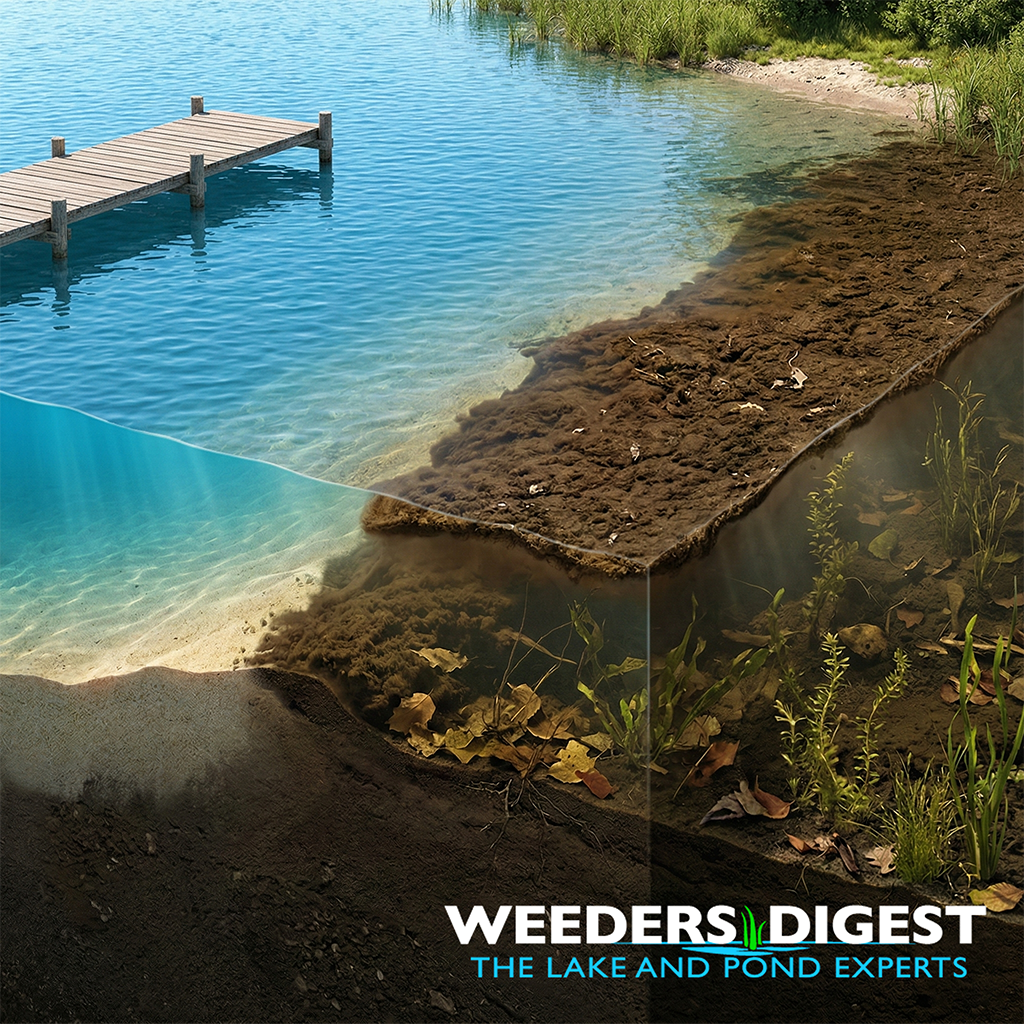
It is incredibly frustrating to watch your clear, sandy swimming area slowly transform into a soft, mucky mess. You might notice that each year the water feels shallower and the bottom feels "squishier" beneath your feet. This isn't just your imagination; it is a natural process where your pond or lake is essentially trying to turn itself into a wetland. As organic debris like leaves, grass clippings, and dying aquatic plants settle on the bottom, they pile up faster than they can decompose, creating a thick layer of sludge.
Beyond just the "gunk" from plants, external factors often accelerate this filling-in process. Rainwater runoff acts like a conveyor belt, carrying fine soil particles, sand, and nutrients from your lawn or nearby construction directly into your swimming area. Once this material hits the calmer water of your swim zone, it loses momentum and drops to the bottom. Over time, these layers of sediment and organic "muck" build up, reducing your water depth and making the area less ideal for swimming.
The Science Behind It:
The phenomenon of a swimming area "filling in" is primarily driven by two limnological processes: sedimentation and cold-water anaerobic decomposition. Sedimentation occurs when suspended solids—ranging from inorganic silts and clays to organic detritus—settle out of the water column. According to research published in Journal of Environmental Management, the rate of sediment accumulation is heavily influenced by the "loading" from the surrounding watershed. When shoreline vegetation is removed to create a beach, the natural buffer that traps these particles is lost, allowing overland flow to deposit mineral soils directly into the littoral zone.
Once this material is deposited, the biological oxygen demand (BOD) at the sediment-water interface increases. In many temperate lakes, the rate of organic matter deposition exceeds the microbial community's ability to process it. As organic debris from Macrophytes (aquatic plants) and phytoplankton senescence accumulates, it creates a nutrient-rich "muck" layer. Research from university extensions indicates that this muck is often composed of up to 90% water and unconsolidated organic matter, which lacks the structural integrity to support weight, resulting in the "sinking" sensation swimmers experience.
Furthermore, the physical geography of a swimming area often creates a "sediment trap." If the area is recessed or protected from wind and wave action to make it safer for swimmers, it also becomes a low-energy zone. In fluid dynamics, a reduction in water velocity leads to a proportional decrease in the size of particles the water can carry. Consequently, even fine silts that would remain suspended in the open lake drop out of suspension in the quiet waters of a beach or cove, leading to a measurable loss in depth over a relatively short temporal scale.
Nutrient enrichment, or cultural eutrophication, exacerbates this cycle. High levels of nitrogen and phosphorus (often from fertilizers or septic seepage) fuel rapid algal blooms and dense weed growth. When these organisms complete their life cycle, they contribute to the internal loading of the lake. A study on lake ontogeny highlights that without intervention, this process of "basin filling" is a progressive transition toward a terrestrial state. The accumulation of muck provides a fertile substrate for more invasive weeds, which then trap more sediment, creating a self-reinforcing feedback loop that degrades the swimming area.
Sources / References:
- Managing Michigan’s Shoreline: Understanding Lake Aging and Sedimentation
- Journal of Environmental Management: Impact of Watershed Land Use on Lake Sedimentation Rates