

Why Is My Lakefront Covered in Floating Weeds? Understanding the Drift
 |

Summary:
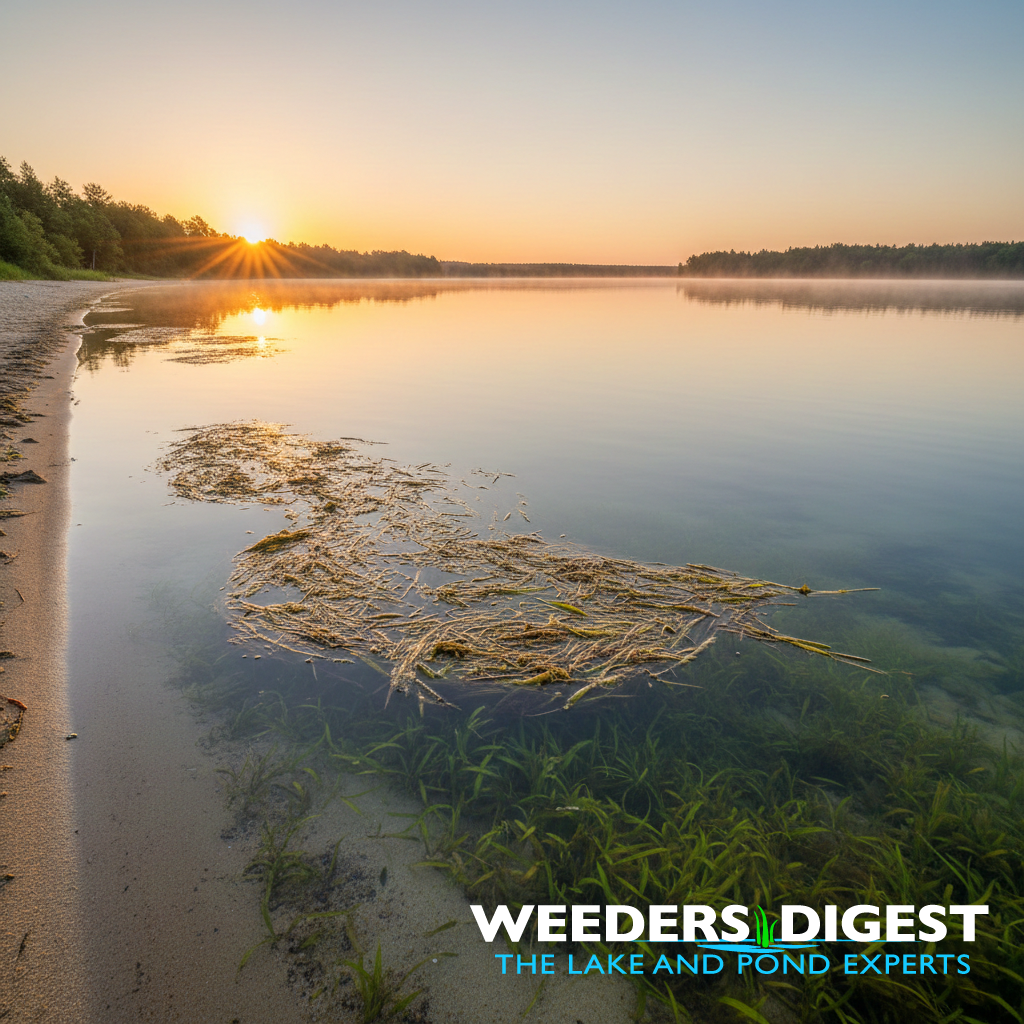
It can be incredibly frustrating to wake up and find your pristine shoreline cluttered with mats of floating vegetation. You might wonder if a neighbor’s boat or a sudden storm is to blame, but the reality is often a bit more complex. While external factors like wind and waves play a role, much of what you see is actually a natural part of the life cycle of aquatic plants.
Think of these floating fragments like the autumn leaves of the underwater world. Just as trees shed leaves, many aquatic "weeds"—which are often beneficial native plants—reach a point where they naturally break apart. This process allows them to spread to new areas of the lake, ensuring the species survives and thrives elsewhere.
Sometimes, these plants aren't just breaking; they are lifting off the bottom entirely. Gases produced during photosynthesis or decomposition can get trapped inside the plant tissues or the root masses, acting like tiny life jackets that pull the vegetation toward the surface. Once they are adrift, the wind and currents act as a conveyor belt, depositing them right on your beach.
Understanding why this happens is the first step in managing your waterfront effectively. By looking at the biology of the lake, we can see that these floating mats are less of a "mess" and more of a sophisticated survival strategy used by the ecosystem to relocate nutrients and organic matter.
The Science Behind It:
The detachment and flotation of macrophytes—large aquatic plants—is primarily driven by a combination of mechanical stress, physiological senescence, and gas-induced buoyancy. According to research published by the University of Florida’s IFAS Center for Aquatic and Invasive Plants, many common submerged species, such as Myriophyllum spicatum (Eurasian watermilfoil), utilize a process called autofragmentation. During this phase, the plant develops specialized abscission layers along the stem, allowing pieces to break off easily without external force. These fragments remain viable and possess the ability to develop adventitious roots once they settle in a new substrate.
Environmental energy also acts as a primary catalyst for plant detachment. High-velocity wind events generate surface waves and subsurface turbulence that exceed the tensile strength of the plant's stem or the anchoring capacity of the root system in soft, organic sediments. In systems with high nutrient loading, plants often grow rapidly and become "top-heavy." This morphological instability makes them susceptible to uprooting during storm events or even through the wake energy produced by passing watercraft.
A critical factor in the flotation of these detached masses is the presence of aerenchyma tissue. Aerenchyma consists of large, gas-filled lacunae or intercellular spaces that provide a low-resistance internal pathway for the exchange of oxygen and carbon dioxide. When a plant fragment is severed, these gas chambers provide immediate buoyancy. Furthermore, during periods of intense photosynthesis, the accumulation of pure oxygen within these tissues can increase the lift of the plant, occasionally causing entire root mats—known as "tussocks" or "floating islands"—to rise from the benthic zone to the water's surface.
Decomposition also plays a significant role in the buoyancy of benthic organic matter. As microbial communities break down cellulose and lignin in dead plant material at the lake bottom, they release metabolic byproducts such as methane and carbon dioxide. These gases can become trapped within the dense weave of the root mass and associated periphyton. When the upward buoyant force of the trapped gas bubbles exceeds the weight of the sediment and the strength of the root attachments, the entire mass buoyantly ascends to the surface. This phenomenon is frequently observed in eutrophic lakes where organic "muck" accumulation is high.
Sources / References:
-
- University of Florida IFAS: Plant Management in Florida Waters - Why Do Some Plants Float?
- Journal of Aquatic Plant Management: Biology and Control of Aquatic Plants