

Why My Best Management Strategy for Your Lake Might Be Doing Absolutely Nothing
Summary:
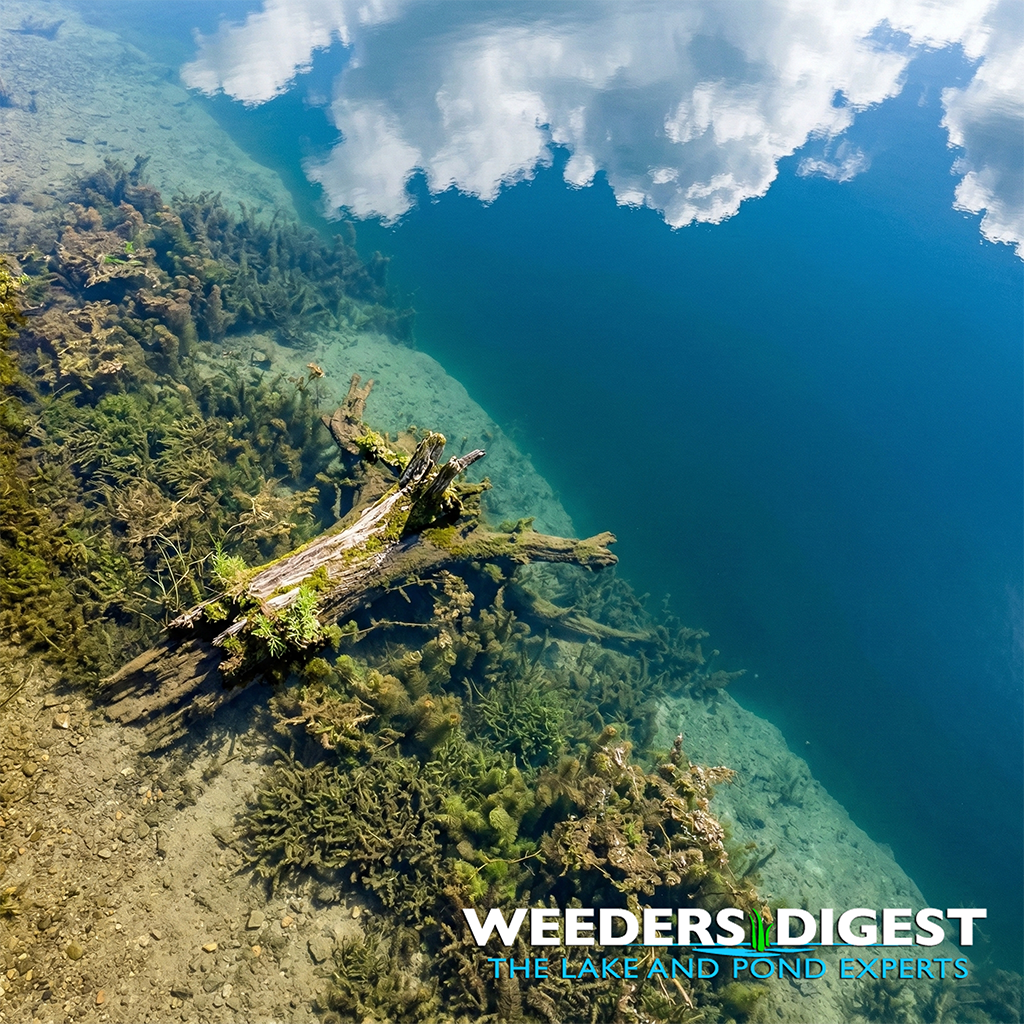
As a lake owner, your first instinct is often to "fix" things the moment you see a patch of lily pads, a film of green, or a fallen log near the shore. We are conditioned to want manicured landscapes, but a lake is a living, breathing ecosystem rather than a backyard swimming pool. Sometimes, the most ecologically sound and cost-effective decision you can make for your waterbody is to simply step back and let nature take its course.
Doing nothing is a deliberate management strategy known as "passive management." It is often the best course of action when the lake is maintaining a healthy balance of native plants, clear water, and diverse wildlife. In these cases, intervening with chemicals or mechanical harvesting can actually trigger a "regime shift," where you accidentally kill off the beneficial plants that were keeping toxic algae at bay.
You should consider the "do nothing" approach when your lake’s aquatic plants are native and covering less than 20% to 30% of the surface area. These plants are acting as the lake's kidneys, filtering out excess nutrients and providing a nursery for the fish you love to catch. If the water is clear and the fish look healthy, your lake is telling you that it doesn’t need a human "upgrade."
By choosing not to intervene, you are protecting the complex biological web that keeps your property value high and the ecosystem resilient. It saves you money, prevents the accidental introduction of invasive species through equipment, and allows the natural beauty of a wild shoreline to flourish. Understanding when to put the rake down is the hallmark of a truly sophisticated lake steward.
The Science Behind It:
In limnology, the concept of alternative stable states suggests that shallow lake systems generally exist in one of two conditions: a clear-water state dominated by submerged aquatic vegetation (SAV) or a turbid-water state dominated by phytoplankton. Research by Scheffer et al. (1993) demonstrates that aquatic macrophytes play a critical role in maintaining the clear-water state by sequestering limiting nutrients like phosphorus and nitrogen, providing refuge for zooplankton that graze on algae, and stabilizing benthic sediments to prevent turbidity. When a lake owner removes native vegetation unnecessarily, they effectively eliminate these stabilizing mechanisms, often precipitating a shift to a turbid, algal-dominated state that is difficult and expensive to reverse.
The ecological value of "coarse woody habitat" (CWH) further supports the "do nothing" philosophy. A study by Helmus and Sass (2008) highlights that fallen trees and submerged timber are essential components of the littoral zone, offering complex structural niches for periphyton growth and macroinvertebrate colonization. This organic matter forms the base of the aquatic food web. Removing this debris under the guise of "cleaning" the lake strips the environment of its primary carbon sources and nesting sites for centrarchid fish species, leading to a measurable decline in biodiversity and ecosystem productivity.
Furthermore, the "do nothing" approach preserves the integrity of the benthic microbial community. Frequent dredging or aggressive bottom-raking disturbs the aerobic-anaerobic interface of the sediment, potentially releasing legacy phosphorus stored in the substrate back into the water column. According to Søndergaard et al. (2003), this internal loading can sustain high chlorophyll-a levels even if external nutrient inputs are reduced. Maintaining an undisturbed sediment layer allows for natural biogeochemical cycling and promotes denitrification, a process where bacteria convert nitrates into nitrogen gas, effectively removing excess nutrients from the system naturally.
From a conservation biology perspective, the presence of native "nuisance" species—such as common duckweed (Lemna minor) or native pondweeds (Potamogeton spp.)—often represents a functional response to nutrient pulses. These organisms act as a biological buffer. Scientific literature suggests that unless these species reach a biomass threshold that induces night-time dissolved oxygen depletion through respiration, their presence is beneficial. Intervening with herbicide applications in a balanced system can lead to rapid decomposition, causing a spike in biological oxygen demand (BOD) and potentially resulting in localized hypoxic events that stress or kill sensitive fish populations.
Sources / References:
- Scheffer, M., et al. (1993). Alternative equilibria in shallow lakes. Trends in Ecology & Evolution.
- Søndergaard, M., et al. (2003). Internal Phosphorus Loading in Lakes: A Vicious Cycle. Scientific World Journal.