

Why My Childhood Cabin’s Shoreline Outshines the Modern Neighbors
 |

Summary:
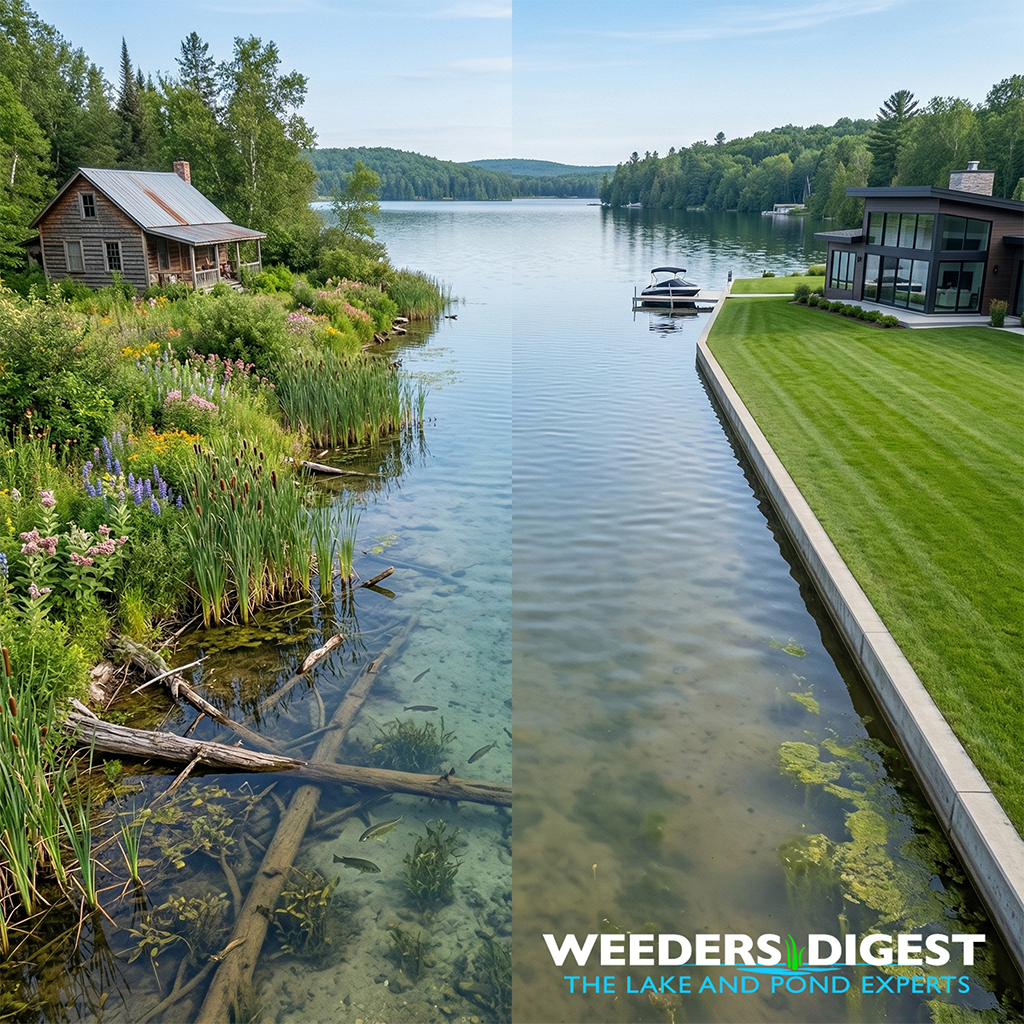
When you look at older lakefront properties, you might notice they look a bit "messier" than the manicured lawns of newer builds. These classic cabins often feature a dense buffer of native shrubs, tall grasses, and woody debris along the water's edge. While a modern homeowner might see this as an overgrown eyesore, it is actually the gold standard for a healthy aquatic ecosystem. These "messy" shorelines act as a natural filter, catching runoff and pollutants before they ever reach the lake, ensuring the water stays clear and the bottom stays firm rather than mucky.
The health of these older shorelines usually stems from a "leave it be" philosophy that was common decades ago. By not clearing the land down to the dirt to plant turf grass, the original root systems stayed intact. These deep roots hold the soil together like biological rebar, preventing the erosion that plagues many newer developments. When a shoreline is left in its natural state, it creates a vibrant "ribbon of life" where fish spawn, birds nest, and water quality thrives.
In contrast, modern landscaping trends often prioritize a clear view and a sandy beach, which inadvertently strips the lake of its immune system. Without the protection of native vegetation, waves from boats and wind chew away at the banks, and fertilizer from green lawns fuels massive algae blooms. The old cabin down the road isn't just lucky; it is benefiting from a complex, self-sustaining biological engine that has been allowed to mature over several decades.
The Science Behind It:
The ecological superiority of established, minimally disturbed shorelines is rooted in the complexity of the littoral zone and the riparian buffer. Peer-reviewed research indicates that native vegetative buffers significantly outperform turf grass in nutrient sequestration and sediment stabilization. According to studies facilitated by the University of Minnesota Extension, native plant roots can extend five to fifteen feet into the earth, whereas standard Kentucky Bluegrass roots rarely exceed a few inches. This deep-root architecture provides the structural integrity necessary to resist the erosive forces of ice heave and hydraulic energy from wake action.
The presence of Coarse Woody Habitat (CWH), such as fallen logs and submerged branches often found at older sites, is a critical component of a high-functioning aquatic food web. Research published in Ecological Applications demonstrates that the removal of shoreline wood leads to a precipitous decline in the growth rates of various fish species, particularly Micropterus salmoides (Largemouth Bass). These structures provide essential substrate for periphyton and macroinvertebrates, which form the base of the trophic pyramid, while simultaneously offering refuge for juvenile fish from apex predators.
Furthermore, the transition from "old growth" shorelines to suburbanized "lawns-to-the-lake" models creates a phenomenon known as shoreline hardening. When native vegetation is replaced by rip-rap or seawalls, wave energy is reflected rather than dissipated. This reflected energy scours the lake bottom, resuspending phosphorus-rich sediments into the water column. As noted in limnological assessments by the Wisconsin Department of Natural Resources, this increased internal loading of nutrients is a primary driver of eutrophication and the proliferation of filamentous algae and invasive aquatic macrophytes.
The chemical filtration capacity of an undisturbed shoreline is another vital metric of its health. Dense riparian zones act as a biological sponge, utilizing denitrification and plant uptake to remove nitrates and phosphates from groundwater and overland flow. Older properties that have maintained a diverse canopy and understory layer facilitate a cooler microclimate through shading, which regulates near-shore water temperatures. This thermal regulation is essential for maintaining dissolved oxygen levels required by sensitive aquatic organisms and preventing the metabolic stress associated with solar loading on cleared shorelines.
Sources / References:
- University of Minnesota Extension: Shoreline stabilization - Restore your shore
- Wisconsin Department of Natural Resources: The Value of Shoreland Habitat