

Why My Favorite Minnesota and Wisconsin Lakes Are So Overgrown
Summary:
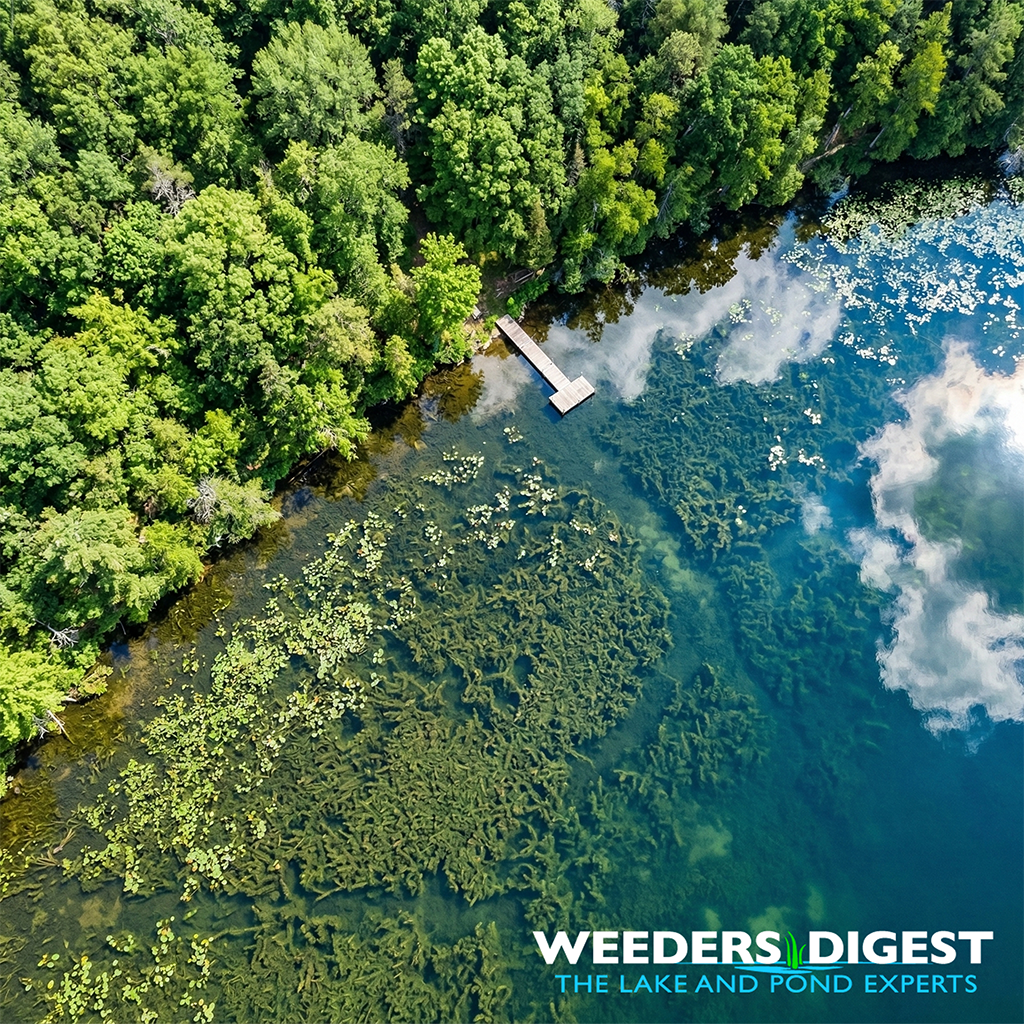
If you have ever waded into a Minnesota or Wisconsin lake only to find yourself tangled in a thick "spaghetti" of vegetation, you aren't alone. As someone who spends a lot of time on the water, I’ve realized that our local lakes are essentially victimized by their own success. These states sit on a geological "goldmine" of nutrients left behind by the last Ice Age. The same rich soil that makes the Midwest a farming powerhouse also fuels the explosive growth of aquatic plants. When you combine that natural fertility with the shallow, bowl-like shapes of many of our lakes, you get a perfect greenhouse environment for weeds.
In my experience, the sheer abundance of plants is actually a sign of how productive these ecosystems are. Because many of our lakes are relatively shallow, sunlight can reach almost the entire lake bed. In the limnology world, we call this the "littoral zone," and in the Upper Midwest, this zone often covers the whole lake. When sunlight hits that nutrient-rich mud on the bottom, it’s like flipping a switch for plant growth. While it can be a headache for boaters and swimmers, these "weedy" patches are the engines of the lake, providing oxygen and critical hiding spots for the fish we love to catch.
I have also noticed that the "weediness" has changed over the years. It’s not just the native lily pads and pondweeds anymore; invasive species like Eurasian Watermilfoil have moved in, taking advantage of the high nutrient levels to outcompete everything else. These plants grow faster and thicker than our native species, creating those dense mats that make it feel like the lake is being swallowed up.
Ultimately, your lake is prone to weeds because it is a living, breathing, and very well-fed ecosystem. Between the ancient glacial history and the way we use the land around the water today, these lakes are naturally designed to be lush. Understanding that this "greenery" is a result of complex geology and biology helps us manage it better, even if it means we have to spend a little more time cleaning off the boat propeller.
The Science Behind It:
The high density of aquatic macrophytes in Minnesota and Wisconsin lakes is primarily a function of glacial legacy and phosphorus-rich parent material. During the Wisconsin Glaciation, which concluded approximately 10,000 years ago, receding glaciers deposited vast quantities of till and outwash—sediment rich in minerals and organic matter (Wikipedia, 2026). This geological event created "kettle lakes" and shallow depressions characterized by high sediment-to-water ratios. Because these sediments are naturally laden with phosphorus and nitrogen, the benthic environment provides an inexhaustible nutrient reservoir for rooted aquatic plants.
A critical factor in the "weed-prone" nature of these water bodies is their morphometry. A significant percentage of lakes in this region are classified as "shallow lakes," meaning they do not permanently thermally stratify during the summer (Minnesota DNR, 2026). In deep lakes, nutrients often become trapped in the cold bottom layer (the hypolimnion), away from the sunlight. However, in shallow Midwestern lakes, the entire water column remains within the photic zone. This allows sunlight to penetrate to the sediment surface across the majority of the lake’s area, facilitating widespread germination of submerged macrophytes such as Potamogeton (pondweeds) and Myriophyllum.
Furthermore, the "alternative stable states" theory in limnology explains why some lakes remain perpetually "weedy." Research indicates that shallow lakes exist in one of two states: a clear-water state dominated by macrophytes, or a turbid-state dominated by algae (Frontiers in Plant Science, 2018). In many Minnesota and Wisconsin lakes, the abundance of plants actually maintains water clarity by anchoring sediments and absorbing nutrients that would otherwise fuel toxic algae blooms. The plants act as a biological filter, though this often results in the "nuisance" levels of vegetation reported by lakefront property owners.
Human-induced or "cultural" eutrophication has further accelerated these natural processes. The conversion of the surrounding landscape for agricultural and urban use has increased the loading of phosphorus into lake basins via runoff. According to the USGS, even small increases in phosphorus can lead to exponential increases in plant biomass, especially when invasive species like Eurasian Watermilfoil (Myriophyllum spicatum) are introduced (USGS, 2025). These invasives possess specialized physiological traits, such as canopy formation and rapid fragmentation, which allow them to exploit high-nutrient environments more efficiently than native flora.
Sources / References:
- Regional Context: Lakes | Minnesota DNR
- Why Study Lakes? An Overview of USGS Lake Studies in Wisconsin
- Response of Submerged Macrophyte Communities to External and Internal Restoration Measures