

Why My Favorite Northern Lakes Look Like Tea: The Mystery of Tannic Water
Summary:
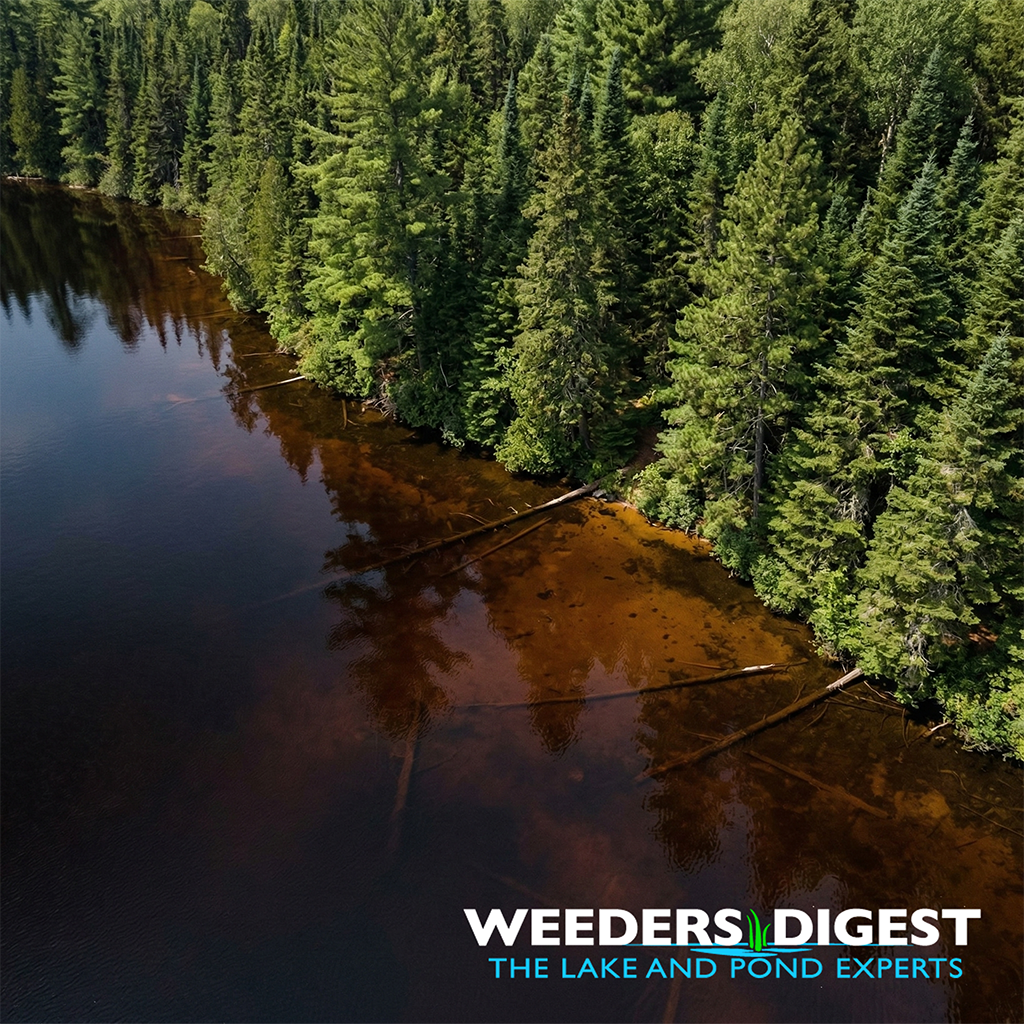
If you have ever paddled through a northern forest lake and noticed the water looks like a deep, steeped batch of breakfast tea, you have seen the power of tannins firsthand. These organic compounds are the reason for that iconic "root beer" or "coca-cola" tint that defines many of our pristine northern wilderness areas. While it might look a bit intimidating or even "dirty" to some, this coloration is actually a sign of a highly productive relationship between the lake and the surrounding forest.
The process begins on the forest floor, where fallen leaves, pine needles, and bark accumulate over seasons. As rainwater and snowmelt filter through this dense layer of organic debris, they pick up dissolved organic matter. This liquid then flows into the lake basins, carrying the concentrated "stain" of the forest with it. Because northern climates often feature slower decomposition rates due to cooler temperatures, these organic acids remain highly concentrated rather than breaking down quickly.
For those of us who spend time on these waters, this tea-colored hue changes everything about the lake's character. It acts as a natural pair of sunglasses for the aquatic ecosystem, limiting how deep sunlight can penetrate. This affects where plants grow and even where fish like Walleye or Muskie prefer to hang out during the day. It is a natural phenomenon that reminds us that a lake is not just a hole in the ground filled with water, but a direct reflection of the land that surrounds it.
Understanding tannins helps us appreciate the complexity of northern ecology. Instead of seeing "stained" water as a flaw, we can see it as a protective, nutrient-rich blanket that defines the unique biological rhythm of the Northwoods. It is a chemical signature of the trees, the soil, and the slow, cool cycles of the northern wilderness.
The Science Behind It:
The prevalence of "tea-stained" or dystrophic lakes in northern latitudes is primarily driven by the high concentration of Dissolved Organic Carbon (DOC), specifically humic and fulvic acids. These complex organic molecules are secondary metabolites produced by terrestrial plants, often referred to as tannins. In northern coniferous and deciduous forests, the accumulation of leaf litter and woody debris creates a thick organic horizon. According to research published in Nature Communications, the "browning" of northern lakes—a process known as terrestrialization or brownification—is linked to increased vegetation density and changing precipitation patterns that flush more terrestrial DOC into aquatic systems (Meyer-Jacob et al., 2019).
The chemical structure of tannins consists of polyphenolic compounds that are highly resistant to microbial degradation. In the cool, often acidic environments of northern forests, the rate of biomass accumulation exceeds the rate of decomposition. This results in the leaching of high-molecular-weight organic acids into the watershed. These molecules are chromophoric, meaning they excel at absorbing specific wavelengths of light, particularly ultraviolet (UV) and blue light. This selective absorption is what produces the characteristic yellow, orange, and deep brown hues observed in the water column.
The presence of these compounds significantly alters the vertical light attenuation coefficient ($K_d$) of the lake. In clear-water lakes, light penetrates deeply, but in tannin-dominant systems, the euphotic zone—the layer where photosynthesis can occur—is drastically compressed. This limitation of light availability regulates the primary productivity of phytoplankton and submerged macrophytes. Furthermore, research highlighted by the University of Wisconsin-Madison’s Center for Limnology indicates that these stained waters provide a thermal advantage by absorbing solar radiation at the surface, leading to stronger, shallower thermal stratification during the summer months.
Beyond optical properties, tannins play a critical role in the chemical buffering and metal speciation of the lake. Humic substances have a high affinity for binding with metals such as iron and aluminum, which can influence nutrient cycling and the bioavailability of toxins. In many northern soft-water lakes, the high concentration of DOC serves as the primary driver of the ecosystem’s metabolism, shifting the balance from autotrophy (energy from light) to heterotrophy (energy from organic matter). This chemical dominance ensures that the lake's biological and physical structure is inextricably linked to the terrestrial carbon cycle of the surrounding forest.
Sources / References:
- Meyer-Jacob, C., et al. (2019). "Lake browning: A long-term perspective on the role of terrestrial vegetation." Nature Communications. https://www.nature.com/articles/s41467-019-12402-w
- University of Wisconsin-Madison Center for Limnology. "The Browning of the North Woods." https://limnology.wisc.edu/