

Why My Favorite Swimming Hole Is Suddenly Full of Leeches
 |
Summary:
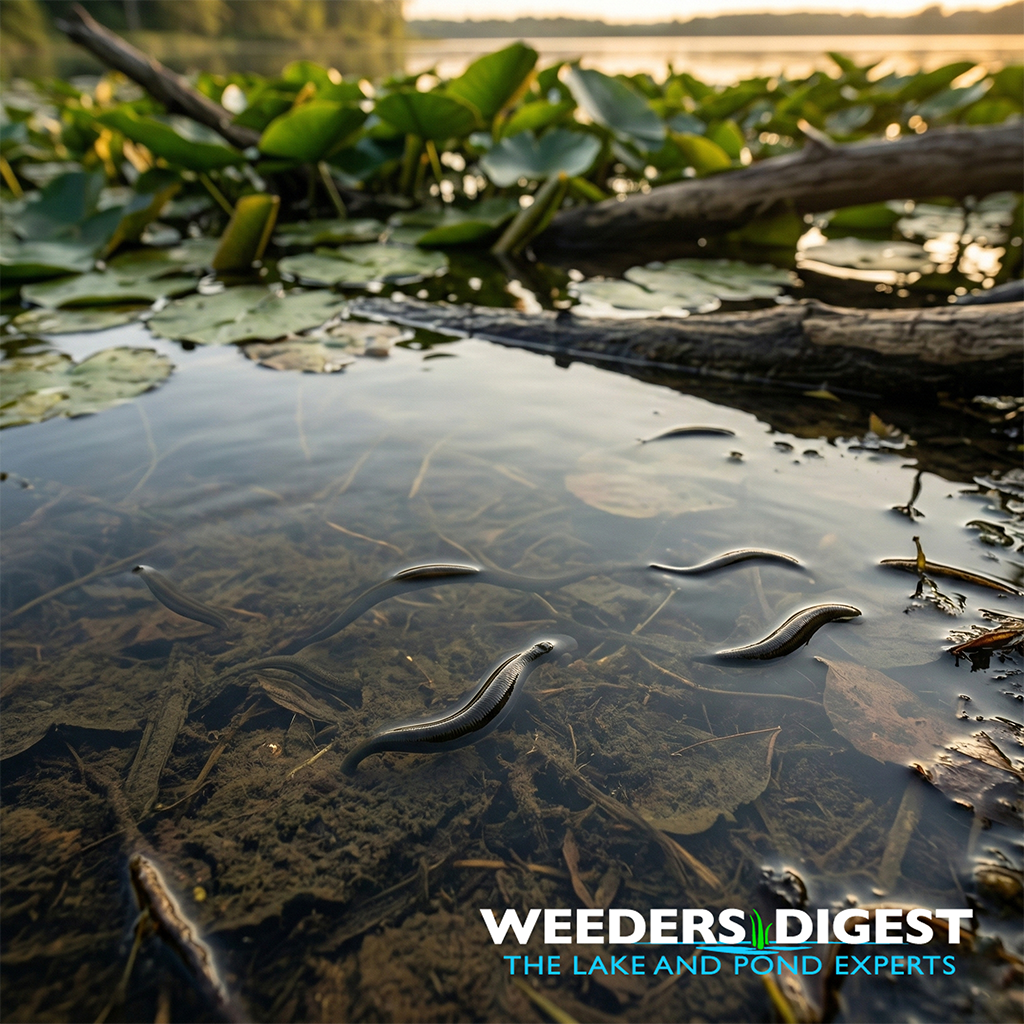
It can be a bit of a shock to step out of your favorite lake only to find a slippery hitchhiker attached to your ankle. You might wonder why one beach is perfectly clear while the neighboring cove seems to be a haven for these segmented worms. The truth is that leeches are rarely just "random." Their presence is a direct reflection of the neighborhood they live in, specifically the amount of underwater "furniture" and the buffet of food available to them.
Leeches thrive in environments where they can remain hidden from predators like bass and walleye. If your shoreline is thick with lily pads, fallen logs, or dense muck, you have essentially built a luxury apartment complex for them. These areas provide the perfect dark, still water they crave. Furthermore, a high population of leeches usually indicates a very healthy and diverse food web nearby, even if that sounds like small comfort when you’re reaching for the salt shaker.
The abundance of leeches in your specific area is often tied to "productivity." In the world of lake management, a productive lake is one with lots of nutrients, which leads to more snails, frogs, and small fish—all of which are on the leech's menu. While they have a spooky reputation, their presence is actually a sign of a robust ecosystem. They are simply following the path of least resistance to the best shelter and the easiest meal.
The Science Behind It:
The distribution and density of Hirudinea (leeches) within lentic ecosystems are primarily dictated by the availability of littoral structure and the presence of preferred host organisms. Leeches are dorsoventrally flattened annelids that lack a rigid exoskeleton, making them highly susceptible to predation by invertivorous fish. Consequently, research indicates a significant correlation between high macrophyte density and leech population stability. Thick stands of submerged aquatic vegetation provide the necessary interstitial spaces for leeches to avoid visual predators while providing a substrate for cocoons during reproductive cycles.
Eutrophication also plays a critical role in leech proliferation. According to ecological surveys conducted by university extensions, lakes with high levels of organic matter and "muck" (decomposing detritus) offer an ideal habitat for many leech species, particularly those that are scavengers or predators of smaller invertebrates. The soft, anaerobic layer at the bottom of productive lakes supports a high biomass of chironomids (midge larvae) and mollusks, which serve as the primary caloric source for many non-parasitic leech species. When nutrient loading increases, the bottom-up effect bolsters these prey populations, subsequently increasing the carrying capacity for Hirudinea.
Thermal stratification and dissolved oxygen levels further influence where these organisms congregate. Most freshwater leeches are sensitive to extreme hypoxia but prefer the warmer, shallower waters of the littoral zone where metabolic rates can remain high. Studies published in journals such as Freshwater Science suggest that leeches exhibit positive chemotaxis toward the chemical signatures of potential hosts. In areas with high waterfowl activity or large amphibian populations, leeches will congregate in higher densities to maximize "encounter rates" with these hosts.
Furthermore, the physical composition of the lakebed is a determining factor for specific families like the Glossiphoniidae. Unlike species that swim actively, many leeches are "sit-and-wait" predators that require firm substrates such as rocks or submerged timber to anchor themselves via posterior suckers. If a specific section of a lake has been modified with rip-rap or has a natural abundance of cobble, it provides a superior hunting ground compared to a barren, sandy beach. Therefore, the "leechiness" of a lake is a complex interplay of substrate availability, nutrient-driven prey density, and the architectural complexity of the aquatic plant community.
Sources / References:
- Minnesota Department of Natural Resources: Leech Biology and Ecology
- University of Wisconsin-Madison: Freshwater Annelids of the Great Lakes Region