

Why My Lake’s Health Depends Entirely on Managing Phosphorus
 |

Summary:
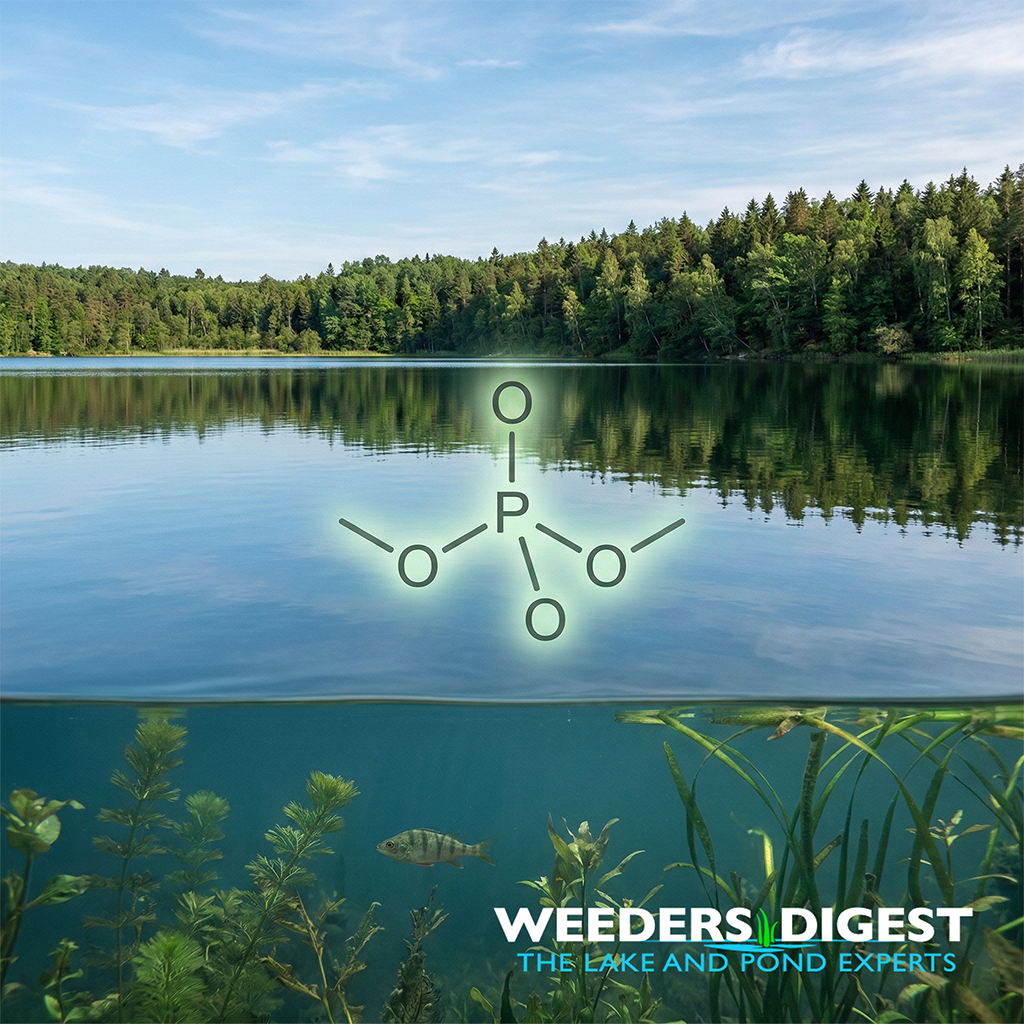
When I look out at a beautiful, clear lake, I am seeing a delicate balancing act happening beneath the surface. For years, I have helped homeowners understand that while many factors contribute to water quality, phosphorus is the single most important "limiter" for plant and algae growth. In most freshwater systems, phosphorus acts like a high-octane fertilizer; even a tiny amount can trigger a massive response. When too much enters the water, it fuels unsightly algae blooms that turn the water green and murky, often ruining the recreational experience we value so much.
The reason I emphasize phosphorus management is that it is often the "chokepoint" for the entire ecosystem. Unlike other nutrients like nitrogen, which can be pulled from the atmosphere by certain bacteria, phosphorus primarily comes from the land around us—think runoff from lawns, failing septic systems, or even the soil itself. Once it gets into the water, it doesn't just disappear. It cycles through the ecosystem, potentially feeding cycles of weed and algae growth for years to come.
Managing my lake's phosphorus levels is about more than just aesthetics; it is about protecting the oxygen levels that fish need to survive. When those massive phosphorus-fueled blooms eventually die off, they sink to the bottom and decompose. This process consumes oxygen, which can lead to "dead zones" where fish cannot live. By understanding and controlling the phosphorus entering our lakes, we are essentially protecting the lifeblood of the entire aquatic environment.
Ultimately, keeping phosphorus in check is the most effective way to prevent a lake from prematurely aging. Without intervention, a lake can undergo a process called cultural eutrophication, shifting from a clear, healthy state to a choked, weed-filled pond. By focusing on this one specific nutrient, we can make the most significant impact on preserving the clarity and longevity of our favorite water bodies.
The Science Behind It:
In freshwater limnology, the Liebig’s Law of the Minimum dictates that primary production is controlled not by the total amount of resources available, but by the scarcest resource—the limiting factor. In the vast majority of temperate lakes, phosphorus (P) serves as this limiting nutrient. According to research published by the University of Minnesota Extension, phosphorus is essential for the growth of algae and aquatic macrophytes because it is a fundamental component of ATP, nucleic acids, and phospholipids. Because phosphorus is naturally scarce in pristine freshwater environments, aquatic organisms have evolved to rapidly sequester any available orthophosphate, leading to explosive biomass production when anthropogenic inputs increase.
The transition of a lake from an oligotrophic (nutrient-poor) state to a eutrophic (nutrient-rich) state is largely driven by the total phosphorus (TP) concentration. Scharf (2021) notes that as TP levels exceed certain thresholds, typically around 20 to 30 micrograms per liter, the lake begins to exhibit symptoms of cultural eutrophication. This includes a significant reduction in Secchi disk transparency and an increase in chlorophyll-a concentrations. The mechanical driver behind this is the "internal loading" cycle, where phosphorus bound to iron in bottom sediments is released back into the water column under anoxic (low oxygen) conditions. This creates a self-sustaining loop of nutrient enrichment that persists even after external sources are mitigated.
The ecological consequences of elevated phosphorus are further complicated by the shift in phytoplankton community composition. High phosphorus-to-nitrogen ratios often favor the proliferation of Cyanobacteria, or blue-green algae. Many species of Cyanobacteria can fix atmospheric nitrogen, giving them a competitive advantage over beneficial green algae when phosphorus is abundant but nitrogen is depleted. These blooms are not only aesthetically detrimental but can also produce harmful cyanotoxins that pose risks to human health, pets, and native wildlife, as detailed in ecological assessments provided by the Wisconsin Department of Natural Resources.
Furthermore, the decomposition of the massive organic matter loads produced by phosphorus-stimulated growth leads to severe dissolved oxygen (DO) depletion in the hypolimnion. As aerobic bacteria break down dead algae at the lake bottom, they utilize the available oxygen, often leading to fish kills and the loss of cold-water fish habitats. This oxygen depletion further facilitates the release of phosphorus from the sediment, as the chemical bond between iron and phosphate is broken in a reducing environment. This biogeochemical feedback loop underscores why phosphorus is the primary target for lake managers and restoration ecologists seeking to maintain aquatic ecosystem stability.
Sources / References:
- https://extension.umn.edu/lakes-and-wetlands/phosphorus-lake-water-quality
- https://dnr.wisconsin.gov/topic/lakes/phosphorus