

Why My Lake’s Health Depends on the Insects You Might Be Ignoring
 |
Summary:
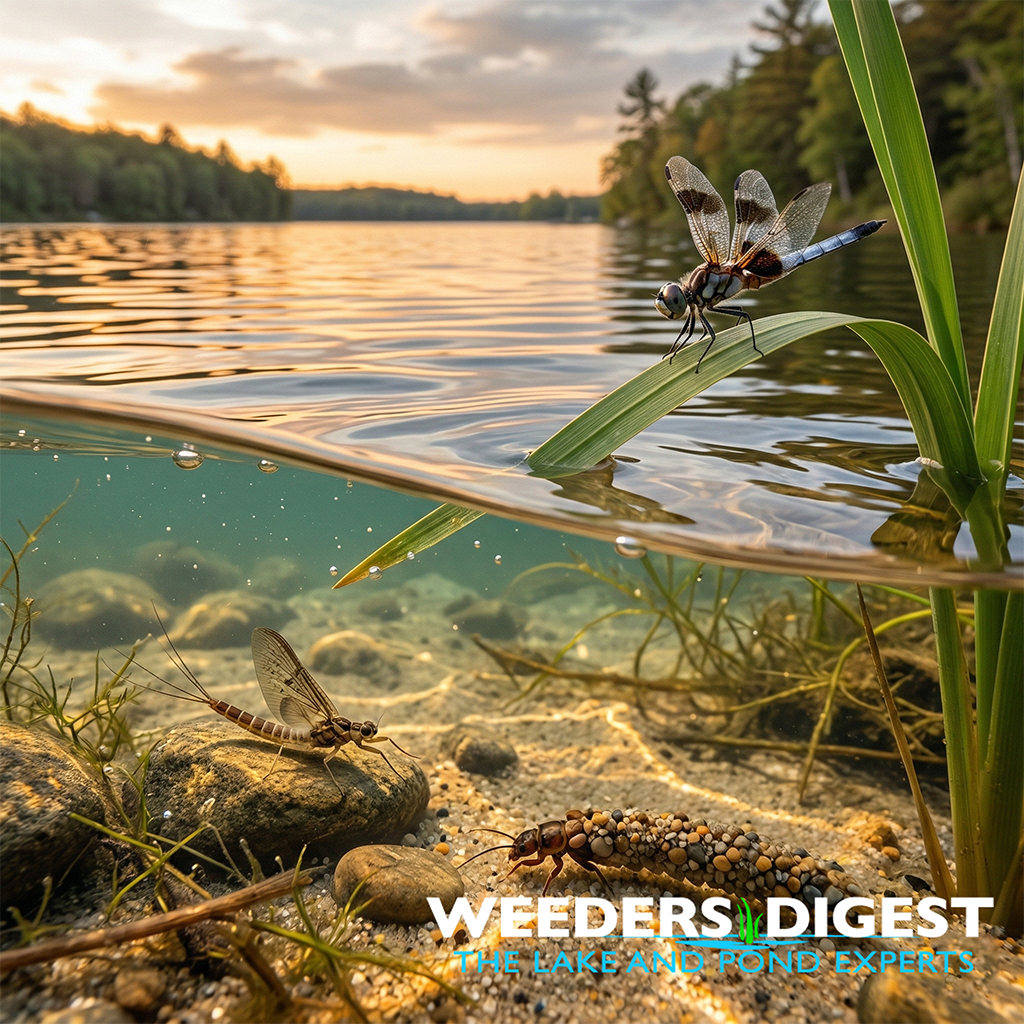
When you look at your lake, you likely focus on the clarity of the water or the size of the fish, but I have found that the most important story is actually being told by the insects living beneath the surface. These "creepy crawlies," known scientifically as macroinvertebrates, are the unsung heroes of your lake's ecosystem. They act as a natural cleaning crew by breaking down fallen leaves and organic debris, preventing your shoreline from becoming a mucky mess. Without them, the nutrients tied up in that "gunk" wouldn't be recycled, and the entire food chain would stall.
I often tell lake homeowners that insects are like a 24/7 security system for water quality. While a water test only tells us what is happening at the exact second the sample is taken, insects live in the water for months or even years. Because some species are very sensitive to pollution while others are "tough guys," the specific types of bugs I find in your lake tell me exactly how healthy the water has been over the long term. If we see a diverse group of dragonflies and mayflies, your lake is likely in great shape.
Beyond just being indicators, these insects are the primary "grocery store" for your fish. From bluegills to trophy bass, almost every fish in your lake relies on aquatic insects for food at some point in its life. When insect populations are healthy, your fish grow faster and larger. They also provide a vital bridge between the water and the land; when they hatch and fly away, they carry nutrients out of the lake and provide food for local birds and bats, keeping the entire neighborhood’s ecology in balance.
Ultimately, protecting the insects in your lake is one of the best ways to ensure clear water and a thriving fishery. Minimizing harsh chemicals and maintaining natural "buffer zones" of plants along your shore helps these little workers do their jobs. By looking after the smallest residents of your lake, you are actually protecting your property value and the recreational enjoyment of your water for years to come.
The Science Behind It:
Aquatic insects, or benthic macroinvertebrates, function as critical "ecosystem engineers" within lentic (still water) environments. Their influence on lake health is exerted primarily through nutrient cycling and energy transformation. Research by Payakka and Prommi (2014) highlights that these organisms are essential elements in trophic webs, participating directly in the energy flow and nutrient cycling by processing organic matter. Functional feeding groups, such as shredders and collectors, break down allochthonous organic matter (like leaf litter), converting it into finer particles that are then utilized by primary producers and other consumers, effectively preventing the stagnation of nutrients in the benthic zone.
The utility of aquatic insects as bioindicators is perhaps their most significant contribution to modern limnological assessment. Because various taxa exhibit differential tolerance levels to environmental stressors—such as hypoxia, heavy metal accumulation, and eutrophication—their community structure serves as a living record of water quality. As noted by MDPI’s research on insect metrics (2024), sensitive orders like Ephemeroptera (mayflies), Plecoptera (stoneflies), and Trichoptera (caddisflies), collectively known as EPT taxa, are generally intolerant of pollution. Their presence or absence allows managers to calculate Biotic Indices (BI) that provide a more integrated ecological picture than intermittent chemical sampling.
Furthermore, the relationship between dissolved oxygen (DO) and insect biodiversity is a primary driver of lake stability. In systems with high organic loading, microbial decomposition consumes vast amounts of oxygen, leading to the extirpation of sensitive insect species and a shift toward pollution-tolerant taxa like Chironomidae (midges). These shifts often precede visible signs of lake degradation, such as harmful algal blooms. The work of Ali (2021) underscores that aquatic insects provide early warning signals of anthropogenic impacts, reflecting changes in pH, alkalinity, and conductivity that might otherwise go unnoticed until the ecosystem reaches a tipping point.
From a fisheries perspective, aquatic insects represent the "intermediate trophic level" that sustains higher vertebrates. They facilitate the translocation of energy from detritus and algae into animal biomass that is consumable by fish. According to ResearchGate (2014), insects are not only food for fish and amphibians but also serve humans by purifying water through the removal of bacteria and suspended solids via filtration. In summary, the health of a lake is inextricably linked to the diversity and functional integrity of its insect community, which regulates the fundamental biological and chemical processes required for a balanced aquatic environment.
Sources / References:
- https://www.cwejournal.org/vol9no1/aquatic-insects-biodiversity-and-water-quality-parameters-of-receiving-water-body
- https://www.mdpi.com/2073-4441/16/6/849
- https://www.researchgate.net/publication/267875476_Why_care_about_aquatic_insects_Uses_benefits_and_services_Benefits_of_Aquatic_Insects