

Why My Lake Weeds Disappear Every Winter While My Muck Only Gets Deeper
 |
Summary:
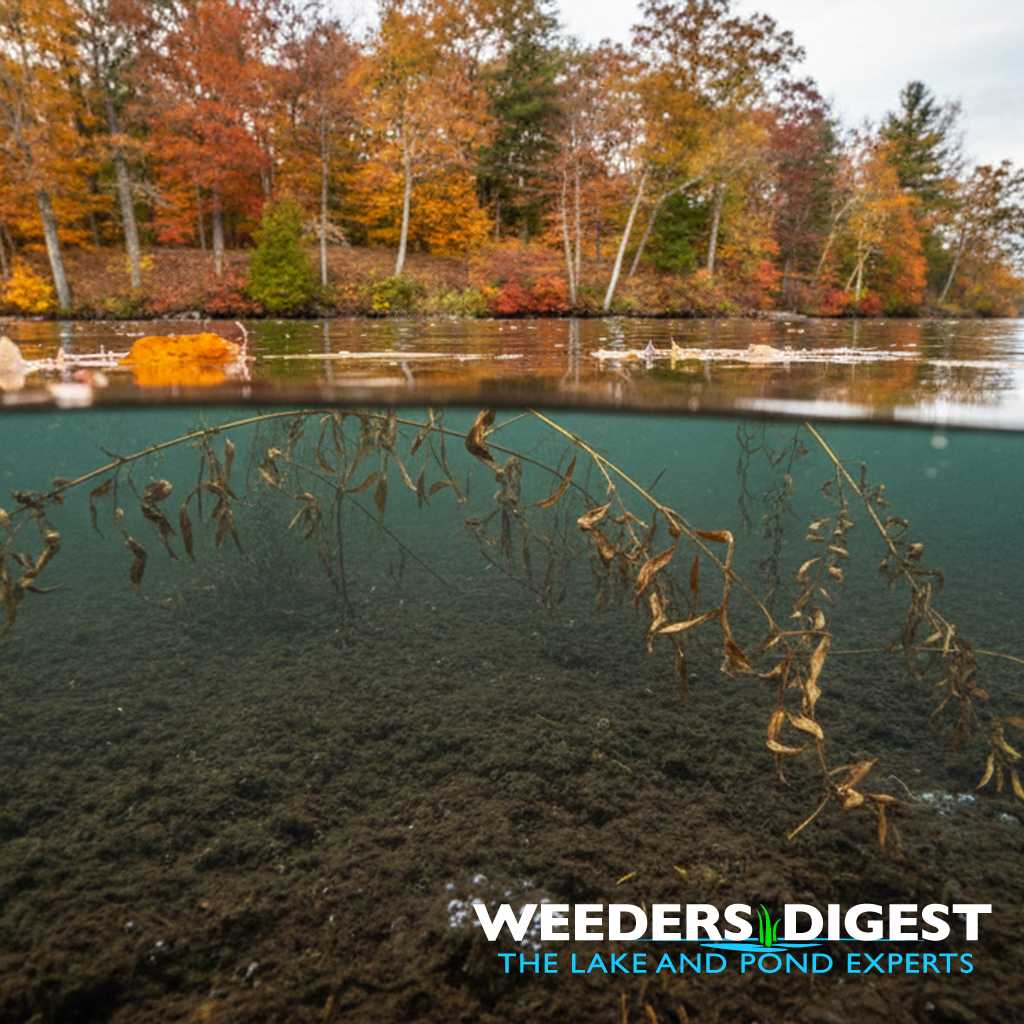
If you own a waterfront property, you have likely witnessed the frustrating cycle of the seasons. Every spring, aquatic plants—those pesky weeds—shoot toward the surface, and by mid-summer, they are thick enough to stall a boat motor. Then, as the temperatures drop in autumn, those plants brown, collapse, and seemingly vanish from the water column. You might expect the "muck" at the bottom to vanish along with them, but instead, the lake floor feels softer and deeper every year.
This phenomenon occurs because weeds and muck represent two different stages of organic existence. Aquatic plants are living organisms that respond to light and temperature; when their growing season ends, they die and sink. However, the muck is not just "dirt." It is a complex, oxygen-depleted layer of accumulated organic matter. While the plants disappear from your sight, they haven't actually left the lake. They have simply transitioned from a vertical nuisance to a horizontal one.
The reason the muck persists is that the rate of "input" (dying plants, leaves, and runoff) is significantly faster than the rate of "decomposition." In many managed or aging lakes, the natural bacteria responsible for breaking down this organic sludge simply cannot keep up. As a result, the weeds you see today become the thick, foul-smelling muck you step in tomorrow. It is a one-way street where the debris of previous seasons builds a foundation that nourishes the next generation of growth.
The Science Behind It:
The disparity between macrophyte senescence and sediment accumulation is governed by the principles of limnology and the efficiency of the benthic microbial loop. Aquatic macrophytes, such as Myriophyllum spicatum (Eurasian Watermilfoil), are composed primarily of cellulose, lignin, and various nutrients. When these plants die, they undergo a process of rapid physical fragmentation and leaching of dissolved organic matter (DOM). Research published in the journal Hydrobiologia indicates that while the cellular structure of the plant collapses quickly, the recalcitrant carbon compounds—specifically lignin—are highly resistant to rapid microbial degradation.
The persistence of lake muck is largely a function of "lacustrine sedimentation" and the metabolic limitations of anaerobic environments. In the littoral zone of a lake, the "weeds" contribute to a process known as autochthonous loading. When this organic material settles on the lake floor, it creates a high biological oxygen demand (BOD). As aerobic bacteria consume available dissolved oxygen to break down the soft tissues, the sediment-water interface often becomes anoxic. In these oxygen-poor conditions, decomposition shifts to anaerobic pathways, which are significantly slower and less efficient than aerobic processes.
Furthermore, the physical structure of lake muck often includes fine-grained mineral silts and clay particles that interleave with organic detritus. This creates a dense, compacted matrix that limits the penetration of oxygen and prevents the "off-gassing" of decomposition byproducts like methane and carbon dioxide. According to studies from the University of Florida’s Institute of Food and Agricultural Sciences (IFAS), the accumulation of "muck" or organic peat is a hallmark of lake aging, or eutrophication. The plants appear to "die back" because their biomass is being converted from a living, structured form into a semi-liquid particulate form that settles into the anaerobic "storage locker" of the lake bottom.
Ultimately, the muck remains because the environment at the bottom of the pond acts as a preservative for organic carbon. While the visible portion of the plant undergoes rapid seasonal necrosis, the molecular components are sequestered in the benthic layer. Without sufficient dissolved oxygen and a robust community of aerobic lithotrophic bacteria, the rate of organic deposition will perpetually exceed the rate of mineralization. This imbalance ensures that while the water column may clear during the winter months, the sediment profile continues to expand upward, a process technically referred to as "basin filling."
Sources / References:
- University of Florida IFAS: Understanding Lake Muck and Sediment
- Journal of Aquatic Plant Management: Decomposition of Aquatic Macrophytes