


Why My Next Boat Motor Might Be Electric: Comparing Power and Performance

Summary:
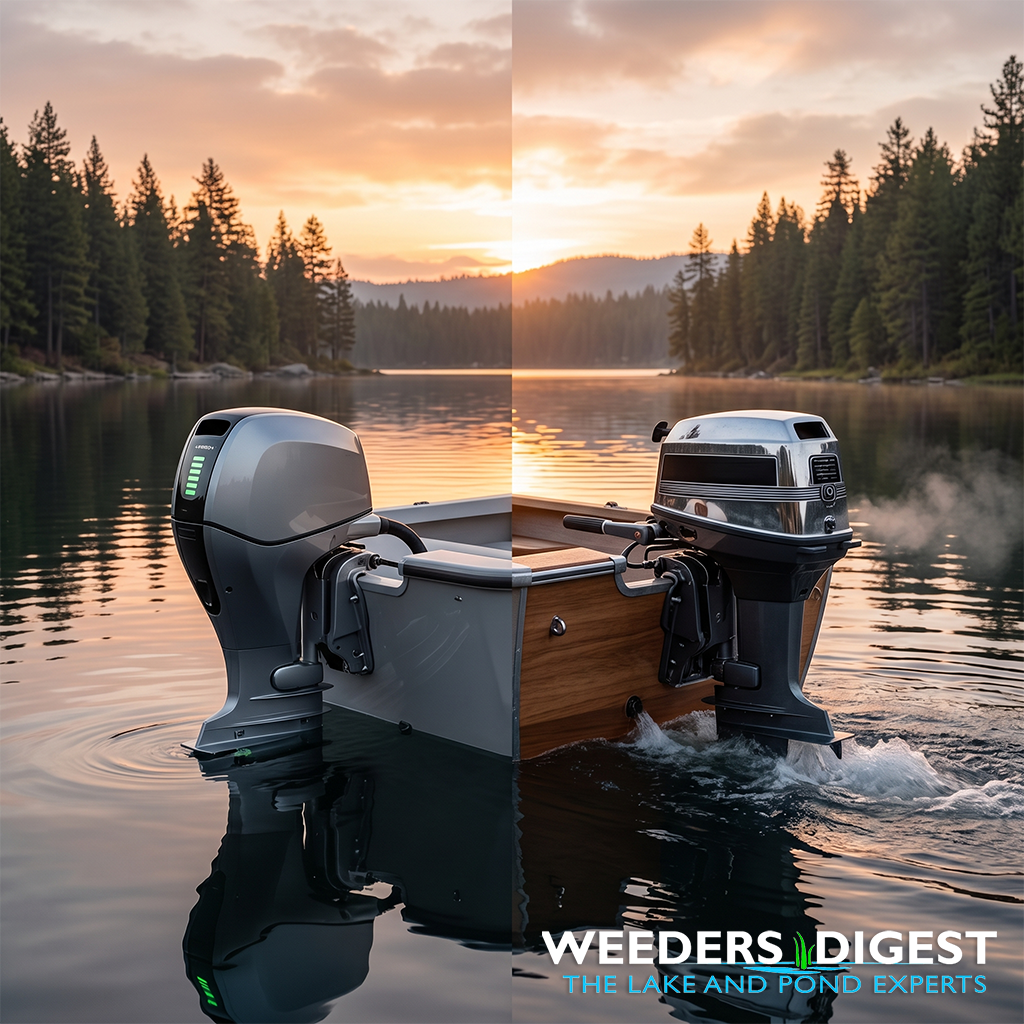
When you’re out on the water, the "power" of your boat motor is usually the first thing on your mind. Traditionally, we’ve always measured this in horsepower, specifically looking at those big gas outboards that roar to life and get you moving across the lake. However, electric boat motors are changing the conversation. While a gas motor might have a higher top speed and more "brute force" for long-distance cruising, electric motors offer a different kind of strength called instant torque. This means the second you touch the throttle, the motor is working at its maximum capacity, giving you incredible control and a very punchy start.
In simple terms, comparing the two is like comparing a marathon runner to a sprinter. A gas motor is built for the long haul and high speeds, while an electric motor is a master of efficiency and immediate response. For many boaters, an electric motor that is rated at a lower "horsepower equivalent" can actually feel more powerful when you are trying to maneuver in tight spots or get moving from a dead stop. It’s not just about the number on the side of the engine; it's about how that energy actually pushes your boat through the water.
Understanding which one is right for your boat depends entirely on what you need that power for. If you are looking to pull a skier or travel miles across a massive lake, gas is still the king of raw power. But if you value a quiet ride, zero fumes, and a motor that responds the very instant you ask it to, the modern electric outboard is proving that you don't need a massive, noisy engine to get the job done effectively.
The Science Behind It:
The fundamental difference in power delivery between electric and internal combustion engines (ICE) lies in the relationship between Revolutions Per Minute (RPM) and torque. Internal combustion outboards generate power through a series of controlled explosions, which requires the engine to "spool up" to a specific RPM range to reach its peak horsepower and torque. Research into marine propulsion indicates that most gas outboards only achieve their rated power at high wide-open throttle (WOT) settings. In contrast, electric motors utilize electromagnetic induction to provide 100% of their available torque at zero RPM. This characteristic, often cited in engineering literature as a "flat torque curve," allows electric outboards to drive larger, high-pitch propellers more efficiently than gas engines of a similar size (Newport Vessels, 2025).
When comparing these systems, it is critical to distinguish between shaft horsepower and propulsive power. Traditional gas outboards are rated by the power measured at the propeller shaft. However, due to the inefficiencies of the internal combustion cycle—where a significant portion of energy is lost as heat and through complex mechanical transmissions—the actual power that translates into movement (propulsive power) can be as low as 15% to 20% of the fuel's energy. Electric motors operate at much higher energy conversion efficiencies, often exceeding 90%. Consequently, a 1-kilowatt (kW) electric motor, which mathematically equates to approximately 1.34 horsepower, can often perform similarly to a 3-horsepower gas engine in terms of thrust and acceleration (eBoating Australia, 2024).
This discrepancy has led to the industry term "horsepower equivalency." This is not a direct measurement of raw wattage, but rather a performance-based comparison of how much static thrust the motor generates. Static thrust is the amount of force a motor exerts on the water while the boat is stationary. Peer-reviewed lifecycle assessments of maritime transportation highlight that while electric motors currently lag behind in energy density—meaning they cannot store as much "travel distance" in a battery as a gas tank can hold in fuel—their ability to maintain high thrust at low speeds makes them superior for displacement hulls and precision maneuvering (ResearchGate, 2026).
Furthermore, the mechanical simplicity of the electric drivetrain reduces the "parasitic loss" of power. In a gas outboard, power must travel through a vertical shaft and a 90-degree gearbox (lower unit) before reaching the propeller. Most electric outboards utilize a direct-drive system or a much simpler gear reduction, meaning more of the energy drawn from the battery is used to move water. While gas outboards remain the standard for high-velocity planing and heavy-load transport, the high-torque, high-efficiency nature of electric propulsion is narrowing the gap for recreational and light-commercial applications (IWA Publishing, 2020).