

Why My Pond’s Lily Pads Have Such Tough, Rubbery Roots
Summary:
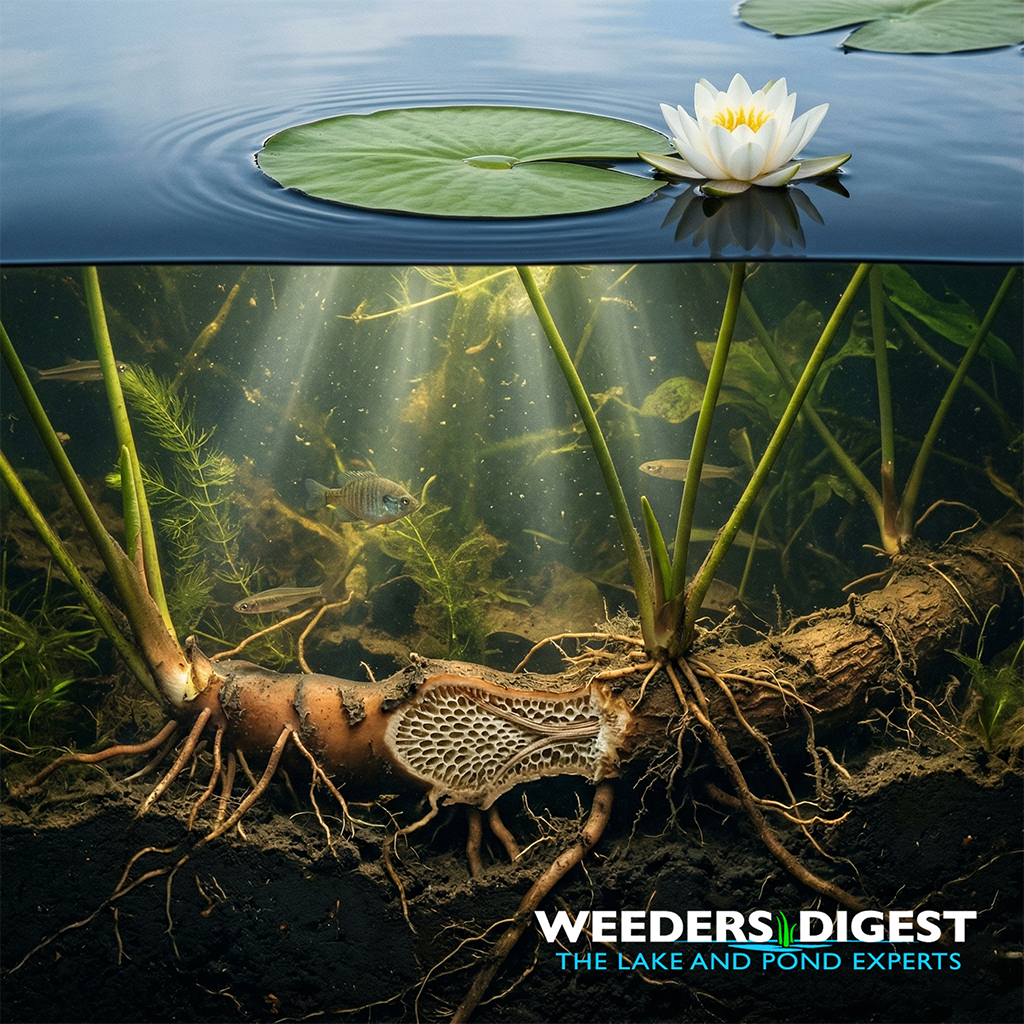
If you have ever tried to pull a lily pad out of your pond by hand, you probably realized very quickly that they are much stronger than they look. It feels less like pulling a weed and more like trying to yank a heavy-duty rubber hose out of the mud. These plants have spent millions of years evolving to stay exactly where they are, regardless of wind, waves, or hungry animals. Their roots, or rhizomes, act as a massive underground anchor and a high-capacity storage locker for the plant's energy.
The reason they feel so "rubbery" is because they are packed with specialized structural fibers designed to withstand the constant tugging of water currents. While the leaves on the surface might look delicate, the root system underneath is a thick, fleshy network that can grow to be several inches in diameter. This durability ensures that even if a boat or a storm damages the leaves, the core of the plant remains safe and sound in the sediment, ready to send up new shoots.
For a homeowner, understanding these roots is the key to understanding why lily pads are so resilient. They aren't just thin strings holding the plant down; they are complex, pressurized systems that allow the plant to breathe underwater while staying firmly attached to the pond floor. This toughness is a survival superpower that makes them one of the most successful aquatic plants in the world.
The Science Behind It:
The structural integrity of the Nymphaeaceae family’s root system is primarily driven by the development of thick, horizontal rhizomes. According to research published by the University of Florida’s Institute of Food and Agricultural Sciences (IFAS), these rhizomes serve as the primary perennial organ, storing massive quantities of starch and carbohydrates to fuel rapid growth during the spring (IFAS, 2023). The "rubbery" texture noted by observers is a result of a dense concentration of vascular bundles and parenchymatous tissue, which provides both flexibility and tensile strength. This allows the plant to absorb the kinetic energy of moving water without fracturing the main biological hub.
Beyond mere physical anchoring, the interior of these roots is defined by a specialized tissue known as aerenchyma. This tissue consists of large, interconnected air spaces that facilitate the longitudinal diffusion of oxygen from the surface leaves down to the roots submerged in anaerobic (oxygen-poor) sediment. Research in the American Journal of Botany highlights that this internal "piping system" is reinforced with sclereids—thick-walled cells that prevent the air channels from collapsing under the weight of the sediment or the hydrostatic pressure of the water column.
The toughness of the root skin, or epidermis, acts as a chemical and physical barrier against the highly reductive environment of pond muck. In these benthic zones, microbial activity often produces hydrogen sulfide and other potentially toxic byproducts. The thick, fibrous exterior of the lily rhizome prevents these toxins from infiltrating the plant's vascular system. Additionally, the high lignin content within the cell walls of the rhizome provides the woody, rubbery resistance required to deter herbivory from aquatic mammals and boring insects.
Furthermore, the adhesive strength of the root system is augmented by a dense network of adventurous fibrous roots that extend downward from the main rhizome. These secondary roots intertwine with the mineral and organic components of the substrate, creating a reinforced soil matrix. This symbiotic relationship between the plant's structural biology and the pond’s geology ensures that the Nymphaea species can maintain its position in the photic zone, optimizing its ability to photosynthesize even in environments with significant water level fluctuations.
Sources / References:
- University of Florida IFAS Center for Aquatic and Invasive Plants: https://plants.ifas.ufl.edu/plant-directory/nymphaea-odorata/
- American Journal of Botany - Structural adaptations of aquatic plants: https://bsapubs.onlinelibrary.wiley.com/journal/15372197