

Why Your Frozen Lake Is More Than Just a Winter Wonderland: My Take on the Importance of Ice Cover
 |
Summary:
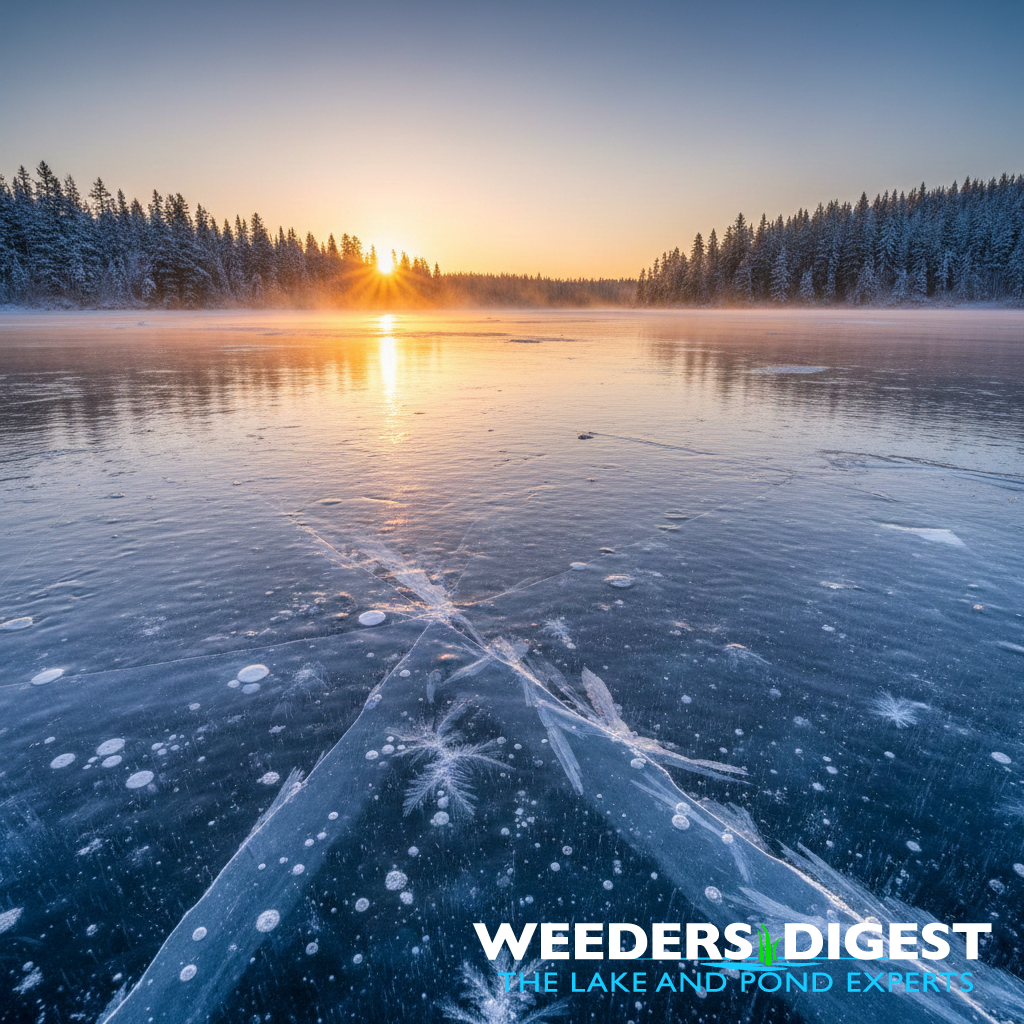
When you look out at your frozen lake in the middle of winter, it might seem like everything has simply hit the "pause" button. To the naked eye, a thick sheet of ice looks like a cold, desolate barrier. However, as an aquatic ecologist, I’ve spent years studying what happens beneath that surface, and I can tell you that ice cover is actually a vital "blanket" that regulates the health of your lake for the entire year. It isn't just a platform for ice fishing; it is a sophisticated climate regulator.
If that ice doesn't form correctly—or if it thaws too early—it can throw the entire ecosystem out of balance. Think of ice cover as a protective seal. It prevents the wind from churning up the water and helps manage how much light reaches the plants below. Without a consistent winter freeze, your lake loses its rhythm, which can lead to warmer water in the summer and potentially more issues with algae and water clarity.
The health of your lake in July is often determined by what happens in January. When we see shorter winters or "ice-on" periods that don't last as long as they used to, it creates a ripple effect. The cold water acts as a reset button for the biological processes of the lake. Without that reset, the lake can "overwork" itself, leading to oxygen depletion and stress on the fish populations you enjoy.
Understanding the relationship between ice and water quality is the first step in being a good steward of your property. Protecting that winter cycle ensures that when spring finally arrives, the water is clear, the fish are healthy, and the ecosystem is ready to bloom in a controlled, natural way.
The Science Behind It:
The presence of seasonal ice cover serves as a primary physical driver for the thermal structure and chemical cycling within temperate lacustrine environments. According to research published in Nature Communications, the duration of lake ice is decreasing globally at an unprecedented rate, which significantly alters the "mixing" regimes of these bodies of water. In a typical dimictic lake, ice cover facilitates a period of winter stratification where the densest water ($4^{\circ}C$) settles at the bottom, creating a stable environment for benthic organisms while the ice prevents wind-induced turbulence (Sharma et al., 2019).
The optical properties of ice and its subsequent snow cover also dictate the metabolic rates of the ecosystem. Clear ice allows for photosynthetic activity to continue via phytoplankton and macrophytes, maintaining dissolved oxygen (DO) levels. However, the accumulation of "white ice" or heavy snow can trigger sub-ice hypoxia. Research from the Global Lake Ecological Observatory Network (GLEON) indicates that as ice duration shortens, the period of winter "rest" is truncated, leading to an earlier onset of summer stratification. This premature warming can extend the period of hypolimnetic anoxia—where the bottom layer of the lake loses oxygen—promoting the internal loading of phosphorus from the sediment.
Furthermore, the loss of ice cover impacts the phenology of aquatic life. Many fish species in temperate zones rely on specific thermal cues for spawning and egg development. A study in Limnology and Oceanography highlights that warmer winter water temperatures, resulting from lack of ice, can increase the metabolic demands of fish during a time when food resources are traditionally scarce. This "metabolic squeeze" can lead to reduced recruitment and shifts in community composition, favoring warm-water invasive species over native cold-water salmonids or percids.
The chemical implications are equally significant. Ice cover acts as a barrier to gas exchange with the atmosphere. While this can lead to the buildup of greenhouse gases like methane ($CH_{4}$) and carbon dioxide ($CO_{2}$) produced by decomposing organic matter, a sudden and early loss of ice can result in a "pulse" of these gases. More importantly, the lack of ice allows for more cumulative solar radiation absorption throughout the spring, which exponentially increases the risk of harmful cyanobacteria blooms (blue-green algae) later in the season. The thermal inertia provided by a long ice season is a critical buffer against the eutrophication of freshwater systems.
Sources / References:
- Sharma, S., et al. (2019). Widespread loss of lake ice around the Northern Hemisphere in a warming world. Nature Communications. https://www.nature.com/articles/s41467-019-08357-w
- Hampton, S. E., et al. (2017). Ecology under lake ice. Ecology Letters. https://onlinelibrary.wiley.com/doi/full/10.1111/ele.12699