

Will My Kids Ever See This Lake Clean Again? The Long Shadow of Human Impact
 |
Summary:
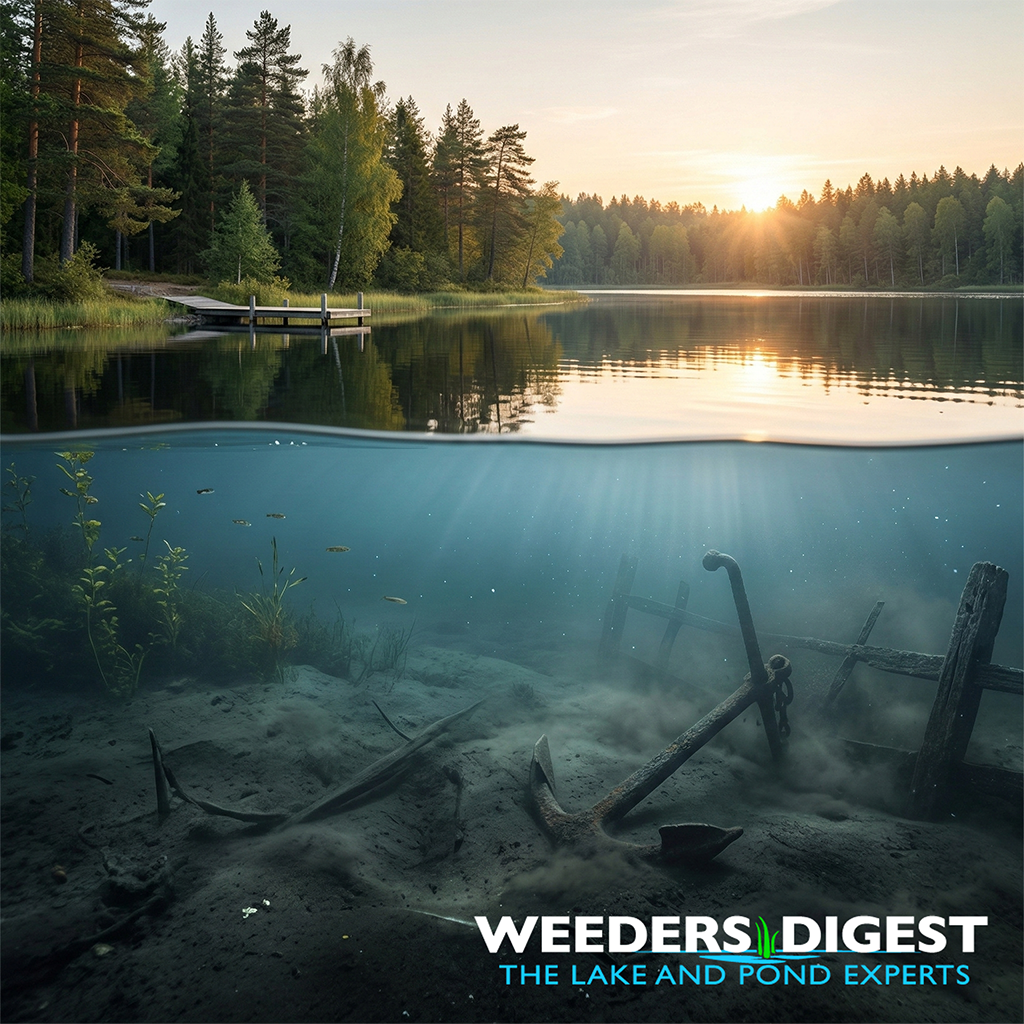
When we think about polluting a lake, we often imagine it like a spilled glass of water that just needs a good wipe-down. Unfortunately, lakes are much more like giant, complex sponges. Every time we add fertilizer to our lawns, let septic systems leak, or disturb the shoreline, we are depositing "debt" into the lake’s ecological bank account. Even if we stopped every bit of pollution today, the lake doesn't just reset overnight.
The reality is that human impact can linger for decades, or even centuries, depending on the size of the lake and how we’ve treated it. This is because pollutants—especially phosphorus and heavy metals—don't just float away. They sink into the mud at the bottom, creating a hidden reservoir of trouble. Long after the original source of the problem is gone, these sediments can "re-pollute" the water from the bottom up, leading to stubborn algae blooms and murky water that seem to defy our best cleanup efforts.
Understanding the lifespan of human impact helps us set realistic expectations for recovery. It isn't a matter of weeks or months; it’s a long-term commitment to healing a living system. While some shallow ponds might show improvement in a few seasons with aggressive management, larger lakes are governed by "hydraulic residence time," which is essentially the time it takes for a lake to completely flush itself out with new, clean water.
Ultimately, the footprints we leave on our shorelines today are often deep enough to be felt by the next generation. We aren't just managing water for this summer; we are managing the legacy of the basin. Knowing how long these impacts last gives us the perspective needed to transition from reactive fixes to proactive stewardship.
The Science Behind It:
The duration of anthropogenic impact on lacustrine ecosystems is primarily governed by the concepts of nutrient loading legacy and hydraulic residence time. Phosphorus, the primary limiting nutrient in most freshwater systems, exhibits a phenomenon known as internal loading. Even when external point-source and non-point-source pollution are mitigated, phosphorus remains sequestered within the benthic sediments. Research by Søndergaard et al. (2003) demonstrates that shallow lakes can continue to experience eutrophic conditions for decades due to the periodic release of these sedimentary phosphorus stores into the water column, often triggered by anoxia or physical disturbance.
Furthermore, the chemical recovery of a lake is inextricably linked to its flushing rate. Hydraulic residence time—the theoretical time required for all water within a basin to be replaced—varies significantly based on basin morphology and watershed hydrology. In large, deep systems like the Laurentian Great Lakes, the residence time can span over a century. Consequently, persistent organic pollutants (POPs) and heavy metals that do not degrade biologically can remain within the ecosystem's food web for generations, undergoing biomagnification as they move from primary producers to apex predators.
The biological recovery of a lake often lags behind its chemical recovery, a process known as ecological hysteresis. Even if nutrient levels return to pre-disturbance concentrations, the original community of macrophytes, zooplankton, and fish may not immediately return. Carpenter et al. (1999) highlight that human-induced shifts in food web structures—such as the introduction of invasive species or the loss of native piscivores—can create "stable states" that resist returning to their natural equilibrium. These biological alterations can effectively permanentize the human footprint on the lake’s biodiversity.
Sedimentation rates also play a critical role in determining the longevity of impact. In many anthropogenically stressed lakes, increased erosion from development leads to accelerated infilling. This not only alters the thermal stratification of the water column but also permanently changes the physical habitat of the lake bed. Because the natural removal of deep-layer sediments occurs on a geological rather than a human timescale, the physical alterations caused by land-use changes can be considered effectively permanent without significant mechanical intervention like dredging.
Sources / References:
- Carpenter, S. R., Ludwig, D., & Brock, W. A. (1999). Management of Eutrophication for Lakes Subject to Potentially Irreversible Changes. Ecological Applications. https://esajournals.onlinelibrary.wiley.com/doi/abs/10.1890/1051-0761(1999)009[0751:MOEFLS]2.0.CO;2