

Securing Your Ice Shelter: Best Ice Anchors
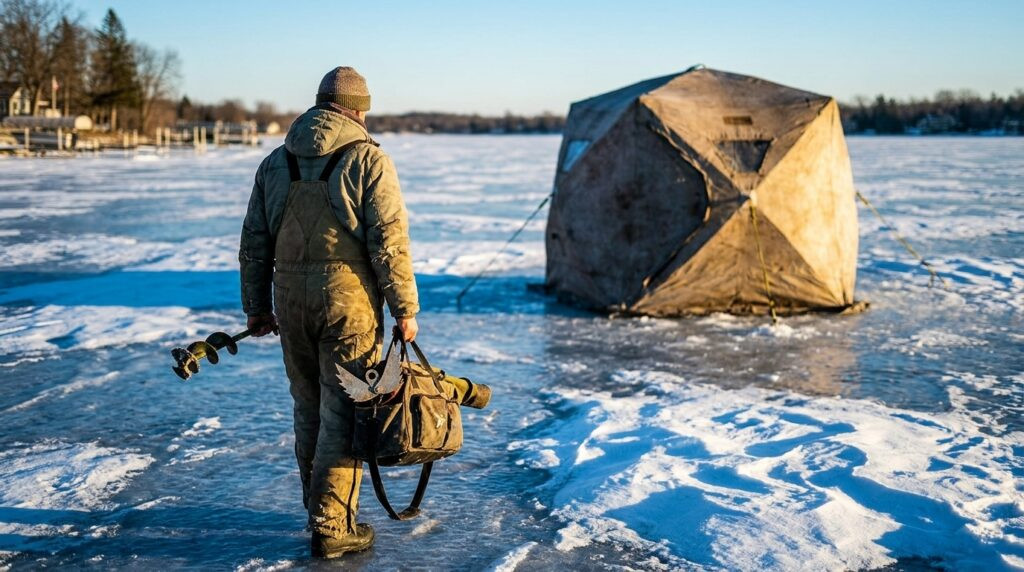
Setting up a shelter on a frozen lake during mid-winter presents serious structural challenges when high winds begin to sweep across the frozen expanse. Anglers routinely rely on reliable ice anchors for their shanties to prevent pop-up hubs and flip-over shelters from turning into sails across bare surface conditions. Securing your shelter properly requires an understanding of how tension, thermal changes, and ice clarity impact structural holding power.
Without dedicated anchorage driven deeply into the ice sheet, even moderate gusts can tear out grommets, snap fiberglass poles, or carry gear across the lake. Learning how to properly select, install, and extract your hardware ensures that your shelter remains stationary, safe, and fully functional regardless of harsh winter weather.
Why Standard Stakes Fail on High-Wind Open Ice
Standard tent stakes and thin smooth pegs are fundamentally designed for dirt, missing the physical features needed to grip high-density clear ice. When wind shear hits the wide fabric walls of a hub shelter, it creates massive lateral lift and sideways tension on corner webbing and guy lines. Smooth metal pegs rely strictly on friction, which rapidly fails as lateral tension wiggles the stake back and forth inside its socket.
Surface conditions on a frozen lake change constantly throughout the day due to solar radiation, air movement, and internal shelter heat. As surface ice temperatures rise near freezing, the friction holding smooth metal stakes disappears, allowing them to pull straight out under load. Deep thread engagement inside solid ice is the only mechanism capable of resisting heavy continuous pull without slipping.
True structural security requires driven hardware that cuts deep threads directly into the sub-surface ice matrix rather than sitting near the surface. Anchors must penetrate several inches below the soft top layer to grab high-density black ice, distributing load forces horizontally across solid crystalline structure instead of relying on weak surface friction.
Comparing Ice Anchors: Screw-In, T-Style, and Drillable Anchors
Selecting effective ice anchors for shanties requires matching your hardware design to the specific ice density, ambient temperatures, and weather conditions you expect on the water. Manual T-handle anchors feature sharp lead threads cut into heavy steel rods, requiring hand pressure and twisting force to start the bite. Self-tapping screw designs add aggressive cutting teeth at the tip, reducing the manual down-force needed to start threads in hard, clear ice.
When setting up during severe sub-zero weather, manual hand-cranking becomes exhausting and time-consuming, leading many anglers to adopt power-driven options. Drillable anchors utilize specialized driver sockets that attach directly to standard cordless drills, driving deep threads into solid ice within seconds per corner. This rapid deployment minimizes exposure to freezing winds and gets your shelter secured long before high winds can catch the fabric walls.
Under-Ice Locking Mechanisms
In slushy conditions or early-season thin ice, traditional threaded shafts struggle to find solid bite within soft upper layers. Scissor-style expansion anchors and drop-toggle designs push through a small drilled hole and swing horizontally against the bottom of the ice sheet. This mechanical back-stop provides massive pull-out resistance regardless of surface slush or soft upper ice texture.
For extreme wind environments, combining deep-threading steel shafts with mechanical locking toggles delivers absolute frame stability. At Weeders Digest, we supply heavy-duty hardware built to withstand intense winter conditions, giving anglers dependable gear designed for rapid deployment and maximum hold on open lakes.
Preventing Frozen Anchors and Safe Removal Techniques
A common challenge during long fishing sessions is dealing with anchors that freeze solid into the ice sheet overnight or during deep cold snaps. Radiated heat from internal propances heaters melts floor ice inside the shanty, causing water to pool around corner peg holes. Once floor water migrates toward cold outer anchors, it instantly refreezes around cold steel shafts, creating an iron-strong ice lock.
To prevent severe ice lock, apply a thin coating of marine grease or silicone lubricant to anchor threads prior to driving them into the ice. Avoid pouring hot water down frozen shafts to free them, as this introduces extra moisture that quickly refreezes deeper down the hole. Instead, clear ice from around the anchor top using a compact chisel before attempting mechanical extraction.
Choosing the Right Anchor Setup for Your Ice Shelter
Determining the number and style of anchors required depends heavily on your shelter size, structural design, and typical weather exposure. Small single-person flip shelters often require only two surface anchors placed on the windward side to maintain stability. Large pop-up hub shelters present massive side profiles to open winds, demanding anchored points at all four frame corners plus mid-wall guy lines.
In moderate conditions on thick clear ice, four ice anchors set at the main hub corners provide ample stability for general fishing trips. When wind speeds climb above twenty miles per hour, extending guy lines from every wall hub to dedicated ice anchors for shanties becomes mandatory. Matching anchor length to ice depth ensures full thread engagement without breaking through thin underlying ice sheets.
Having an adaptable setup means carrying high-holding hardware that handles fluctuating conditions across early, mid, and late-season outings. Explore our ice fishing equipment catalog to gear up with robust anchoring tools, drivers, and winter accessories built for harsh conditions.
Frequently Asked Questions
How do you anchor a pop-up ice shelter on bare ice without wind cover?
Anchoring on bare ice requires clearing loose surface debris down to solid black ice before driving threaded steel anchors at a 45-degree angle away from the shelter. Secure all four main skirt corners first before deploying windward guy lines to balance lateral tension across the hub frame.
What is the difference between ice fishing anchors and climbing screws?
Climbing ice screws are manufactured from lightweight polished metal with hollow cores designed to evacuate ice cores under hand pressure during vertical climbs. Ice fishing anchors feature solid steel shanks, heavy T-handles, or drill-adapter heads designed for high lateral torque and repeated power-driver use. Fishing anchors prioritize heavy-duty durability, low cost, and fast ground placement over extreme weight reduction.
Can you use standard lag bolts as ice anchors for fishing shanties?
Standard lag bolts can work in emergency situations when driven with a cordless drill, but their fine machine threads clog quickly with slush and lack deep holding power. Specialized ice anchors utilize wide, aggressive thread pitches designed specifically to cut into ice without stripping out surrounding material under load. Standard bolts also lack integrated handles or loop rings, making guy-line attachment clumsy and prone to slippage.
How many ice anchors are needed to secure a hub-style shelter in 25 mph winds?
Securing a hub shelter in 25 mph winds requires a minimum of eight dedicated anchors to handle total frame load. Four anchors secure the bottom skirt grommets at each corner, while four additional anchors secure external lines extending from each hub wall. This dual-layer anchoring prevents structural collapse, wall pop-in, and fabric tearing under high wind shear.
Equip Your Shelter with Superior Ice Anchoring Hardware
Securing your shelter effectively comes down to choosing the right hardware, driving threads deeply into solid ice, and protecting your anchors from thermal refreezing during long trips. By using specialized ice house anchors, angling your drive points, and balancing line tension, your pop-up hub stays stable and secure throughout harsh winter outings.
We understand the real-world challenges of managing equipment on open water, whether dealing with frozen winter lakes or seasonal shoreline maintenance. Our team brings extensive hands-on expertise to help you select high-performance solutions built for tough conditions, high winds, and long-term durability.
Reach out to our team today to find high-holding winter gear, shelter accessories, and expert advice for your next outing.
Recent Posts
-
Securing Your Ice Shelter: Best Ice Anchors
Setting up a shelter on a frozen lake during mid-winter presents serious structural challenges when …20th Nov 2026 -

Blue Tipz Tip Up Alarm: Never Miss a Strike
Setting a wide tip-up spread across a frozen lake is one of the most effective strategies for target …17th Nov 2026 -
Dock Bubbler Systems: Ice-Free Docks
For lakefront property owners, marina operators, and HOA members in cold climates, the threat of win …9th Nov 2026