


Finding Your Sweet Spot: How I Use Outboard Trim to Master My Boat’s Ride

Summary:
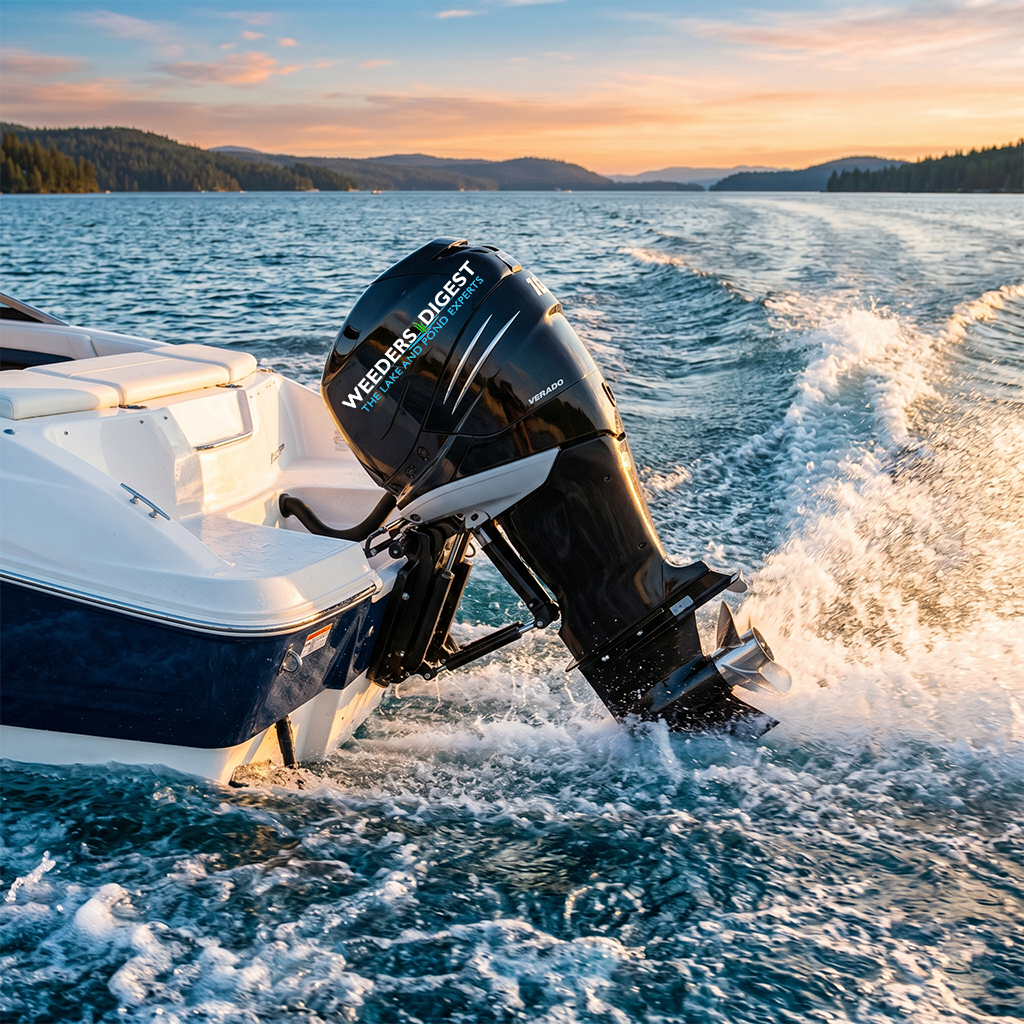
Adjusting the trim on your outboard motor is one of those small changes that makes a massive difference in how your boat feels on the water. When I talk about "trimming," I’m really talking about changing the angle of the propeller relative to the back of the boat. By pushing a simple button, you are moving the lower unit of the motor either closer to the transom or further away from it. This shifts the direction of the water being pushed by the prop, which then acts like a lever on the entire hull.
If you tuck the motor in toward the boat, the propeller pushes water upward, which naturally forces the stern up and the bow down. This is my go-to move when I’m trying to get on a plane quickly or if the water is getting a bit choppy and I need the front of the boat to cut through the waves. On the other hand, tilting the motor up and away from the boat pushes the stern down and lifts the bow out of the water. This reduces the amount of the hull touching the water, which is how I get those higher top speeds and better fuel efficiency on calm days.
Understanding this balance is like finding the "tipping point" of your vessel. If you trim too high, the boat might start bouncing like a porpoise; if you trim too low, you’ll plow through the water, wasting gas and making the steering feel heavy. It’s all about using that underwater leverage to find the perfect horizontal plane for whatever conditions you’re facing.
The Science Behind It:
The mechanical manipulation of an outboard motor’s angle, commonly referred to as "trimming," relies on the principles of vector thrust and the center of buoyancy. When the outboard’s tilt angle is adjusted, the thrust vector—the direction of the force generated by the propeller—is redirected. According to hydrodynamic principles, when the motor is "trimmed in" (negative trim), the thrust vector is angled upward. Because the motor is mounted at the transom, this upward force creates a rotational moment around the boat's center of gravity, effectively lifting the stern and depressing the bow. This orientation increases the wetted surface area of the hull, which provides greater stability and lift at lower speeds, a process essential for overcoming the "hump" during the transition from displacement mode to planing.
Conversely, "trimming out" (positive trim) shifts the thrust vector downward. As the propeller pushes water toward the surface, the reactionary force pushes the stern deeper into the water. This leverage causes the bow to rise, a phenomenon explained by the shift in the longitudinal center of gravity relative to the center of pressure. By lifting the bow, the vessel reduces its hydrodynamic drag by minimizing the amount of hull surface in contact with the water. Research in naval architecture suggests that optimizing this angle can significantly reduce fuel consumption and increase velocity by aligning the hull at an ideal "angle of attack" relative to the water's surface (Gerr, The Nature of Boats).
The efficiency of these adjustments is also governed by the interaction between the propeller’s ventilation limit and the hull's deadrise. If the motor is trimmed too far upward, the propeller may begin to draw atmospheric air from the surface, a condition known as ventilation, which results in a sudden loss of thrust and increased RPMs without a corresponding increase in speed. Furthermore, improper trim can lead to longitudinal instability, or "porpoising," where the bow rhythmically oscillates up and down. This occurs when the center of pressure moves forward of the center of gravity, causing the boat to lose its steady-state equilibrium.
The integration of hydraulic trim systems allows for minute adjustments to these physics in real-time. By altering the angle of the propeller shaft, the operator is essentially reconfiguring the boat’s hydrodynamic profile. This allows for the compensation of variable loads, such as passenger weight or fuel distribution, ensuring that the hull maintains its most efficient orientation. This relationship between thrust angle and hull attitude is a fundamental component of marine dynamics, dictating the performance envelopes of modern planing craft.