


How Do the Frogs in My Pond Know Exactly When to Hibernate?
 |

Summary:
As the crisp autumn air turns into a biting chill, you might notice the sudden disappearance of the familiar chorus from your backyard pond. It can feel like a coordinated vanishing act, leaving you wondering how these tiny creatures know exactly when to tuck themselves away. The truth is that frogs are incredibly sensitive to the world around them, relying on a biological internal clock that reacts to the shortening days and the falling temperatures of the water and soil.
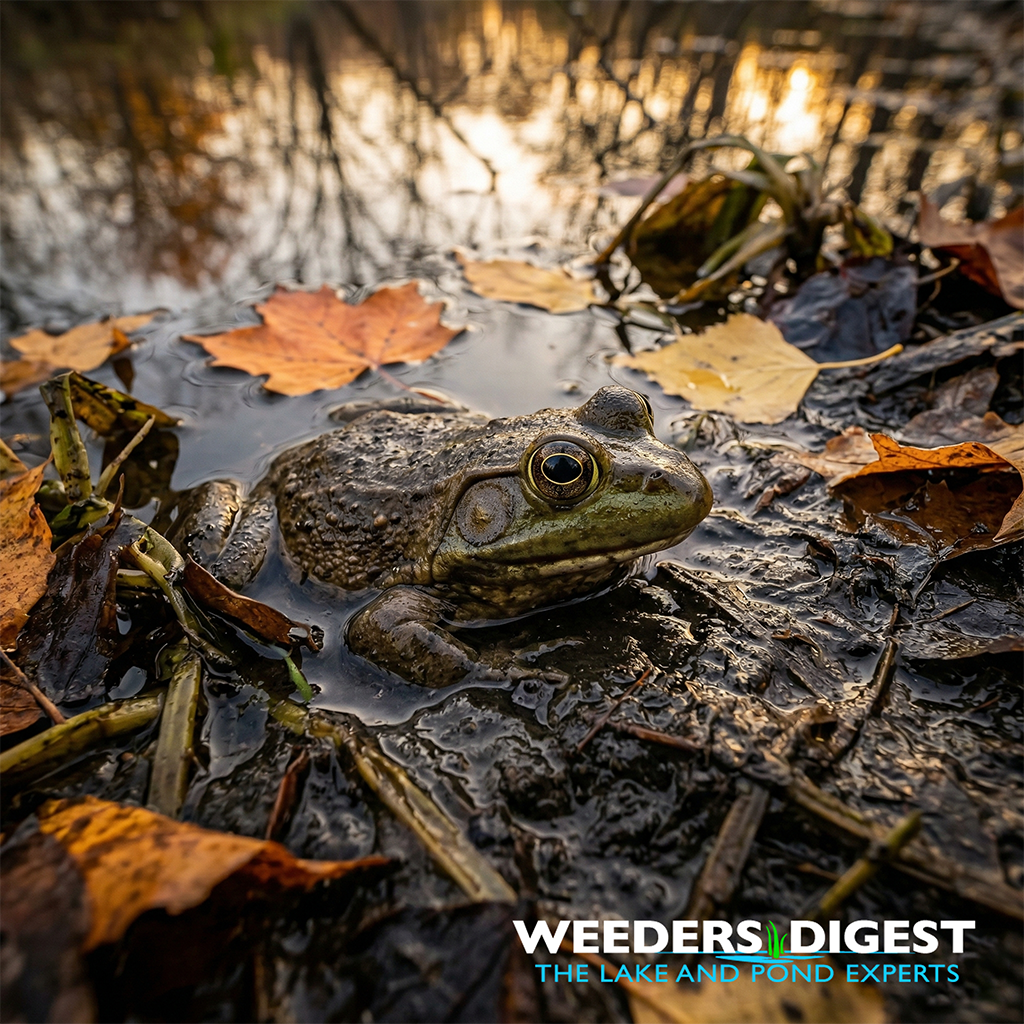
For many of our local species, like the Bullfrog or the Green Frog, the signal to dive deep into the silty bottom of your pond isn't just a whim; it is a calculated survival move. They don't just "feel" cold; their entire metabolism begins to shift as the sun hits a certain angle in the sky. By the time the first thin sheet of ice forms on the surface, your pond’s residents have already nestled into the mud, entering a state of suspended animation where they will remain until the spring thaw.
Watching this transition in your own landscape is a lesson in nature’s perfect timing. If they wait too long, they risk freezing in the open air; if they go too early, they miss out on the last few insects of the season. They find that "Goldilocks" moment by monitoring the physical environment with precision that rivals our best weather apps, ensuring they are safely insulated before the ground turns rock hard.
The Science Behind It:
The phenological timing of anuran hibernation—specifically hibernacula selection in aquatic environments—is governed by a complex interplay between exogenous environmental cues and endogenous circadian rhythms. The primary driver for this behavioral shift is photoperiodism, which is the physiological reaction of organisms to the length of night or a dark period. As the Earth tilts away from the sun, the decrease in daylight hours triggers the endocrine system to suppress metabolic activity. Research published in Journal of Thermal Biology indicates that amphibians utilize sensitive photoreceptors in their skin and pineal gland to measure these light shifts, initiating the transition to a dormant state regardless of temporary "Indian Summer" temperature spikes.
Temperature serves as the secondary, immediate catalyst for sub-aqueous burial. Ectothermic organisms, such as Rana catesbeiana (the American Bullfrog), rely entirely on external heat to drive cellular processes. As ambient temperatures drop, the kinetic energy within their biochemical pathways decreases, leading to a state of lethargy. According to ecological studies found through the University of Missouri Extension, when water temperatures consistently hover near $4^\circ\text{C}$ to $7^\circ\text{C}$, frogs seek out the benthic zone of water bodies. The mud provides a thermal buffer where temperatures remain relatively stable and above freezing due to the high specific heat capacity of water and the insulating properties of the sediment.
The physiological feat of surviving in the mud involves a process known as extrapulmonary gas exchange. While buried, frogs cannot use their lungs; instead, they satisfy their significantly reduced oxygen requirements through their highly vascularized skin. To prevent freezing, many species undergo a process of cryoprotection, where the liver converts glycogen into high concentrations of glucose or glycerol. This act functions as a biological antifreeze, lowering the freezing point of the frog's internal fluids and protecting vital organs from cellular rupture during extreme cold (Storey & Storey, 1988).
Ultimately, the "decision" to bury is a result of the hypothalamus responding to the cumulative "cold sum" of the environment. If an individual fails to respond to the narrowing window of the photoperiod, the resulting metabolic slowdown would leave them immobilized on the surface, vulnerable to predation or desiccation. The precision of this timing is an evolutionary adaptation that ensures the organism enters a state of brumation—the reptilian and amphibian equivalent of hibernation—exactly when the energetic cost of remaining active exceeds the energy available in the environment.
Sources / References:
- University of Missouri Extension: https://extension.missouri.edu/publications/g9444
- Journal of Experimental Biology (Cryobiology of Amphibians): https://journals.biologists.com/jeb