


How My Local Crayfish Survive When the Lake Freezes Solid
 |
Summary:
If you have ever walked across a frozen lake and wondered what happened to the lively crayfish that were scuttling around all summer, you might be surprised to learn about their incredible survival tactics. It is a common misconception that these hardy crustaceans simply "freeze" along with the water. In reality, they are masters of finding the small, hidden pockets of life that remain even in the harshest winter conditions.
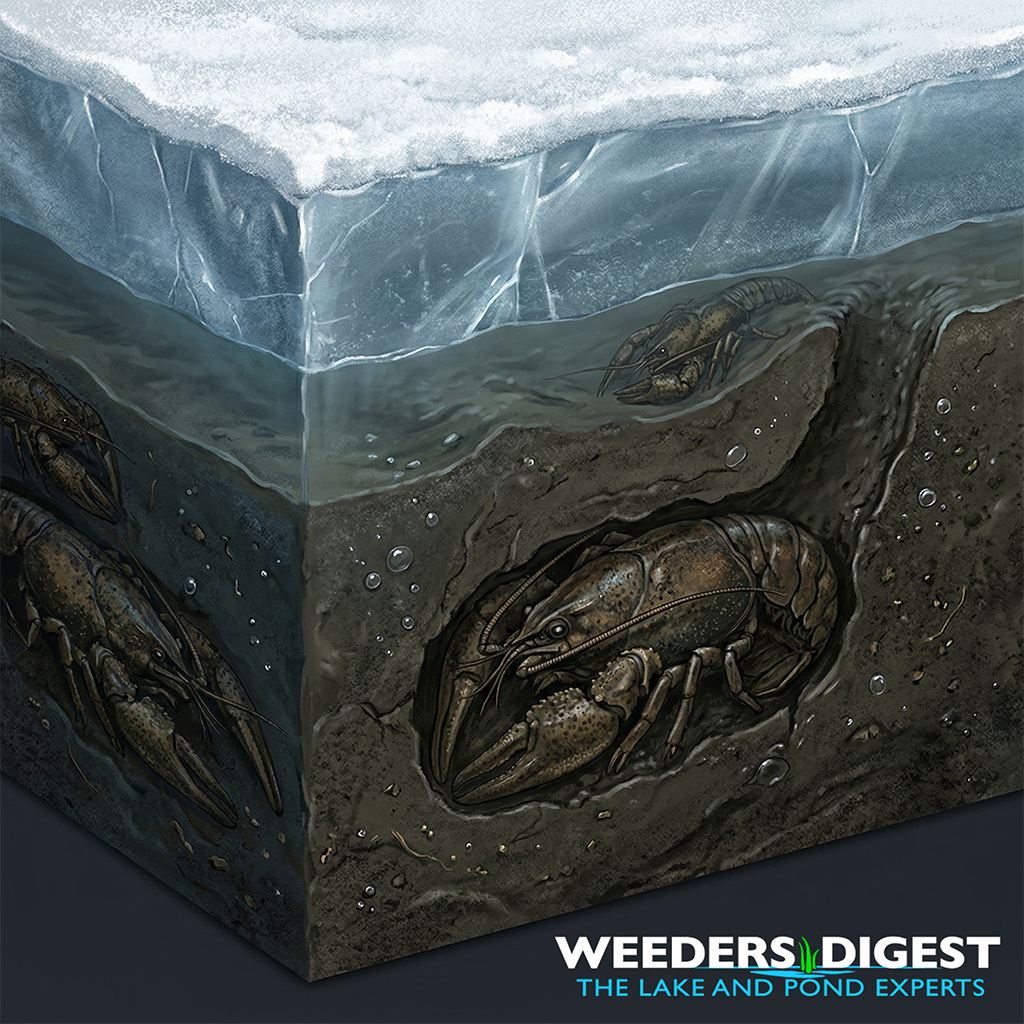
Most crayfish are not actually trapped in the solid ice that you see on the surface. Instead, they utilize the unique properties of water and soil to stay just below the frost line. Even when a shallow pond appears to be frozen solid to the bottom, there is often a muddy, saturated layer of substrate that remains unfrozen due to the geothermal heat of the earth and the insulating properties of the ice above.
My favorite part of their winter strategy is their ability to slow down their entire existence. They enter a state of dormancy where they barely move and their metabolism drops to a crawl. They tuck themselves into deep burrows or wedge into the soft silt, waiting out the cold in a subterranean world that stays just a few degrees above freezing.
In many cases, crayfish will even leave the main body of water if they sense the freeze coming. They are expert excavators, digging "chimney" burrows into the banks of the lake that reach down into the groundwater table. This allows them to stay wet and protected from the ice, essentially creating their own private, temperature-controlled basement until the spring thaw arrives.
The Science Behind It:
The survival of crayfish in littoral zones that experience deep freezing is dictated by behavioral thermoregulation and physiological metabolic depression. Research indicates that most temperate crayfish species, such as those in the genera Orconectes or Procambarus, are not freeze-tolerant organisms; they cannot survive the formation of ice crystals within their tissues. According to studies conducted by university extension programs regarding aquatic invertebrate overwintering, these organisms primarily rely on "freeze avoidance" by seeking thermal refugia within the benthic substrate or subterranean groundwater.
When a water body freezes, the ice layer acts as a thermal insulator, slowing the loss of heat from the sediment into the atmosphere. In shallow systems, the "freeze-to-bottom" phenomenon often leaves a thin layer of liquid water or saturated mud within the interstitial spaces of the substrate. This zone, buffered by the latent heat of the earth, remains slightly above $0^{\circ}C$. Crayfish utilize their chelipeds and pleopods to burrow deep into these sediments, often reaching depths below the frost line where the temperature remains stable, preventing cryogenic cellular damage.
Physiologically, crayfish enter a state of facultative diapause or quiescence. As the ambient temperature drops, the rate of biochemical reactions within the crayfish follows the $Q_{10}$ temperature coefficient, significantly reducing oxygen consumption and energy expenditure. In these hypoxic or even anoxic winter environments, crayfish can transition to anaerobic metabolic pathways, though they prefer the oxygen-rich groundwater found in deep burrows. Research from ecological journals highlights that primary burrowing species are particularly adept at this, constructing elaborate tunnels that intersect the water table, providing a safe haven from both predators and solid ice.
Furthermore, the chemical composition of the crayfish's hemolymph may undergo subtle changes to lower its freezing point, a process known as supercooling. While they do not produce the high concentrations of cryoprotectants found in some terrestrial insects, the maintenance of high osmotic pressure within their fluids provides a marginal buffer against incidental ice contact. Ultimately, the survival of the population depends on the physical integrity of these sub-benthic microhabitats, which protect the crustaceans from the lethal mechanical pressure and desiccation associated with solid ice formation.