


How My Local Lake Changed Forever: The Secret Link Between Zebra Mussels and Your Growing Weed Problem
 |

Summary:
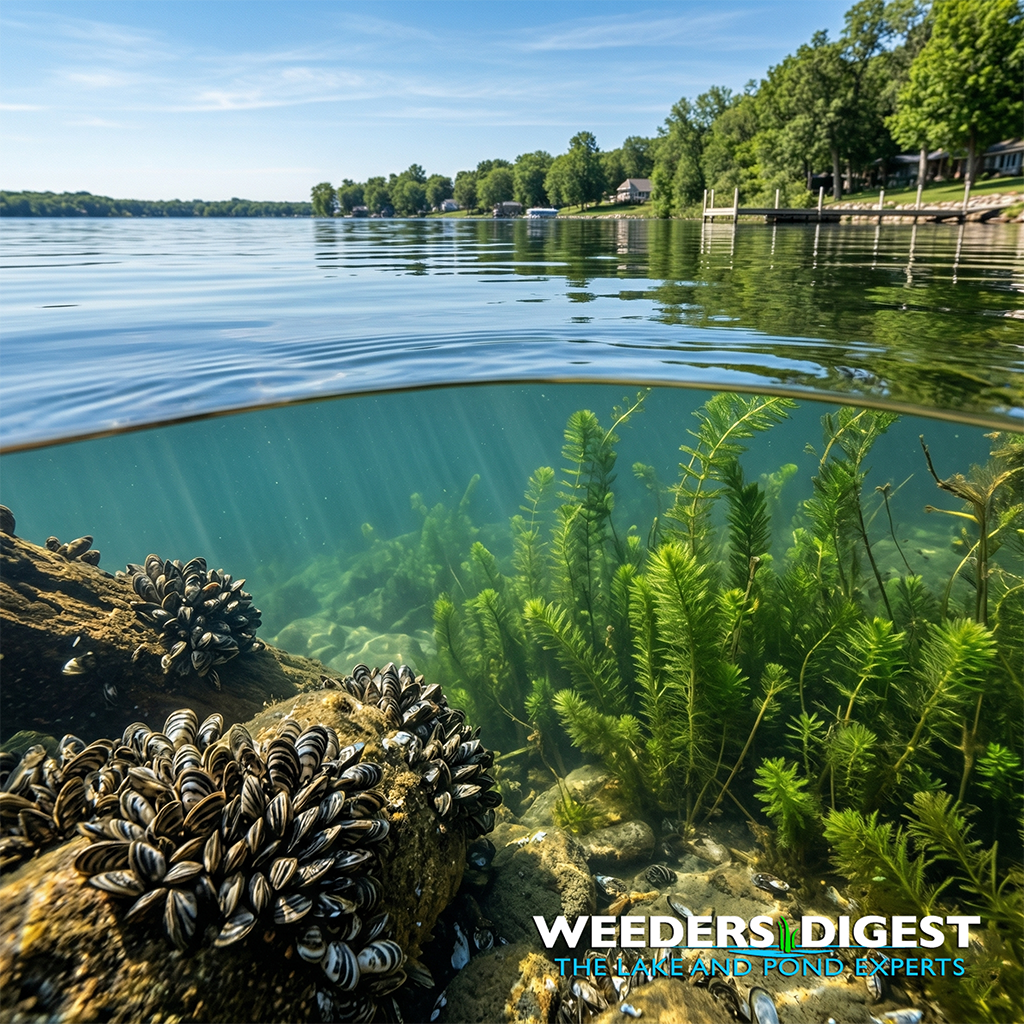
When I first noticed zebra mussels in our lake, I didn't realize they would completely redesign the underwater landscape. While most people focus on the sharp shells cutting their feet or clogging boat motors, the most dramatic shift actually happens to the plants. You might notice that your lake water becomes incredibly clear, almost like a swimming pool, but this clarity comes with a frustrating trade-algae and weeds suddenly start growing deeper and thicker than ever before.
This happens because zebra mussels are master filters. They eat the microscopic particles that usually make water look cloudy, allowing sunlight to reach the lake bottom in areas that were previously too dark for plants to survive. Instead of a balanced ecosystem, you end up with a "carpet" of vegetation that can take over your shoreline and dock area. It’s a classic example of how one small, invasive species can flip an entire environment upside down.
If you’ve been wondering why your lakefront looks like a jungle lately, the answer lies in the way these mussels manipulate the light. They aren't just living in the lake; they are actively farming it by changing how energy moves through the water. Understanding this connection is the first step in managing the new reality of your waterfront property.
The Science Behind It:
The introduction of Dreissena polymorpha, commonly known as the zebra mussel, initiates a profound ecological phenomenon known as "nearshore shunting." These bivalves are prolific filter feeders, capable of processing up to one liter of water per day per individual. By consuming vast quantities of phytoplankton and suspended particulate matter, they significantly increase water transparency and Secchi disk transparency depths. According to research published in Freshwater Biology, this increased light penetration extends the photic zone, allowing benthic primary producers to colonize much deeper areas of the lake bed than previously possible (Zhu et al., 2006).
This shift in light dynamics facilitates the explosive growth of submerged aquatic vegetation (SAV). As the water clears, the compensation depth—the depth at which oxygen production via photosynthesis equals oxygen consumption via respiration—drops significantly. This allows invasive macrophytes like Eurasian Watermilfoil (Myriophyllum spicatum) to thrive in deeper waters, outcompeting native species that are less adapted to the rapid change in nutrient availability. Furthermore, the waste produced by zebra mussels, in the form of feces and pseudofeces, concentrates phosphorus and nitrogen on the lake bottom, essentially fertilizing the sediment for these plants.
The relationship between zebra mussels and plant life is further complicated by the "benthification" of the food web. By removing nutrients from the open water (the pelagic zone) and depositing them into the bottom sediments (the benthic zone), zebra mussels starve out the open-water algae that typically cloud the water. This creates a feedback loop where the lack of pelagic algae ensures the water remains clear, which in turn ensures that the macrophyte population continues to expand unchecked. A study in the Journal of Great Lakes Research highlights that this nutrient redirection can lead to massive blooms of filamentous algae, such as Cladophora, which attach to the mussel shells themselves (Hecky et al., 2004).
Furthermore, the physical presence of mussel beds provides a hardened substrate that can alter the recruitment of certain plant species. While the mussels compete with some bottom-dwelling organisms, their primary impact on the flora is mediated through the alteration of the optical environment. The resulting "macrophyte-dominated state" is often stable and difficult to reverse, leading to long-term changes in fish habitat, dissolved oxygen cycles, and the overall biodiversity of the aquatic ecosystem. The structural complexity provided by the increased plant biomass can harbor different macroinvertebrate communities, but it often leads to the displacement of native fish species that require open water for spawning.
Sources / References:
- Zhu, B., Fitzgerald, D. G., Mayer, C. M., Rudstam, L. G., & Mills, E. L. (2006). Alteration of water clarity and submersed aquatic vegetation by zebra mussels. Freshwater Biology.
- Hecky, R. E., et al. (2004). The zebra mussel invasion of Lake Erie: A mechanism for the benthic detachment of the nearshore phosphorus cycle. Journal of Great Lakes Research.