

Are You Making These 5 Common Mistakes When Identifying Your Aquatic Weeds?
 |

Summary:
Taking care of your lakefront starts with knowing exactly what is growing in the water, but pinpointing the exact plant species is notoriously tricky. Many lake homeowners end up frustrated because they misidentify the green growth in their water, leading to ineffective management strategies. The most common error is simply confusing filamentous algae with actual rooted or vascular weeds, which represent two entirely different forms of aquatic biology.
Another frequent slip-up involves mistaking beneficial native plants for aggressive invasive species. For example, native milfoils look incredibly similar to the highly invasive Eurasian watermilfoil to the untrained eye, causing unnecessary panic. People also tend to overlook the importance of examining the plant's roots, seeds, and small reproductive structures, focusing only on the large leaves floating on the surface of the water.
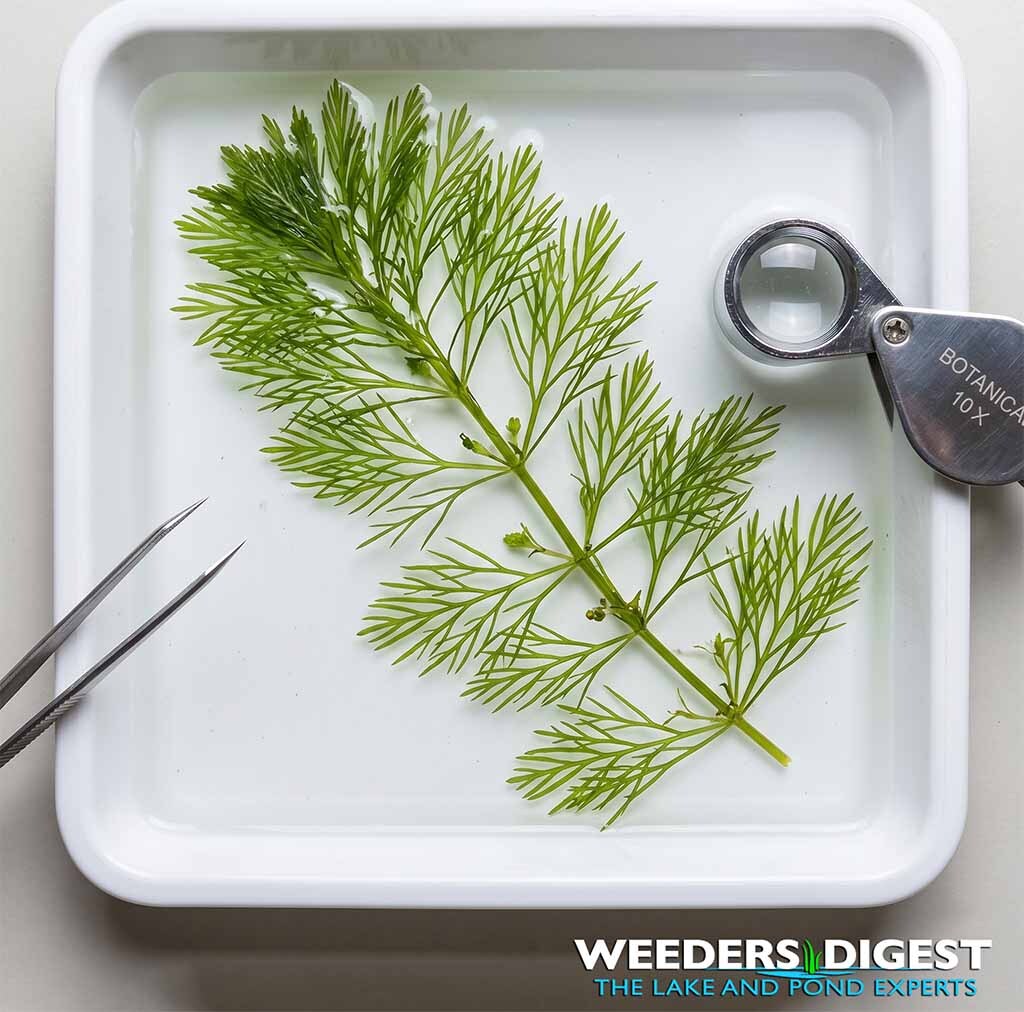
Furthermore, failing to account for how a plant changes shape depending on water depth and clarity leads to frequent misdiagnoses. An aquatic weed can look completely different when it is fully submerged compared to when it breaks the surface. Taking the time to properly wash and spread out a plant sample on a light-colored background can save you from these everyday identification headaches and ensure you are taking the right steps to support your local water ecosystem.
The Science Behind It:
The morphological classification of aquatic macrophytes is inherently complicated by high degrees of phenotypic plasticity. Aquatic environments exert dynamic selective pressures, such as fluctuating light attenuation, nutrient availability, and hydrodynamic stress, which induce significant variations in plant morphology. Consequently, relying strictly on vegetative characteristics like leaf shape or stem length often leads to taxonomic misidentification. Accurate classification requires a comprehensive morphological analysis encompassing reproductive structures, such as inflorescences, turions, and seed pods, which exhibit greater genetic stability across diverse environmental gradients.
The differentiation between structurally similar species, particularly within the genus Myriophyllum, exemplifies the need for rigorous taxonomic evaluation. Native northern watermilfoil and invasive Eurasian watermilfoil share a deeply lobed, pinnate leaf structure. However, botanical research highlighted by the Texas A&M AgriLife Extension Service emphasizes counting leaflet pairs per leaf as a primary diagnostic metric; Eurasian watermilfoil typically exhibits 12 to 21 pairs, whereas native species generally possess fewer than 10. Failing to utilize a hand lens to conduct these precise meristic counts is a fundamental diagnostic error that compromises subsequent ecological monitoring.
Another prevalent taxonomic error involves conflating macroscopic algal communities with vascular macrophytes. Filamentous algae lack differentiated tissues, true roots, stems, and vascular networks. Misinterpreting these macroalgal mats as submerged vascular plants ignores fundamental botanical phylogeny and physiological transport mechanisms. Microscopic examination or simple physical manipulation—noting the lack of vascular rigidity and the presence of mucilaginous cellular sheaths—readily differentiates algae from angiosperms like Naiads or Pondweeds.
Furthermore, researchers emphasize the diagnostic importance of spatial leaf arrangement along the stem, known as phyllotaxy. Identifying whether leaves are arranged alternately, oppositely, or in whorls is a critical taxonomic baseline. A frequent oversight in field sampling occurs when specimens are hastily pulled from the water column, causing the flaccid stems to collapse and obscuring the natural nodal spacing and leaf arrangement. According to taxonomic protocols outlined by the University of Florida Center for Aquatic and Invasive Plants, proper limnological procedures dictate floating the specimen in a shallow white pan filled with water to allow the structural geometry to relax into its natural state for accurate identification.
Finally, the hybridization of aquatic species introduces complex genetic variables that render purely visual identification inadequate in certain contexts. Invasive species frequently hybridize with native counterparts, creating introgressed populations that display intermediate morphological traits. In these scenarios, molecular techniques and genetic sequencing are often required by aquatic biologists to definitively confirm the species lineage and ensure ecological observations do not inadvertently document hybrid vigor as indigenous flora.
Sources / References:
- Texas A&M AgriLife Extension - AquaPlant: https://aquaplant.tamu.edu/plant-identification/
- University of Florida - Center for Aquatic and Invasive Plants: https://plants.ifas.ufl.edu/