

Can You Scoop or Dredge Muck Off Your Lake Bottom in the Fall Without Ruining the Ecosystem?
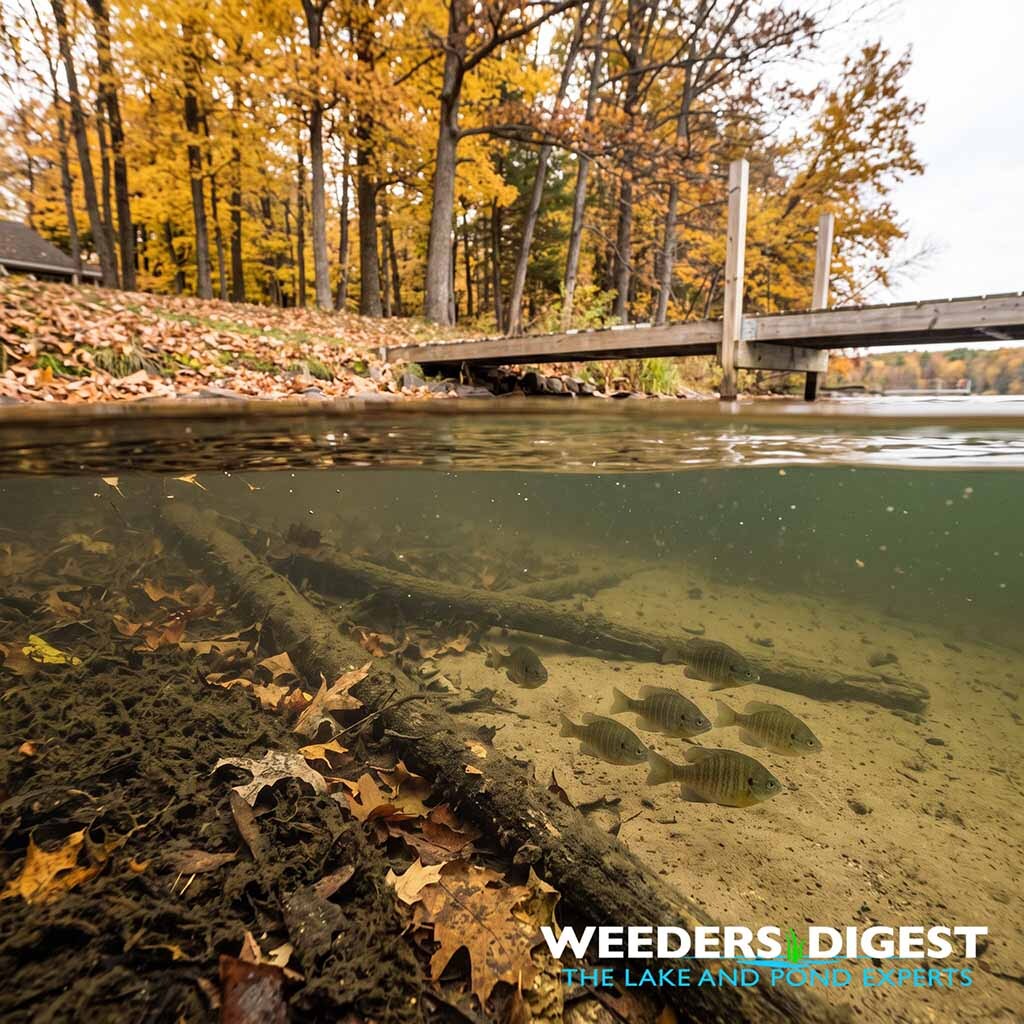 |

Summary:
Scooping or dredging lake muck in the autumn will not destroy your lake's broader ecosystem if performed correctly, but physical excavation creates severe localized disturbances that require careful timing, permitting, and technique. Fall is ecologically superior to spring or summer for shoreline sediment removal because native sportfish have finished spawning, aquatic vegetation has naturally senesced, and lower water temperatures prevent catastrophic microbial oxygen crashes. However, mechanical dredging fundamentally strips away benthic macroinvertebrates, re-suspends bioavailable phosphorus, and risks acute winter fish kills if done haphazardly right before freeze-up. We always emphasize that while dredging acts as a fast reset button, it is a blunt trauma tool rather than a comprehensive ecological cure.
In our field observations along shorelines across the Midwest and Northeast, we routinely see property owners scoop out shallow littoral muck with mini-excavators or heavy drag-rakes in October, only to be shocked by dense filament algae carpets or anoxic fish stress when the ice sets in. When heavy equipment breaks through the consolidated sediment crust, it exposes dense layers of volatile hydrogen sulfide and releases a nutrient bloom into an already cooling water column. If you choose to manually extract or mechanically scoop muck in the late season, success hinges on minimizing turbidity, utilizing turbidity curtains, and avoiding deep disruption immediately prior to ice cover.
The Science Behind It:
The sediment-water interface functions as both a chemical barrier and a biological engine in freshwater systems. Lake muck consists of highly degraded autochthonous detritus (decomposed plants and algae) and allochthonous matter (leaves, agricultural runoff, and terrestrial silt) characterized by high Biological Oxygen Demand (BOD) and Chemical Oxygen Demand (COD). In undisturbed littoral zones, the topmost millimeters of sediment maintain an oxidized microzone where ferric iron (Fe3+) complexes bind soluble reactive phosphorus (SRP), locking it into the substrate. Mechanical dredging or aggressive physical scooping ruptures this thin barrier, shifting the redox potential and driving dramatic benthic nutrient fluxes.
Peer-reviewed hydrodynamic research published in Water demonstrates the stark magnitude of this disturbance: dynamic sediment agitation and physical disturbance elevate internal nutrient release rates drastically, yielding nutrient loads that are 4 to 17 times higher than under static conditions. When sediment is scooped or gouged, total phosphorus and ammonium trapped within interstitial pore water enter the water column instantly. In a laboratory and field analysis of dredged shallow basins, researchers found dynamic total phosphorus release rates reaching 5.83 mg/m²·d and nitrogen release rates reaching 164.75 mg/m² under active disturbance regimes. If this nutrient loading occurs during early autumn when sunlight is still adequate, it often triggers secondary cyanobacteria blooms or cold-water filamentous algae proliferation.
From an ecological perspective, timing physical intervention during the fall offers substantial biological advantages over spring or summer operations. The littoral zone serves as essential spawning habitat for centrarchids like largemouth bass (Micropterus salmoides) and bluegill (Lepomis macrochirus) between April and July. Dredging during those warm-water periods smothers egg clutches with fine particulates and eliminates nesting gravels. Fall timing protects these recruitment cycles. Furthermore, macrophyte die-off has already started, meaning physical scoops will not spread viable vegetative fragments of aggressive invasives like Eurasian Watermilfoil (Myriophyllum spicatum) as readily as during active mid-summer fragmentation.
Nevertheless, the biological trade-off centers on benthic macroinvertebrates and dissolved oxygen budgets. Benthic communities—consisting of Chironomidae larvae, Ephemeroptera nymphs, amphipods, and oligochaetes—form the baseline forage base for littoral fish communities. Studies evaluating sediment extraction reveal that mechanical dredging can remove upwards of 80% to 90% of localized benthic organism density, with recovery cycles often taking between 12 and 36 months depending on recolonization rates from adjacent, undisturbed substrates.
Critically, scooping sediment in late autumn too close to freeze-up represents a lethal danger known as induced winterkill. The organic compounds stirred up by deep scooping rapidly consume dissolved oxygen as aerobic bacteria feast on newly exposed organic substrates. In cold water, microbial decomposition rates decline, but chemical oxygen demand from exposed ferrous minerals and sulfur compounds remains instantaneous. If an early freeze caps the lake with ice shortly after excavation, atmospheric re-aeration drops to zero. The combined biochemical oxygen demand of the disturbed muck and the decay of trapped vegetative debris under snow-covered ice can plunge the water column below the critical 2.0to3.0mg/L dissolved oxygen threshold, precipitating widespread winter mortality for overwintering fish populations.
Our Recommendation for Managing Lake Muck in the Fall:
If your goal is to reclaim your swimming area, dock, or shoreline without decimating the local aquatic food chain or triggering permitting penalties from state resource agencies, physical excavation should be your last resort. Scooping and mechanical dredging alter bottom contours, leave sterile substrate trenches, and often violate local shoreline excavation regulations.
A scientifically superior and ecologically balanced approach leverages directional water circulation and continuous aerobic boundary management. By creating continuous laminar flow across the sediment-water interface, you physically prevent the settlement of autumn leaf fall and fine organic silts while driving dissolved oxygen directly into the substrate. This prevents the sediment layer from going anoxic and accelerates natural microbial digestion.
For shoreline property owners dealing with ongoing muck, vegetative debris, and soft sediment accumulation around docks and swimming zones, installing an automated underwater flow system—such as our AquaThruster Muck & Weed Blower collection—provides continuous, high-volume sediment displacement. Unlike mechanical dredging, which strips the benthic seed bank and leaves an unstable crater, directional water propulsion sweeps decaying leaf litter and light silt out toward deep water while keeping native, heavier sand and gravel in place. Pairing directional blowers with natural biological muck digestion pellets allows you to reduce organic sediment depths season after season without ever shocking your lake's delicate biological balance.
Sources / References:
- Tian, Y., Zhang, L., & Wang, S. (2021). Effects of Sediment Dredging on Nutrient Release and Eutrophication in the Gate-Controlled Estuary of Northern Taihu Lake. Water, 13(2), 154. https://doi.org/10.3390/w13020154
- Li, H., Liu, Q., & Zhang, J. (2024). Effects of Dredging on Nitrogen and Phosphorus Storage Patterns and Retention Mechanisms in Column Core Sediments in the Caohai Region of Dianchi Lake. Water, 16(3), 449. https://doi.org/10.3390/w16030449
- Gibbs, M., & Hickey, C. (2020). Lake sediment phosphorus release management—Decision support and risk assessment framework. New Zealand Journal of Marine and Freshwater Research, 46(3), 377–394. https://doi.org/10.1080/00288330909510043