

How Deep Does My Pond Need to Be to Prevent a Total Freeze-Out This Winter?
 |

Summary:
To completely prevent a total winter freeze-out and protect aquatic life from suffocation, a natural pond should ideally feature a minimum depth of 8 feet across at least 25% of its total surface area. For smaller ornamental garden ponds containing hardy fish like koi or goldfish, a minimum depth of 18 to 24 inches is required so that the bottom zone remains liquid beneath the surface ice layer. When our lake and pond experts evaluate sites heading into sub-zero weather, we frequently find that winter fish loss—known technically as winterkill—is rarely caused by freezing temperatures alone. Instead, it is driven by an invisible suffocation cycle where thick ice and snow seal off atmospheric oxygen while decomposing organic sediment consumes the remaining dissolved gases.
The Science Behind It:
The mechanics of winter aquatic survival rely heavily on thermal stratification and the density anomalies of water. Water reaches its maximum density at approximately 4 degrees Celsius (39.2 degrees Fahrenheit). As winter temperatures drop, this densest layer sinks to the bottom of the pond, creating a thermal refuge where fish and aquatic organisms enter a metabolic state of torpor. According to guidance from university extension programs, such as Purdue University and the Illinois Extension, managing a deep basin is critical: ponds in northern climates should be at least 8 feet deep over a quarter of their area to maintain a stable, unfrozen lower layer that prevents fish from freezing solid or exhausting dissolved oxygen.
The primary biological threat during a harsh winter is oxygen depletion, or winterkill. When ice forms and is subsequently blanketed by snow, sunlight penetration drops to near-zero, halting all photosynthetic oxygen production by submersed aquatic plants and phytoplankton. Simultaneously, aerobic bacteria continue to decompose organic matter—such as dead vegetation, leaves, and accumulated bottom muck—respiration that rapidly strips oxygen from the water column. Research highlighted by Penn State Extension indicates that a 1-acre pond with a shallow depth of 3 feet is drastically more vulnerable to a total winter oxygen crash than a deeper, higher-volume water body, because shallow systems lack the water volume required to buffer against massive biological oxygen demand. Furthermore, decomposing organic sediment releases toxic gases like hydrogen sulfide and carbon dioxide under the ice sheet, which can suffecate fish populations once trapped. To disrupt this cycle, limnologists emphasize both maintaining adequate depth and ensuring continuous gas exchange via localized aeration.
Our Recommendation for Managing Pond Freezing and Organic Sediment:
While digging a deeper basin is the ultimate structural fix for natural ponds, existing water bodies dealing with heavy organic accumulation face high winterkill risks regardless of depth. To break the cycle of oxygen depletion, continuous water movement and aggressive sediment reduction are scientifically required to eliminate the decomposing muck that robs your pond of vital winter oxygen.
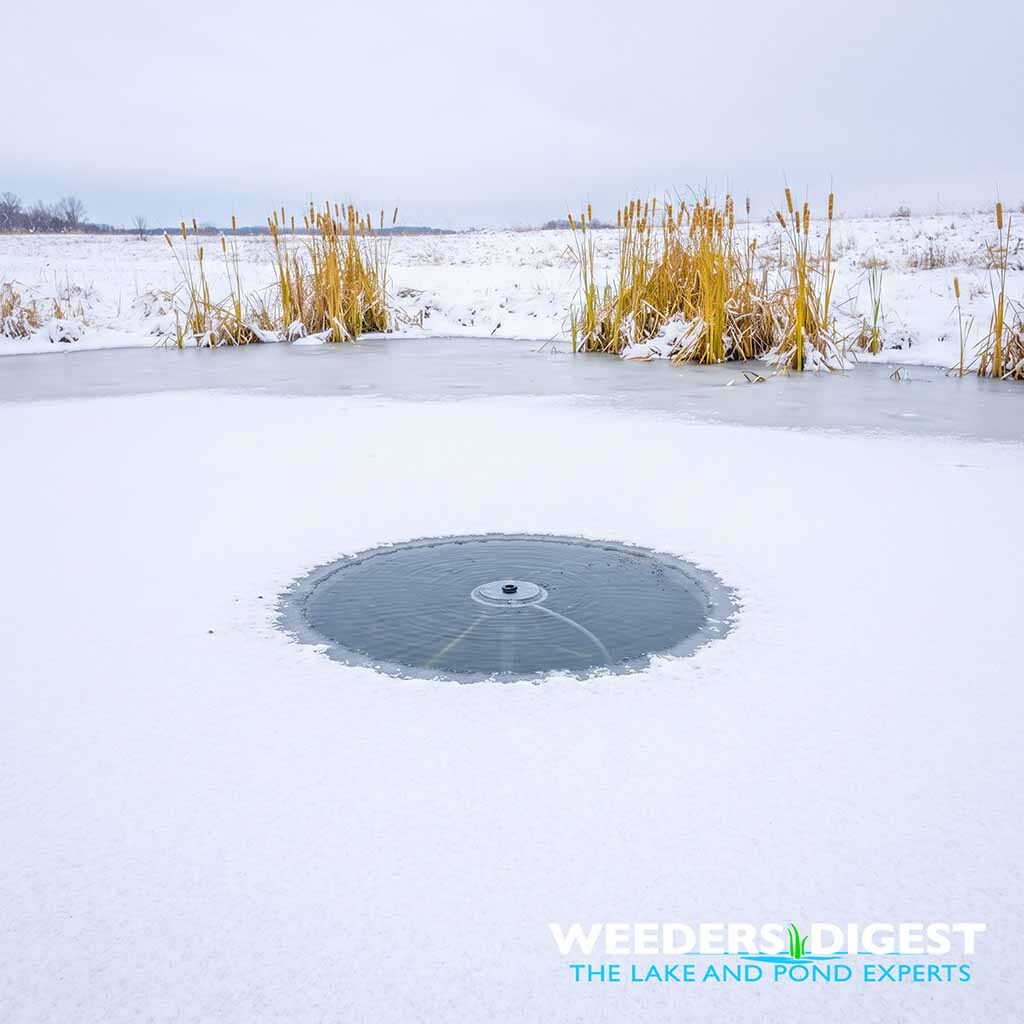
Preventing stagnant winter stratification and toxic gas accumulation requires keeping a localized area open and oxygenated. Deploying sub-surface aeration or targeted water displacement tools helps maintain open surface water for gas diffusion. For comprehensive shoreline and shallow zone maintenance, exploring equipment options like our AquaThruster Muck & Weed Blower collection helps prevent the buildup of decaying matter throughout the active seasons, ensuring your ecosystem enters the winter months clean, balanced, and ready to protect aquatic life.
Sources / References:
- Illinois Extension: Under the Ice: What Winter Means for Your Pond - https://extension.illinois.edu/news-releases/under-ice-what-winter-means-your-pond
- Purdue Extension: Fish Kills in Indiana - Their Causes and Prevention (FNR-69) - https://www.extension.purdue.edu/extmedia/FNR/FNR-69.pdf
- Penn State Extension: Winterkill in Ponds - https://psu.edu/extension/winterkill-in-ponds