

How Low Autumn Water Levels Can Destabilize Your Pond’s Chemical Balance
 |

Summary:
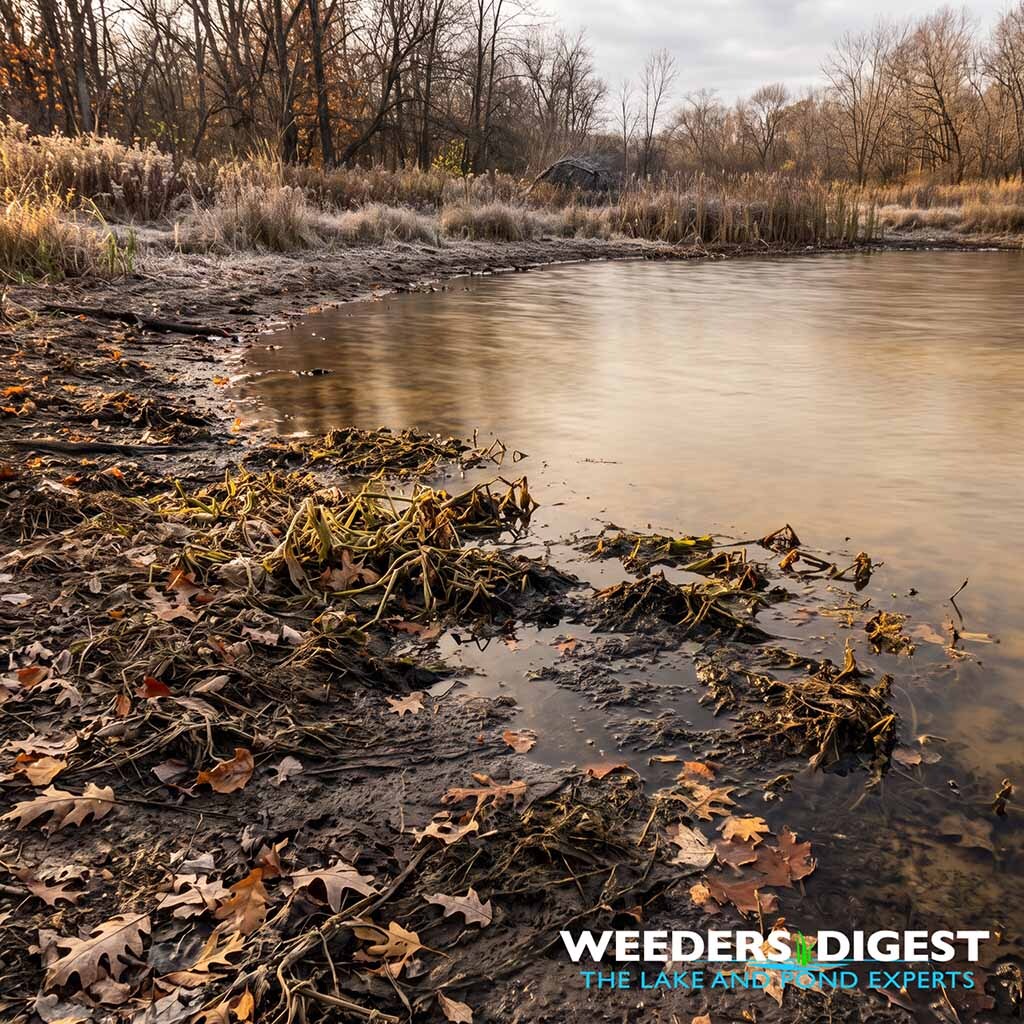
Low water levels in late autumn disrupt your pond's chemical balance by drastically reducing the overall water volume available to dilute decaying organic matter, triggering rapid dissolved oxygen depletion and concentrated nutrient spikes. When water volume drops before the cold season, the relative concentration of nitrogen, phosphorus, and organic detritus increases, forcing beneficial aerobic bacteria to consume oxygen supplies at an accelerated rate. We frequently observe this phenomenon during late-season drought conditions across northern and midwestern waters, where shoreline retreat exposes shallow muck shelves and concentrates summer biomass into a dangerously confined basin. When our lake and pond experts conduct late-fall site assessments on low-water ponds, they regularly detect the sulfurous "rotten egg" odor of hydrogen sulfide gas rising along shorelines—a telltale sign that bottom sediment has entered a state of complete oxygen exhaustion just as seasonal freezing approaches. As autumn turnover circulates these concentrated bottom compounds throughout the entire shallow basin, the chemical equilibrium collapses, leaving the aquatic ecosystem vulnerable to sudden toxic spikes and winterkill.
The Science Behind It:
The fundamental driver behind chemistry shifts during low-water periods is the alteration of the pond’s volumetric dilution capacity relative to its benthic biological oxygen demand (BOD). In limnology, water bodies rely on sufficient depth and volume to buffer the influx of nutrients released by autumn senescing macrophyte biomass and falling terrestrial leaf litter. Research from university extension programs shows that aquatic life becomes severely stressed when dissolved oxygen falls below 5.0 parts per million (ppm), and high-volume retention—such as maintaining at least 25% of a pond’s basin at an ideal depth of 8 feet or deeper—is critical to mitigate oxygen depletion. When late-autumn evaporation, drought, or municipal drawdowns drop water levels by several feet, this protective volumetric buffer disappears.
The biochemical consequence is an immediate spike in nutrient density, particularly bioavailable soluble reactive phosphorus and total nitrogen. Under normal volumetric conditions, sediment acts as a nutrient sink; however, when shallow waters cool and winds initiate complete fall turnover (holomixis), the entire column mixes. Because less total liquid volume exists to dilute benthic releases, phosphate concentrations reach saturated thresholds that trigger late-season cyanobacteria and filament blooms. Peer-reviewed studies in shallow lake ecology demonstrate that a reduction in water depth directly elevates internal nutrient loading, as wind-induced shear stress easily disturbs the sediment-water interface, re-suspending loose organic muck into the photic zone.
Concurrently, microbial decomposition of concentrated detritus accelerates dissolved oxygen depletion. As aerobic heterotrophic bacteria break down complex carbon chains from dying plant tissue, they consume oxygen at rates exceeding atmospheric diffusion and reduced autumn photosynthetic production. In lower-volume ponds, this biological oxygen demand rapidly exhausts available dissolved oxygen, driving the oxidation-reduction (redox) potential of the benthic layer into extreme negative millivolt ranges.
Once redox conditions shift into anoxia, microbial pathways transition from aerobic respiration to anaerobic fermentation and sulfate reduction. Facultative and obligate anaerobic bacteria utilize alternative electron acceptors, converting organic nitrates into ammonia (NH3) and sulfates into toxic hydrogen sulfide (H2S). In a low-volume basin, these metabolites accumulate rapidly instead of diffusing safely, altering total alkalinity and causing severe shifts in water pH. When winter freezes over a pond in this compromised state, sunlight penetration ceases, trapped toxic gases cannot escape via atmospheric exchange, and total chemical collapse—resulting in devastating fish winterkill—is almost inevitable.
Our Recommendation for Managing Low Water Chemistry Spikes:
When low water levels reduce volume and concentrate benthic biomass, relying on passive natural recovery will rarely protect your fishery or water clarity. Scientifically, breaking this cycle requires active physical disturbance and aeration to prevent muck consolidation and suppress anaerobic zones before winter seals the surface. High-thrust, directional water movement is essential to continuously sweep decaying matter away from critical nearshore areas and inject circulation into the sediment-water boundary. Utilizing continuous flow technology like the AquaThruster Muck & Weed Blower collection allows waterfront property owners to clear nutrient-rich muck deposits, suspend stagnation, and maintain an open channel that fosters natural gas exchange, effectively protecting the pond’s chemical integrity through late autumn and beyond.
Sources / References:
- Illinois Extension: Under the Ice: What Winter Means for Your Pond (https://extension.illinois.edu/news-releases/under-ice-what-winter-means-your-pond)
- Penn State Extension: Winterkill in Ponds (https://extension.psu.edu/winterkill-in-ponds)
- Texas A&M AgriLife Extension: Oxygen Depletion in Ponds (https://soiltesting.tamu.edu/soiltesting/wp-content/uploads/sites/13/2023/05/c1048.pdf)