

How My Lakefront Property Value Could Plummet (or Soar) Based on Water Clarity
 |

Summary:
The crystal-clear water you see when you look out your back window isn't just a beautiful view—it is a direct contributor to your home's equity. When we talk about lakefront real estate, the water is the primary "amenity" you are purchasing. Just as a modern kitchen or a finished basement adds value, the transparency and health of the lake serve as a fundamental variable in determining what a buyer is willing to pay. If the water becomes murky or filled with algae, that value can shift significantly in a very short amount of time.
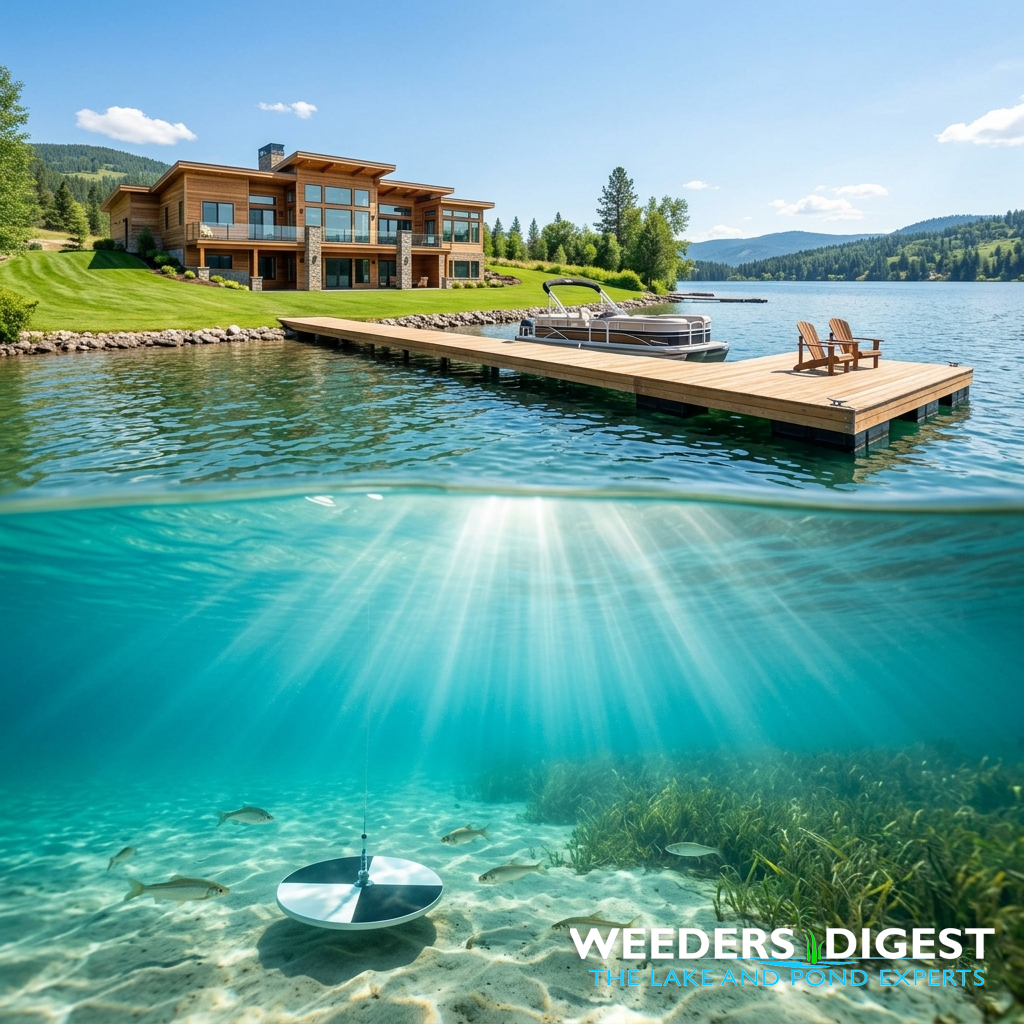
In simple terms, water clarity is often measured by how deep you can see into the lake using a tool called a Secchi disk. For every foot of additional clarity gained, property values typically see a measurable percentage increase. Conversely, when clarity drops—often due to nutrient runoff or invasive species—the "curb appeal" of the water vanishes. Buyers are less likely to invest in a home where they cannot see their feet while swimming or where the water looks uninviting for recreation.
Because lakefront homes are often the most expensive properties in a county, they also contribute the most to local property taxes. This means that water clarity isn't just a "you" problem; it’s a community-wide economic factor. When the water stays clear, everyone from the homeowner to the local school district benefits from the sustained or rising property values. When clarity fails, the financial impact is felt far beyond the shoreline.
Ultimately, protecting the water is synonymous with protecting your investment. Understanding the direct link between the biology of the lake and the dollars in your bank account is the first step toward proactive lake management. By maintaining high water quality, you aren't just being a good steward of the environment; you are ensuring that your most valuable asset remains desirable for decades to come.
The Science Behind It:
The relationship between water clarity and real estate pricing is quantified using a "hedonic price model." This econometric approach isolates the specific value of environmental attributes by comparing home sales across different lakes while controlling for structural variables like square footage, age, and lot size. Research consistently indicates that water clarity, typically represented by Secchi disk transparency (SDT) measurements, is the most influential non-structural factor in lakefront property valuation. Homeowners and prospective buyers use visual transparency as a proxy for overall ecological health, even if they are unaware of the underlying nutrient concentrations (MDPI, 2018).
In a comprehensive study of over 100 lakes, researchers found a statistically significant elasticity between clarity and price. Specifically, it was determined that a one-meter increase in water clarity can lead to a property value increase ranging from 1% to 10% depending on the region and the baseline clarity of the lake (ResearchGate, 2020). This phenomenon is driven by the "capitalization" of environmental quality into land value. When water is clear, it suggests low levels of chlorophyll-a and suspended solids, which correlates with better conditions for swimming, boating, and aquatic biodiversity.
Conversely, the presence of invasive species or eutrophic conditions—characterized by high phosphorus and nitrogen levels—acts as a "negative amenity." For instance, a study in Northern Idaho demonstrated that the presence of Eurasian Watermilfoil, which significantly reduces perceived and actual water clarity, was associated with a 13% decline in mean property values, equating to tens of thousands of dollars in lost equity per household (MDPI, 2016). This occurs because murky water increases the "perceived risk" for the buyer, who may anticipate future costs related to weed control or a loss of recreational utility.
Furthermore, the impact of clarity is non-linear; the economic gain is often most pronounced when a lake moves from "marginal" to "clear" status. As nutrient loading increases and triggers algal blooms, the Secchi depth decreases, and the property value follows a downward trajectory. This is due to the fact that light attenuation—the rate at which light dissipates in the water column—directly affects the aesthetic and functional quality of the littoral zone. From an ecological-economic perspective, the water's transparency is not merely a visual preference but a metric of the ecosystem services the lake provides to the property owner.