

How My Local Boat Launch Protects Your Favorite Fishing Spot
 |

Summary:
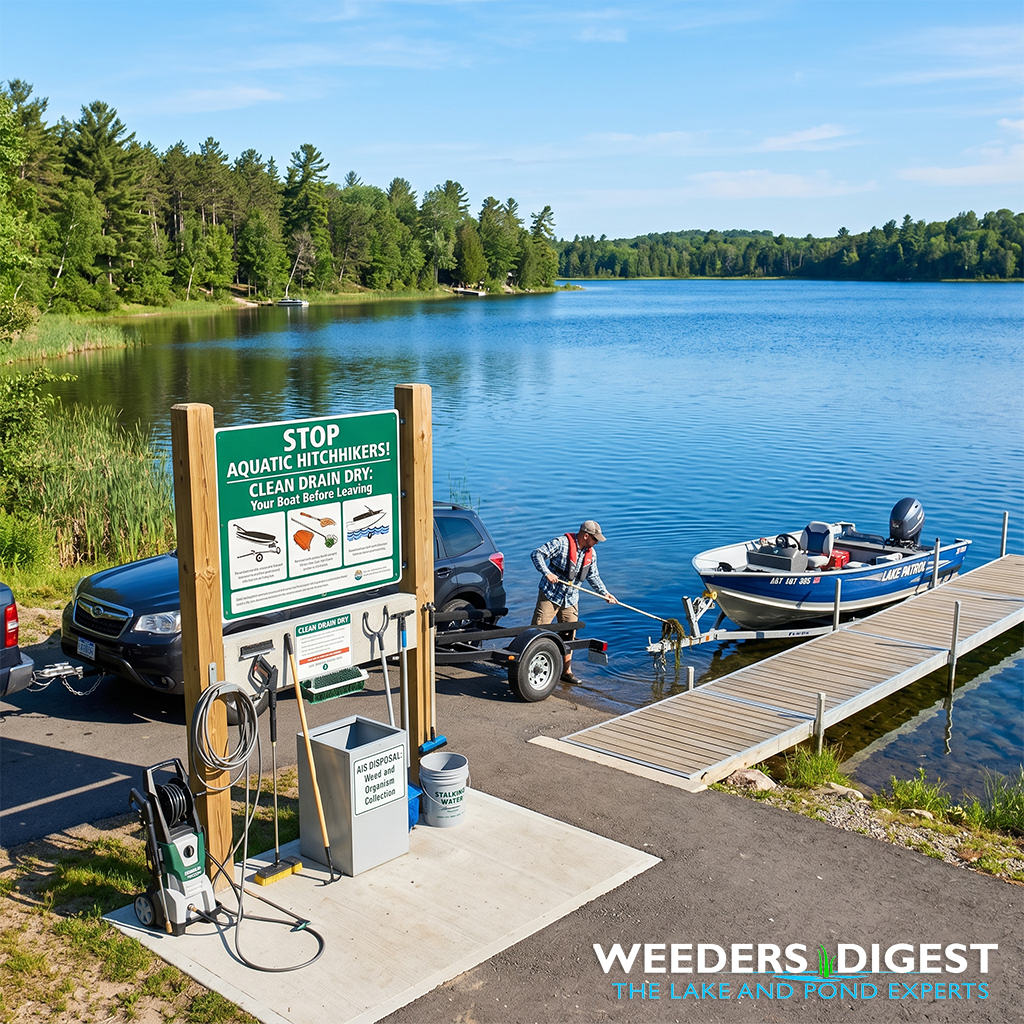
When you pull your trailer up to a public access point, you might notice large signs, cleaning stations, or even staff members asking to inspect your vessel. These measures are the frontline defense in the war against aquatic invasive species. Because many harmful plants and animals can survive for days out of water in damp compartments or tangled on trailers, public launches act as critical checkpoints to ensure that "hitchhikers" from one lake don't get a free ride into another.
The most effective way these launches protect our waters is by encouraging a culture of "Clean, Drain, Dry." By providing the tools—such as long-handled reach tools, high-pressure water, or even just designated disposal bins—public boat launches make it easier for every boater to do their part. Without these intervention points, invasive species like zebra mussels or Eurasian watermilfoil would spread at an exponential rate, eventually choking out native wildlife and ruining the recreational value of our lakes.
Public launches also serve as a vital educational hub. For many casual boaters, the launch is the only time they interact with lake management protocols. By placing high-visibility information at the exact moment of entry and exit, these sites transform a simple boat ramp into a biological shield. This collective effort ensures that the water remains clear and the fish remain healthy for your next trip.
The Science Behind It:
The efficacy of public boat launches in mitigating the spread of aquatic invasive species (AIS) is grounded in the principles of vector management and propagule pressure. Research conducted by the University of Wisconsin-Extension indicates that recreational boating is the primary overland vector for the secondary spread of non-indigenous species. Public access points serve as the bottleneck where these vectors can be intercepted. By implementing mandatory or voluntary inspection stations, managers significantly reduce the "propagule pressure"—the frequency and quantity of individual organisms introduced into a new ecosystem—thereby lowering the statistical probability of a successful invasion.
A study published in Biological Invasions highlights that visual inspections and manual removal of organic debris can reduce the presence of plant fragments and small invertebrates by upwards of 88%. At many modernized public launches, "CD3" (Clean, Drain, Dry, Dispose) stations utilize specialized equipment such as compressed air and vacuum systems to remove residual water from bilge pumps, livewells, and bait buckets. This is scientifically critical because microscopic larvae, such as zebra mussel veligers, can persist in small volumes of standing water for several days, bypassing simple visual inspections.
Furthermore, the implementation of "Low-Deterrence" behavioral nudges at launch sites leverages psychological triggers to increase compliance among lake users. According to data from Minnesota Sea Grant, boaters are significantly more likely to engage in decontamination behaviors when physical infrastructure, such as compost bins for weeds and well-lit inspection bays, is readily available. These physical structures prevent the "bypass effect" where boaters might otherwise ignore protocols due to a perceived lack of convenience or equipment.
The biological integrity of an oligotrophic or mesotrophic lake often hinges on the prevention of nutrient loading associated with invasive decay. When invasive macrophytes like curly-leaf pondweed are introduced at a launch, they can quickly dominate the littoral zone, altering the phosphorus cycle and leading to internal loading issues. By centralizing decontamination efforts at the public entry point, aquatic biologists can monitor "sentinel" locations, allowing for early detection and rapid response (EDRR) protocols if a new pioneer infestation is identified near the ramp.