

How Your Lake Can Bounce Back: My Deep-Dive into Successful Ecosystem Restoration After Aquatic Weed Invasions
 |

Summary:
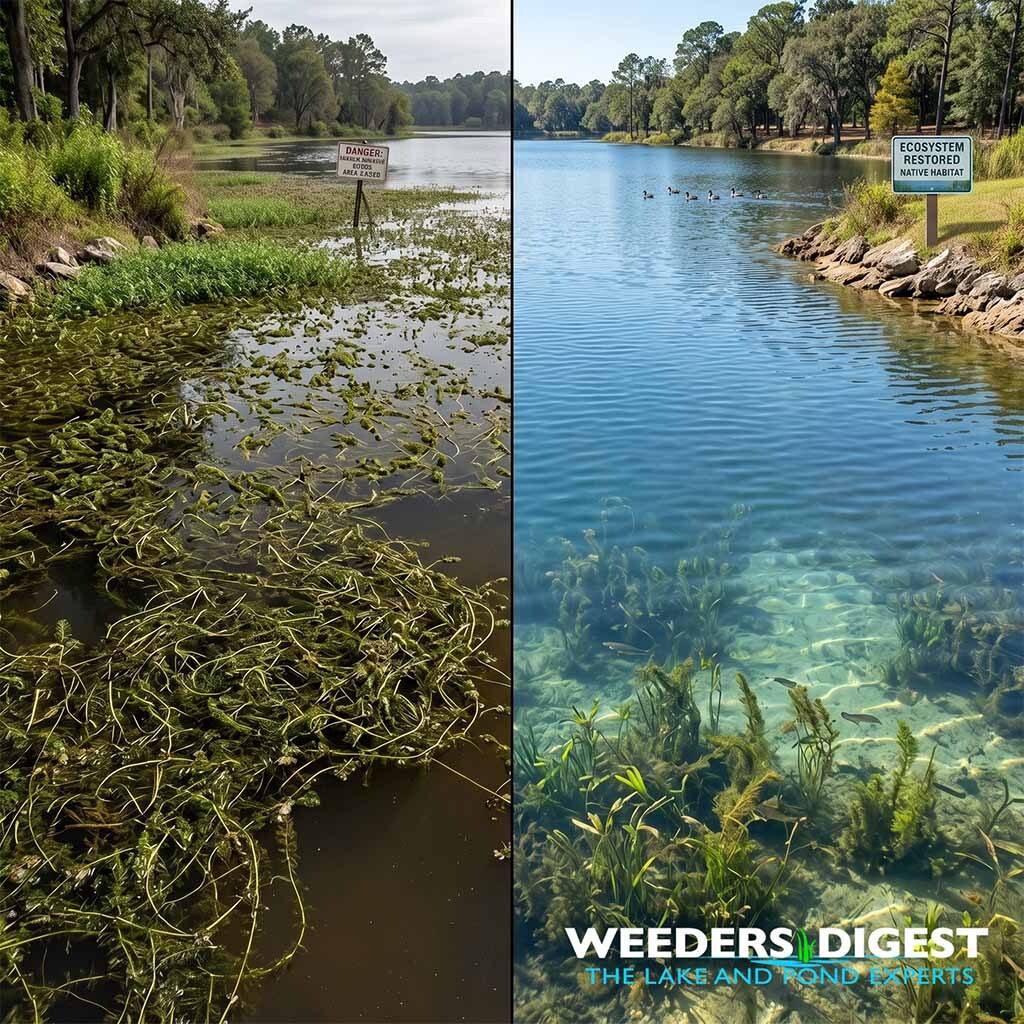
When invasive aquatic weeds take over your favorite lake or pond, it can feel like a death sentence for the waterbody. Mats of thick, tangled vegetation choke out native plants, ruin fishing spots, and make swimming practically impossible. But I am here to tell you that total recovery is absolutely possible. Real-world case studies show that with the right combination of patience, targeted treatments, and ecological management, completely choked lakes can be brought back to their natural, pristine state.
The key to these successful bounce-backs is understanding that you cannot simply hack away at the weeds and hope for the best. True restoration requires a carefully planned attack that removes the invasive species while giving the native ecosystem a chance to heal. In many of the most successful lake recoveries, experts used a blend of natural plant-eating fish, specialized aquatic treatments, and carefully timed water drawdowns to reclaim the water. Once the invaders are out of the picture, the native seeds resting in the lakebed finally get the sunlight and space they need to sprout again.
Ultimately, restoring a pond or lake is about hitting the reset button on the entire environment. It takes time for the native fish, insects, and beneficial plants to regain their footing, but the results are nothing short of spectacular. By looking at successful projects from around the world, we can learn exactly what it takes to turn a weed-choked swamp back into your community's most valuable natural asset.
The Science Behind It:
The restoration of degraded lentic ecosystems following severe invasions by aquatic macrophytes relies heavily on targeted biomanipulation and integrated pest management strategies. When exotic species like Egeria densa, Hydrilla verticillata, or Eurasian watermilfoil (Myriophyllum spicatum) dominate an aquatic environment, they drastically alter the water chemistry, deplete dissolved oxygen levels, and competitively exclude native flora. Successful eradication protocols typically begin with a primary control mechanism designed to severely reduce the invasive biomass. For instance, the successful restoration of Lake Parkinson in New Zealand was initiated by stocking the herbivorous grass carp (Ctenopharyngodon idella), which successfully eradicated the dense Egeria densa canopies that had previously collapsed the lake's trout fishery (Rowe, n.d.). By removing the primary biological stressor, the aquatic environment was primed for the next successional phase of recovery.
Once the invasive macrophyte biomass is actively reduced, the ecosystem undergoes a critical transition period where water clarity and nutrient cycling dynamics shift. Mechanical and chemical interventions are often utilized alongside biological controls to manage sudden nutrient spikes resulting from decaying plant matter. Research demonstrates that the use of highly selective systemic herbicides can precisely target the root structures of invasive weeds without inducing non-target site resistance (Ortiz, n.d.). This targeted chemical application limits the collateral damage to the benthic zone, ensuring that the sediment chemistry remains hospitable for the eventual recruitment of native plant species. Managing this chemical and biological balance is crucial to prevent secondary algal blooms, which can occur when newly freed nutrients remain suspended in the water column.
The resurgence of native aquatic vegetation is the ultimate indicator of a successful ecosystem restoration. In the Lake Parkinson case study, once the invasive weeds were eliminated and the grass carp were subsequently removed from the system, native macrophytes successfully regenerated directly from senescent seeds that had remained dormant in the lake-bed sediment (Rowe, n.d.). This naturally occurring seed bank is a vital asset in lake restoration, as it allows the original autotrophic foundation of the lake to rebuild without the need for artificial planting. Furthermore, a diverse native plant community acts as a biological buffer, occupying the ecological niches that would otherwise be vulnerable to secondary invasions.
Long-term ecosystem stability requires the concurrent restoration of higher trophic levels, particularly the local fish assemblages. Because invasive weed canopies structurally alter habitats, they often favor the proliferation of undesirable or stunted fish populations by providing excessive refugia that disrupt natural predator-prey dynamics. When managing these systems, ecologists will often restructure the fish fauna post-plant eradication, as scaling the control technique to the level of infestation and carefully monitoring the resulting community is imperative (Madsen, 2000). By carefully reintroducing native forage and predatory fish after the native macrophyte beds have re-established, the trophic cascade is stabilized. This comprehensive approach ensures that the lake or pond does not merely become a weed-free basin, but rather a functional, self-sustaining ecosystem with resilient biodiversity.
Sources / References:
- Madsen, J. D. (2000). Advantages and Disadvantages of Aquatic Plant Management Techniques. Defense Technical Information Center. https://doi.org/10.21236/ada392169 (Cited by: 113)
- Ortiz, M. F. (n.d.). 9 DISSERTATION XENOBIOTICS TRANSLOCATE IN AQUATIC PLANTS: A CASE STUDY USING THREE AQUATIC HERBICIDES Submitted by Mirella F. O - Mountain Scholar. https://api.mountainscholar.org/server/api/core/bitstreams/f34ee9b8-ddeb-49e6-bdc8-1cbf87a203c9/content
- Rowe, D. K. (n.d.). Biomanipulation of plants and fish to restore lake parkinson: A case study and it's implications - Department of Conservation. https://www.doc.govt.nz/documents/science-and-technical/aqua5.pdf (Cited by: 41)