

How Your Lake is Being Invaded: The Science Behind Eurasian Watermilfoil Fragmentation
 |

Summary:
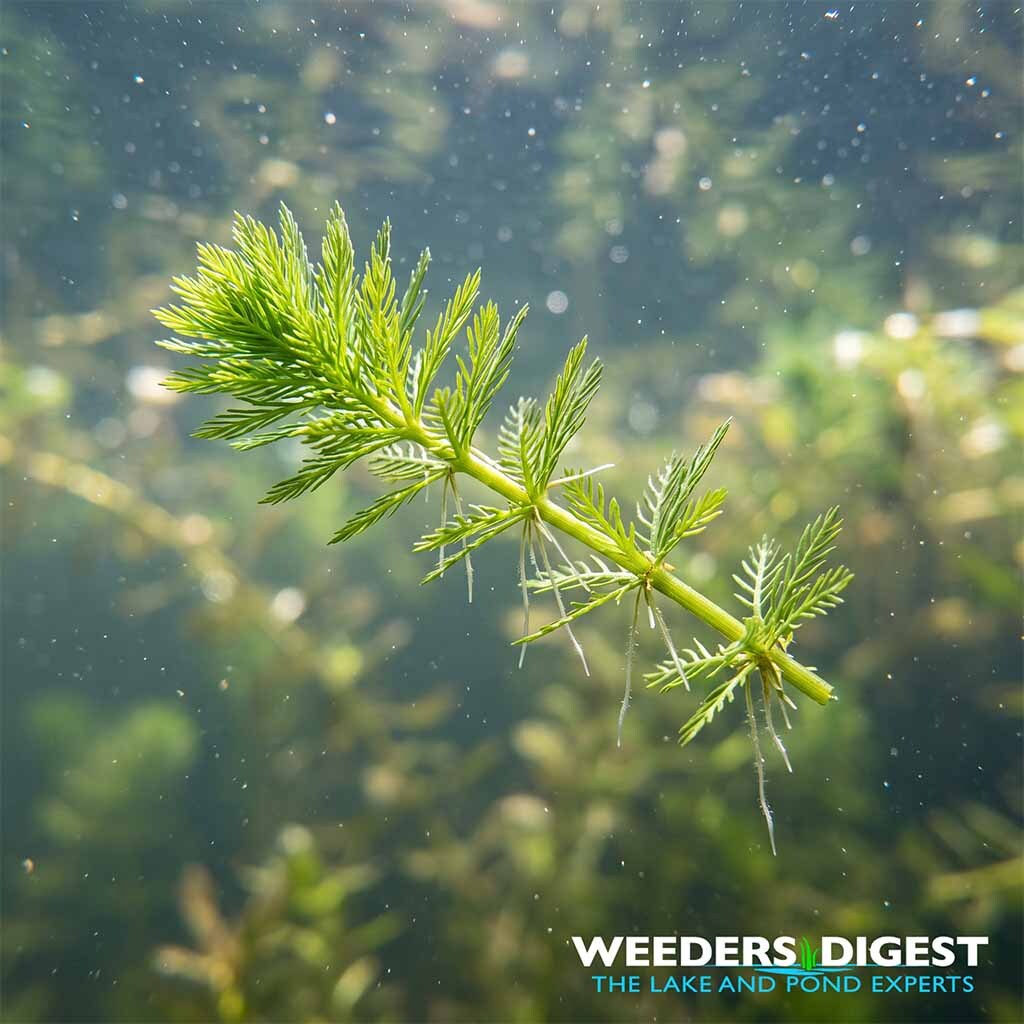
Eurasian watermilfoil transforms from a single, broken stem into a dense underwater forest by generating its own root system while freely floating, a reproductive survival process known as fragmentation. This aggressive aquatic invasive species acts as a master cloner, snapping off pieces of its own stems when disturbed by boat propellers, swimmers, or naturally during the late summer months. Instead of dying and decaying like most damaged plants, these drifting fragments continue to photosynthesize, eventually sprouting small white rootlets before sinking to the lake bottom to establish entirely new, independent colonies. Over just a few seasons, a handful of these floating clippings can multiply to choke an entire shoreline, crowding out beneficial native plants and ruining recreational access for homeowners.
As a Certified Lake Manager, I regularly pull up to seemingly pristine boat launches only to spot tiny, two-inch strands of milfoil wrapped around trailer bunks or tangled in fishing gear—and knowing the biology of this plant, I know it takes just one of those viable snippets washing into the water to trigger a multi-year management nightmare.
Once anchored in the mud, the new plant begins its secondary phase of invasion by sending out horizontal runners along the lake floor, rapidly claiming territory. Because this plant does not rely on seasonal seed germination to spread, its growing season is highly accelerated, allowing it to form thick, impenetrable surface mats before native species even have a chance to compete for sunlight. Homeowners often try to chop or rake these weeds away, but without removing every single severed piece, this mechanical disturbance only acts to replant and multiply the infestation.
The Science Behind It:
Eurasian watermilfoil (Myriophyllum spicatum) relies on a highly specialized form of asexual vegetative reproduction to dominate freshwater ecosystems. This propagation occurs through two distinct mechanisms: allofragmentation and autofragmentation. Allofragmentation is triggered by mechanical disturbances, such as the chopping action of watercraft propellers, wave turbulence, or human harvesting efforts that physically break the plant's stems. Conversely, autofragmentation is a self-induced abscission of shoot apices that occurs naturally, typically in late summer after the plant has reached its peak biomass and completed its flowering cycle. During autofragmentation, the plant deliberately cuts off nutrient flow to specific upper internodes, causing fragile stem sections to detach and drift away on water currents.
The biological mechanism that makes fragmentation so ecologically devastating is the plant's rapid development of adventitious roots. Adventitious roots are root structures that arise from non-root tissues, specifically from the nodes of the severed stem. While the fragment is suspended in the water column, it utilizes stored total nonstructural carbohydrates to survive and grow. As the new rootlets elongate, the fragment's physical density changes; it becomes negatively buoyant, descends through the water column, and settles onto the hydrosoil (lake sediment). Once contact is made with the substrate, the adventitious roots anchor the fragment and begin nutrient uptake, transitioning the drifting clone into an established, rapidly growing colony.
Concrete quantitative data highlights the extreme efficiency of this reproductive strategy. According to research on the vegetative spread of Eurasian watermilfoil colonies, an estimated 46% of the fragments that settle onto the lake substrate successfully establish into rooted, growing plants under optimal conditions (Madsen, 1997). Furthermore, research analyzing the desiccation tolerance of these clones demonstrated that when milfoil fragments remain hydrated in a control aquatic environment, they maintain a staggering 98% viability rate, with 90% of those nodes successfully producing rootlets within five weeks of separation (Evans et al., 2011). These statistics illustrate why even highly diluted fragment dispersal can result in severe localized infestations.
Once a fragment successfully roots, the plant initiates aggressive localized expansion using stolons, which are creeping horizontal plant stems that take root at points along their length to form new vertical shoots. This dual-strategy of intermediate-to-long distance dispersal via fragments and rapid localized spread via stolons allows milfoil to outcompete native macrophytes. By early summer, the rapidly elongating vertical shoots reach the water's surface, where they branch profusely to form a dense, light-blocking canopy. This canopy severely limits solar radiation from reaching the benthic zone, completely suppressing the photosynthesis and survival of low-growing native plant communities.
The resulting monotypic (single-species) stands fundamentally alter the limnological profile of the lake. The dense biomass restricts natural water circulation, which can lead to localized depletion of dissolved oxygen and fluctuations in water temperature and pH. This habitat homogenization degrades vital spawning grounds for native fish species and disrupts the foraging efficiency of predatory fish. Because a single fragment containing just a few nodes holds enough genetic material and carbohydrate reserves to regenerate a complete organism, understanding the mechanics of fragmentation is critical for developing effective, long-term aquatic management protocols.