

My Seasonal Playbook for Reclaiming Your Lake: The Mechanics of Drawdowns and Dredging
 |

Summary:
As a lake manager, one of the most common questions I get from property owners is how to take back their water from aggressive aquatic weeds without relying entirely on repeated herbicide applications. My favorite approach involves working with the changing seasons rather than fighting against them. By strategically manipulating water levels during the winter and physically removing nutrient-dense muck, we can starve out invasive plant life and restore the natural balance of your pond or lake. These methods require careful planning and considerable physical labor, but they offer highly effective, sustainable relief for your waterfront.
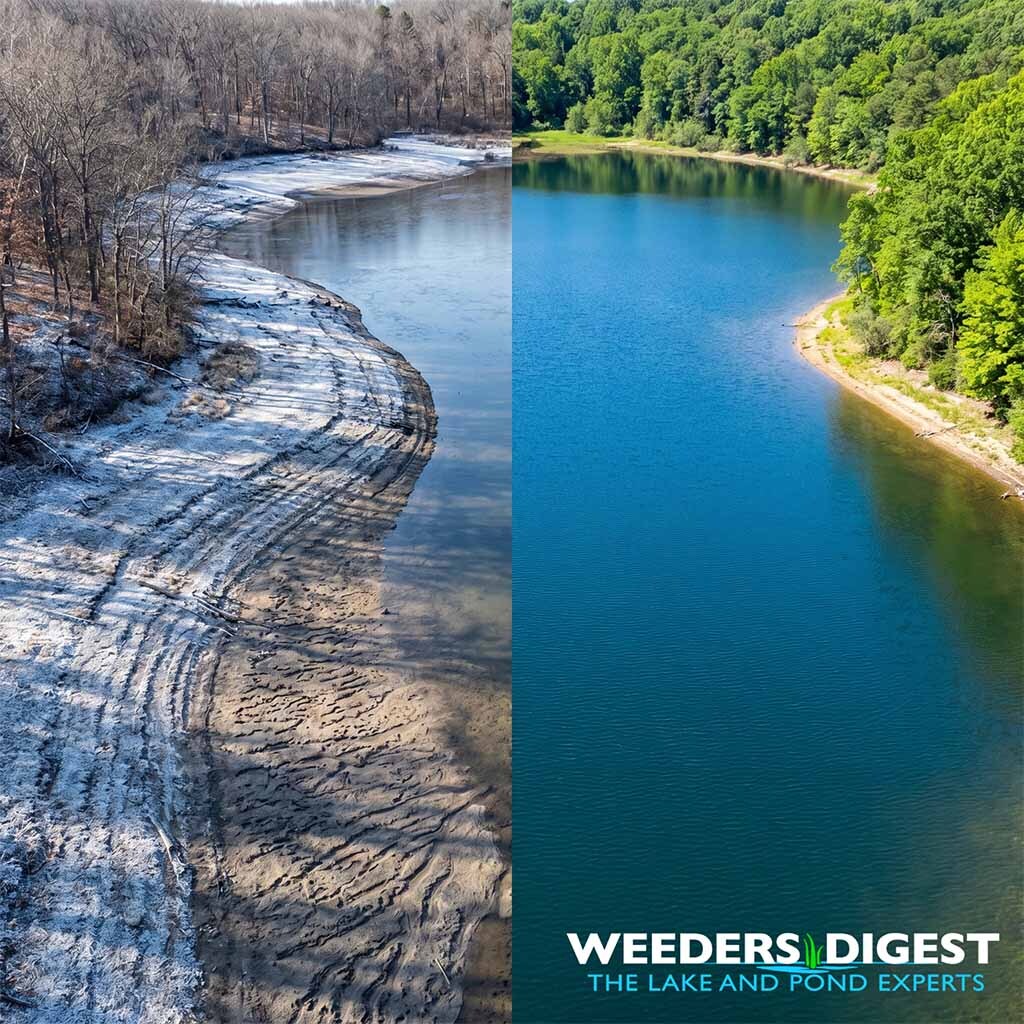
A winter drawdown is essentially draining a portion of your pond just before the freezing months. By lowering the water level a few feet, we expose the shallow, weed-choked shorelines to harsh winter air. When the freezing temperatures and dry winds hit those exposed lakebeds, the root systems and reproductive structures of nuisance plants dry out and die. It is a highly effective, natural reset button for your waterbody, preparing it for a much cleaner spring season.
Dredging tackles the root of the problem by physically scooping out the accumulated sludge, decaying plant matter, and sediment that feed aquatic weeds. Over the years, organic debris settles at the bottom of your lake, creating a nutrient-rich compost pile that acts as the perfect fertilizer for unwanted vegetation. By removing this muck, we deepen the water to block out sunlight and permanently strip away the internal fuel source that powers explosive weed growth. Used correctly, these two seasonal strategies give you the upper hand in managing your water year-round.
The Science Behind It:
The efficacy of winter drawdowns relies heavily on the physiological disruption of aquatic macrophytes through desiccation and thermal shock. According to research published by the Arkansas Cooperative Extension Service, lowering the water column to expose 35 to 50 percent of the littoral zone subjects overwintering vegetative structures, such as rhizomes, stolons, and turions, to freezing atmospheric conditions. While the water beneath the ice typically remains insulated between one and four degrees Celsius, exposing these reproductive structures to sustained atmospheric temperatures below freezing for a minimum of two weeks causes fatal cellular damage. The vascular systems of the plants collapse, and the structural integrity of the root mass is permanently compromised through extreme dehydration.
Beyond direct macrophyte mortality, winter drawdowns physically alter the benthic environment in ways that inhibit future germination. The Mississippi State University Extension Service details that exposing benthic sediments to the atmosphere accelerates the aerobic oxidation of organic matter. As the peripheral pond soils are allowed to interact with the air, the ground contracts and compacts. This sediment consolidation subtly deepens the shallow margins of the waterbody once reflooded, which subsequently limits the photic zone's reach into the benthic layer. Furthermore, frost heaving of the exposed sediment physically uproots entrenched vegetative mats, separating them from the substrate and leaving them highly vulnerable to winter mortality.
Dredging operates on the principle of nutrient limitation and physical depth alteration, directly addressing the process of accelerated eutrophication. Over time, allochthonous inputs like terrestrial leaf litter and autochthonous organic matter from decaying aquatic vegetation accumulate in the benthic zone. This creates a highly enriched, flocculent sediment layer loaded with bioavailable phosphorus and nitrogen. Research highlighted by the University of Minnesota Water Resources Center demonstrates that dredging physically extracts these internal nutrient loads, directly removing the legacy phosphorus that fuels both massive macrophyte proliferation and harmful phytoplankton blooms. By excavating this internal nutrient sink, the overall trophic state of the waterbody is shifted downward toward a more manageable baseline.
Additionally, dredging significantly modifies the morphometry of the lake basin to restrict the basic physiological requirements of submersed vegetation. Submersed macrophytes are strictly limited by the attenuation of photosynthetically active radiation in the water column. By mechanically deepening the littoral zone and creating steeper bank slopes—typically recommended at a three-to-one ratio—the benthic substrate is pushed below the light compensation point. Without sufficient solar energy penetrating to the newly exposed, nutrient-poor mineral soil layer, seed banks and remaining vegetative fragments are unable to achieve the necessary photosynthetic rates to survive, establishing a long-term, physical barrier to aquatic weed re-infestation.