

Protecting Your Lake: My Science-Backed Guide to Aquatic Weed Control and Ecosystem Health
 |

Summary:
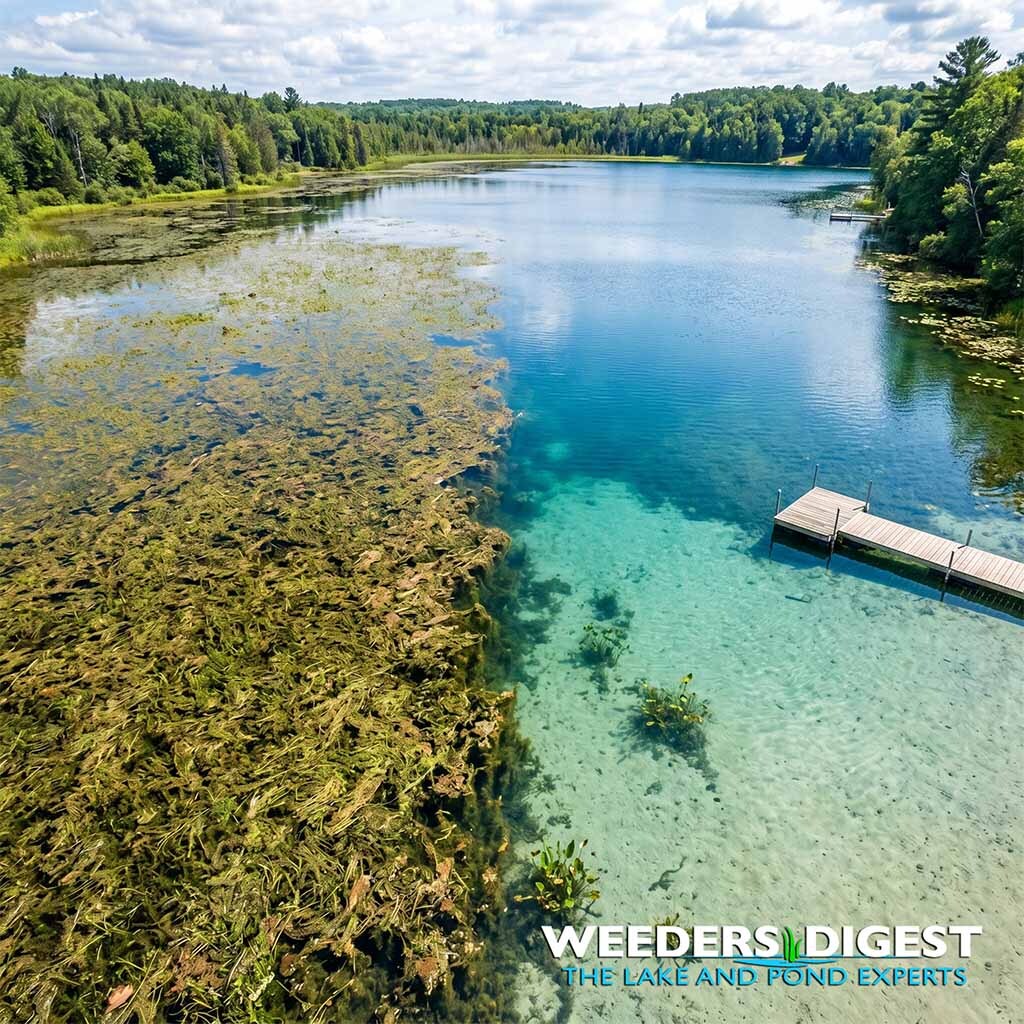
If you live on a lake, you know the frustration of looking out at your beautiful waterfront only to see it choked by thick, tangled weeds. It is incredibly tempting to want to clear out every single plant to create a pristine swimming and boating area. However, your lake is a complex, living ecosystem, and removing too much vegetation—or doing it the wrong way—can actually do more harm than good. When plants are removed too aggressively, the natural balance is destroyed, which often leads to murky water, foul odors, or dangerous algae blooms that ruin the water quality for everyone.
The most effective approach to clearing your waterfront relies on smart, balanced management rather than total destruction. Native aquatic plants play an important role in filtering water and providing a safe habitat for fish and local wildlife. By specifically targeting the invasive or overgrown nuisance weeds, you can open up your recreational space while keeping the beneficial plants intact. It is also highly beneficial to use methods that cleanly cut weeds at the roots rather than violently ripping them out of the lakebed. This prevents the nutrient-rich muck at the bottom from stirring up and clouding your water.
Ultimately, taking a thoughtful, eco-friendly approach to weed management gives you the best of both worlds. You get to enjoy a clean, accessible shoreline for swimming and boating, while ensuring your local waterway remains healthy and vibrant. By respecting the natural environment and utilizing strategic clearing techniques, your waterfront can remain a beautiful, clear, and thriving oasis for generations to come.
The Science Behind It:
The management of invasive alien freshwater aquatic plants requires a nuanced understanding of limnological processes and benthic-pelagic coupling. Unregulated eradication efforts, such as widespread herbicide application or aggressive mechanical uprooting, can drastically alter the physicochemical characteristics of an aquatic body. These radical alterations often reduce dissolved oxygen concentrations and trigger the release of legacy nutrients from the sediment into the water column. Such nutrient pulses favor the rapid proliferation of phytoplankton and harmful cyanobacteria, effectively shifting a clear-water, macrophyte-dominated state to a turbid, algae-dominated state (Hussner et al., 2017).
Implementing environmentally responsible best management practices is essential for mitigating the collateral impacts of aquatic weed control. Mechanical control methods that cleanly shear or cut plants at the root crowns minimize benthic disturbance compared to dredging or aggressive bottom-dragging. Limiting the resuspension of the benthic layer prevents the mobilization of anaerobic sediment, which would otherwise increase biochemical oxygen demand and lower water clarity. Furthermore, selective mechanical harvesting reduces the organic load that would normally decompose in the water during winter, thereby preventing seasonal anoxia and preserving the delicate aquatic food web structure.
Extensive research demonstrates that the strategic, partial removal of dense plant canopies allows for improved hydrodynamics and local water quality without devastating the ecosystem. For example, long-term studies on the harvesting of specific aquatic weed species have shown that selective removal significantly lowers local concentrations of total nitrogen and dissolved phosphorus during the growing season. This systematic extraction of biomass ensures that nutrients are permanently exported out of the aquatic system rather than being recycled back into the water column during autumn decay, which simultaneously promotes the recovery of beneficial submersed macrophyte communities (Yuan et al., 2021).
Sustainable aquatic plant management ultimately hinges upon an integrated, solution-focused approach that prioritizes ecological equilibrium over absolute eradication. Current frameworks in aquatic ecology emphasize that leaving native aquatic vegetation intact provides crucial refugia for zooplankton and macroinvertebrates, which are necessary for maintaining secondary production and supporting higher trophic levels, including predatory fish. By executing targeted, science-backed control methods, lake managers can successfully restore the recreational utility of water bodies while reinforcing the resilience and biodiversity of the entire aquatic ecosystem.
Sources / References:
- Hussner, A., Stiers, I., Verhofstad, M. J. J. M., et al. (2017). Management and control methods of invasive alien freshwater aquatic plants: A review. Aquatic Botany, 136, 112–137. https://doi.org/10.1016/j.aquabot.2016.08.002 (Cited by: 442)
- Yuan, C., Bai, X., Zhu, T., et al. (2021). Long-Term Effects of the Harvesting of Trapa natans on Local Water Quality and Aquatic Macrophyte Community in Lake Erhai, China. Frontiers in Environmental Science, 9. https://doi.org/10.3389/fenvs.2021.706746 (Cited by: 11)