

Protecting Your Lake: The Science Behind Cyanobacteria and Toxic Algae Blooms
 |

Summary:
Cyanobacteria, commonly known as blue-green algae, are dangerous because they can produce potent cyanotoxins like microcystins and anatoxins that cause severe liver damage, neurological failure, and even death in humans, pets, and local wildlife. These microscopic organisms naturally exist in aquatic environments, but when agricultural nutrient runoff, warm temperatures, and stagnant water combine, they multiply rapidly into harmful algal blooms (HABs). Once these blooms form, identifying their toxicity by sight alone is impossible, making any sudden green, paint-like scum on a waterbody a serious environmental hazard.
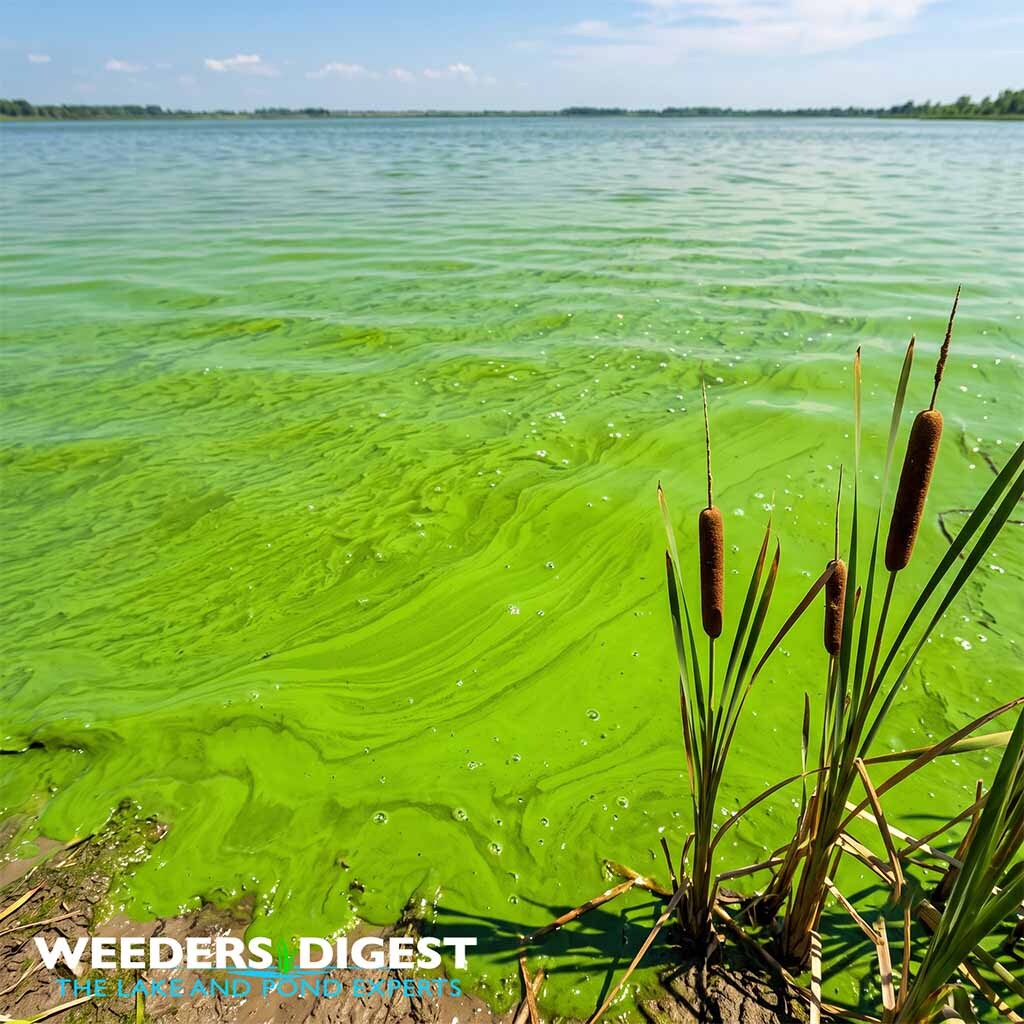
As a Certified Lake Manager, I have stood at the edge of dozens of affected ponds that look exactly as though someone spilled a thick coat of bright green paint across the surface, and it is always concerning to see how quickly a dog will try to drink from the water if not carefully monitored. The immediate physical reactions to these waters can be swift, resulting in skin rashes, gastrointestinal issues, or respiratory distress for humans who simply recreate nearby. For animals ingesting the water, the consequences are frequently fatal in a matter of hours.
Because these organisms are technically bacteria rather than true algae, their cellular mechanisms operate differently, allowing them to sequester toxins until their cells break down. When a bloom begins to die off naturally or is disrupted, the cell walls rupture, dumping a concentrated load of toxins directly into the water column. This invisible phase of the bloom is often the most dangerous period for the surrounding ecosystem and the local community relying on that water source.
The Science Behind It:
The danger of cyanobacteria lies fundamentally in their ability to synthesize secondary metabolites known as cyanotoxins. These toxic compounds are broadly classified by their physiological targets in vertebrates, primarily grouping into hepatotoxins, neurotoxins, dermatoxins, and cytotoxins. Hepatotoxins, such as microcystins, are the most frequently detected variants in freshwater ecosystems globally. Microcystins are cyclic heptapeptides that are highly stable in water and highly resistant to boiling or standard water treatment. Upon ingestion, these toxins actively transport into liver cells via bile acid carriers, where they rapidly inhibit protein phosphatases 1 and 2A. This inhibition leads to the hyperphosphorylation of structural proteins, causing the cellular cytoskeleton to collapse, ultimately resulting in hepatic necrosis, massive liver hemorrhage, and potentially fatal acute liver failure.
Neurotoxins produced by cyanobacteria, such as anatoxin-a and saxitoxins, operate with devastating speed on the central nervous system. Anatoxin-a functions as a potent agonist of the nicotinic acetylcholine receptors. Because it cannot be degraded by the enzyme acetylcholinesterase, it causes continuous, unchecked stimulation of the muscle cells. This persistent depolarization prevents muscle relaxation, triggering intense muscle fasciculations, loss of coordination, respiratory paralysis, and rapid asphyxiation. The severity of these toxins is reflected in epidemiological monitoring. According to data from the Centers for Disease Control and Prevention's One Health Harmful Algal Bloom System (OHHABS), a single year's monitoring across just 13 states recorded 227 harmful algal bloom events that resulted in 95 documented human illnesses and at least 1,170 animal illnesses, highlighting the pervasive threat these organisms pose.
The biological trigger for cyanotoxin production is governed by a complex interaction of environmental stressors and genetic transcription. While the specific genes for microcystin production (the mcy gene cluster) are present in many cyanobacterial strains, they are not uniformly expressed. Eutrophication—specifically elevated concentrations of phosphorus and nitrogen—combined with optimal thermal conditions and high light intensity, heavily upregulates the transcription of these toxin-producing genes. Interestingly, not all cells within a single bloom are toxigenic; a bloom typically comprises a dynamic mixture of toxic and non-toxic strains. This ratio can fluctuate rapidly based on localized nutrient availability, meaning a seemingly benign bloom can transition into a highly toxic state within a matter of days.
Crucially, the majority of cyanotoxins remain intracellular, confined within the intact cyanobacterial cell wall during the active growth phase of the bloom. The most severe environmental exposure occurs during the senescence and lysis of the cyanobacteria. When the cells die due to natural life cycle completion, sudden temperature drops, or the application of cell-lysing chemical treatments, the cellular membranes rupture. This lysis releases concentrated quantities of endotoxins into the surrounding water column. Because these dissolved toxins are invisible and highly stable, the water remains hazardous for weeks after the visible biomass of the bloom has dissipated, requiring specialized liquid chromatography-mass spectrometry (LC-MS) or enzyme-linked immunosorbent assays (ELISA) to confirm the water is chemically safe for consumption or recreation.