

Reclaiming Your Water: My Blueprint for Restoring Aquatic Habitats After Weed Infestations
 |

Summary:
Beating back an invasive aquatic weed infestation is a massive relief for any waterfront owner, but removing the nuisance plants is only the first half of the battle. Whether you recently skimmed the surface or used specialized cutters to slice the invaders at their roots, your lake or pond is now a blank slate. Unfortunately, nature despises a vacuum. If you leave the underwater landscape completely barren, aggressive weeds and algae will rapidly reclaim the territory, putting you right back where you started.
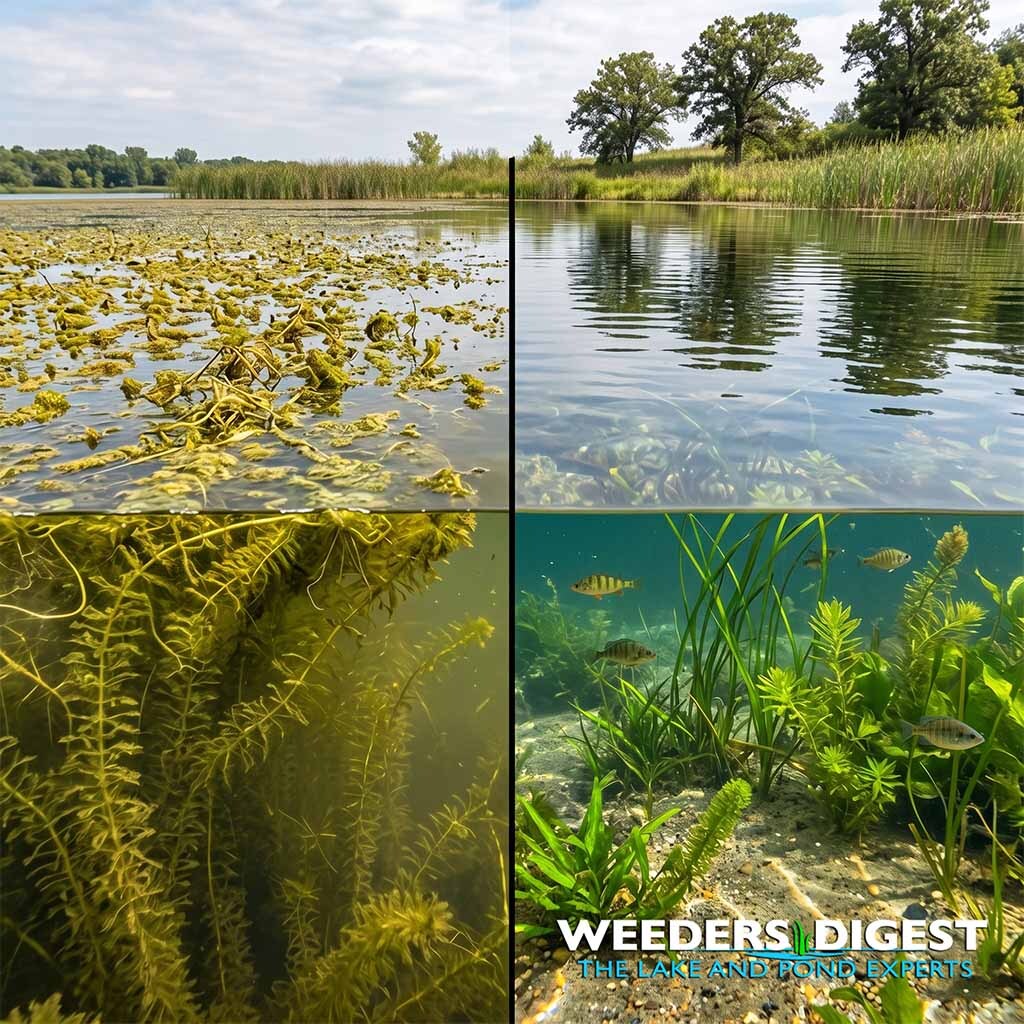
The secret to long-term success is actively restoring the native habitat. Just like pulling weeds from your garden leaves room for your vegetables to grow, removing invasive aquatic vegetation creates the perfect opportunity to reintroduce beneficial, native aquatic plants. These native species act as the natural filtration system of your waterbody. They anchor the muck at the bottom, absorb excess nutrients that would otherwise feed green algae blooms, and provide essential hiding places for fish and beneficial aquatic life.
Rebuilding this underwater ecosystem requires patience and a strategic approach. Rather than waiting for good plants to miraculously return on their own, actively replanting the right native species gives your pond a much-needed head start. By combining smart nutrient management with the reintroduction of healthy vegetation, you can transform your water from a constant battleground into a self-sustaining, crystal-clear sanctuary.
The Science Behind It:
The transition from an invasive-dominated waterbody to a healthy ecosystem requires navigating the ecological concept of alternative stable states. Shallow lakes and ponds typically exist in either a clear-water state dominated by beneficial benthic macrophytes or a degraded, turbid state dominated by phytoplankton. When invasive aquatic plants are abruptly removed, the lack of root systems destabilizes the substrate, making the ecosystem highly vulnerable to wind and wave action. This physical disturbance readily resuspends lakebed sediments, creating a feedback loop of sustained poor water clarity that traps the ecosystem in a turbid state and restricts native seedling recruitment (Hofstra et al., 2024).
Active in-lake restoration is frequently necessary because prolonged invasive weed infestations often leave native seedbanks severely depleted. Relying strictly on passive recovery can delay restoration for years, during which opportunistic algae or returning invasive species capitalize on the available nutrients. Reintroducing native macrophytes acts as a biological wave break, limiting sediment resuspension while actively sequestering the dissolved nutrients that fuel phytoplankton blooms (Slagle & Allen, 2018). Furthermore, the diverse architectural structures of these carefully selected native plants provide highly specific microhabitats that benefit various life stages of the local fish community.
The restoration of submerged aquatic vegetation also triggers vital trophic cascades that biologically clean the water column. Native macrophytes provide a critical structural refuge for crustacean zooplankton, protecting them from excessive predation by benthic and planktivorous fish. In these heavily vegetated zones, large-bodied zooplankton populations can thrive and graze heavily on suspended phytoplankton, which significantly improves overall water clarity and resource use efficiency within the low-light benthic environment (Wang et al., 2023).
Ultimately, the long-term success of macrophyte restoration relies heavily on overcoming initial environmental barriers, particularly underwater light attenuation. Because high turbidity restricts the photosynthetic active radiation necessary for native plant establishment, early restoration efforts must frequently pair replanting with temporary nutrient mitigation or water clarity enhancements. Once a minimum threshold of native vegetation cover is established, the restored macrophytes generate positive feedback loops that naturally sustain the clear-water state, permanently elevating the biological integrity and resilience of the aquatic habitat (Hofstra et al., 2024).
Sources / References:
- Hofstra, D., de Winton, M., & Champion, P. (2024). Knowledge of macrophyte requirements and tolerances holds the key to successful shallow lake restoration – a New Zealand perspective. Marine and Freshwater Research, 75.https://doi.org/10.1071/mf23194 (Cited by: 3)
- Slagle, Z. J., & Allen, M. S. (2018). Should we plant macrophytes? Restored habitat use by the fish community of Lake Apopka, Florida. Lake and Reservoir Management, 34, 296–305.https://doi.org/10.1080/10402381.2018.1443179 (Cited by: 14)
- Wang, L., Ma, X., & Chen, J. (2023). Do submerged macrophyte species influence crustacean zooplankton functional group richness and their resource use efficiency in the low-light environment? Frontiers in Plant Science, 14.https://doi.org/10.3389/fpls.2023.1185947 (Cited by: 12)