

Safely Navigating My Favorite Local Lakes After Dark
 |

Summary:
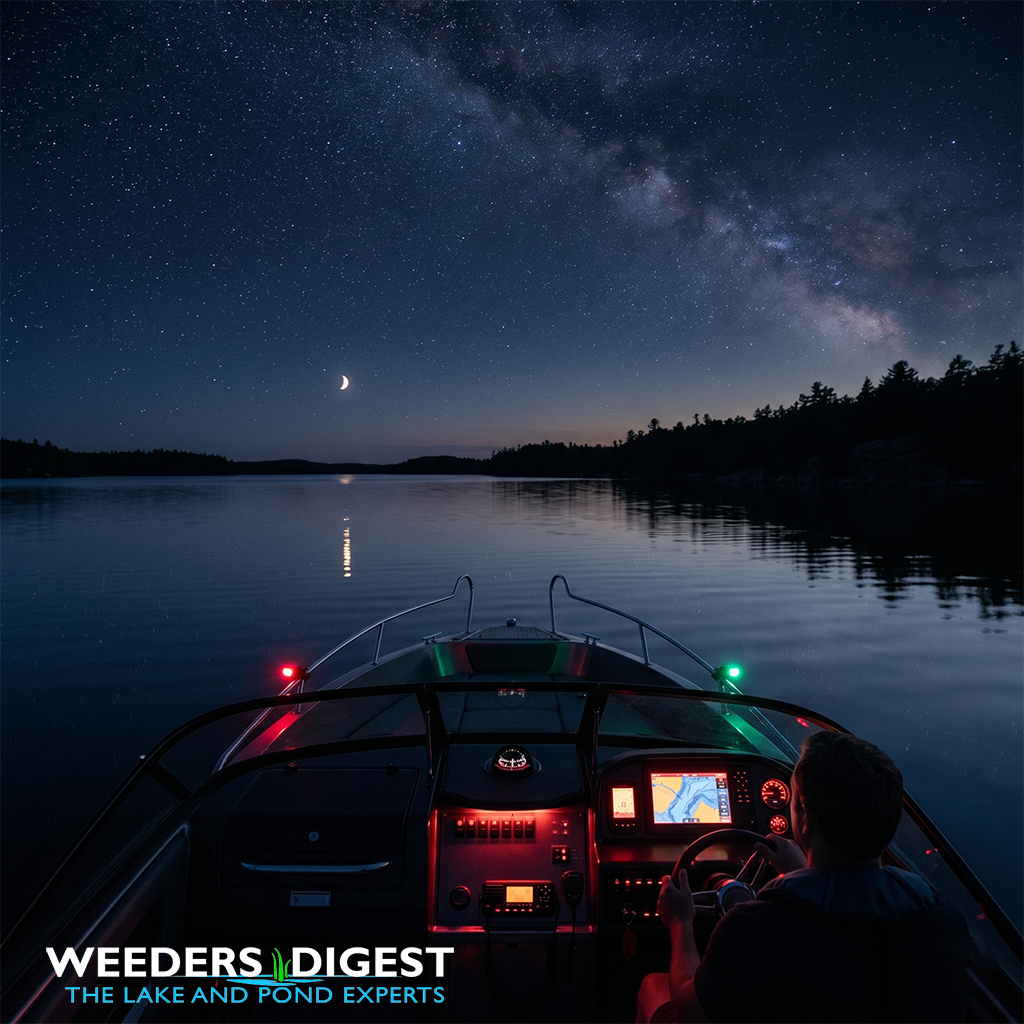
Navigating a lake at night is a fundamentally different experience than daytime boating. Even on a body of water I know well, the darkness distorts distances and hides familiar landmarks, making it incredibly easy to become disoriented. The safest way to approach night navigation is through a combination of extreme speed reduction, proper use of lighting, and advanced preparation. Slowing down is the most critical factor; it provides the necessary reaction time to identify unlit hazards like buoys, driftwood, or shallow sandbars that are nearly invisible until they are right in front of the bow.
To stay safe, I always ensure my navigation lights—the red and green sidelights and the white all-around light—are functional and unobstructed before leaving the dock. It is a common mistake to use high-powered spotlights or docking lights while underway, but these actually destroy night vision for both the operator and other boaters on the water. Instead, I rely on my electronics, such as GPS and depth finders, while keeping my eyes adjusted to the natural starlight or moonlight.
Staying within a known safe track is another essential practice. If I am heading into unfamiliar territory, I make it a point to study the depth charts and scout the area during the daylight hours first. By following a previous GPS "breadcrumb" trail at a slow, steady pace, I can significantly reduce the risk of running aground or colliding with submerged structures. Safety at night is less about high-tech gadgets and more about patience, situational awareness, and respecting the limits of visibility.
The Science Behind It:
Human nocturnal navigation is heavily limited by the biological constraints of scotopic vision. According to research from the University of Minnesota Extension, the human eye requires approximately 20 to 30 minutes to fully adapt to low-light conditions, a process involving the sensitization of rod cells. When a boater uses a bright spotlight or a "docking light" while moving, the sudden glare triggers a pupillary light reflex and bleaches rhodopsin, effectively resetting the dark adaptation period and leaving the operator momentarily blind to the subtle shadows of shoreline hazards or unlit navigational markers.
Hydrographic awareness is further complicated by the "Purkinje effect," where the peak sensitivity of the human eye shifts toward the blue end of the spectrum in low light, making red navigational lights appear dimmer than green ones at equal distances. This can lead to errors in spatial judgment regarding the orientation and heading of approaching vessels. Peer-reviewed studies on maritime safety emphasize that a vessel’s "safe speed" is a variable determined by visibility; at night, the stopping distance must be strictly less than the visible range provided by ambient light to avoid catastrophic impact with "deadheads" or floating debris.
The use of Global Navigation Satellite Systems (GNSS) provides a critical layer of safety by offering real-time spatial positioning that does not rely on visual landmarks. Research published in ecological and management journals highlights that digital bathymetric maps allow operators to monitor "isobaths" or contour lines, ensuring the vessel remains in deep water. However, reliance on screens must be tempered by the use of "night mode" or red-filtered overlays to prevent the screen's luminance from interfering with the operator's ability to scan the horizon for the silhouettes of other craft.
Effective night navigation also requires an understanding of sound propagation over water. In the absence of visual cues, acoustic signals become primary indicators of nearby landmasses or other vessels. The atmospheric boundary layer over a cool lake surface can cause sound waves to refract downward, allowing noise to travel significant distances. An authoritative approach to night safety involves periodic "engines-off" checks to listen for the breaking of water against rocks or the engine noise of an unseen boat, utilizing multi-sensory data to compensate for the loss of high-resolution visual input.