

The Ghost Forests Beneath the Waves: Why Your Local Reservoir Is Full of Sunken Trees
 |

Summary:
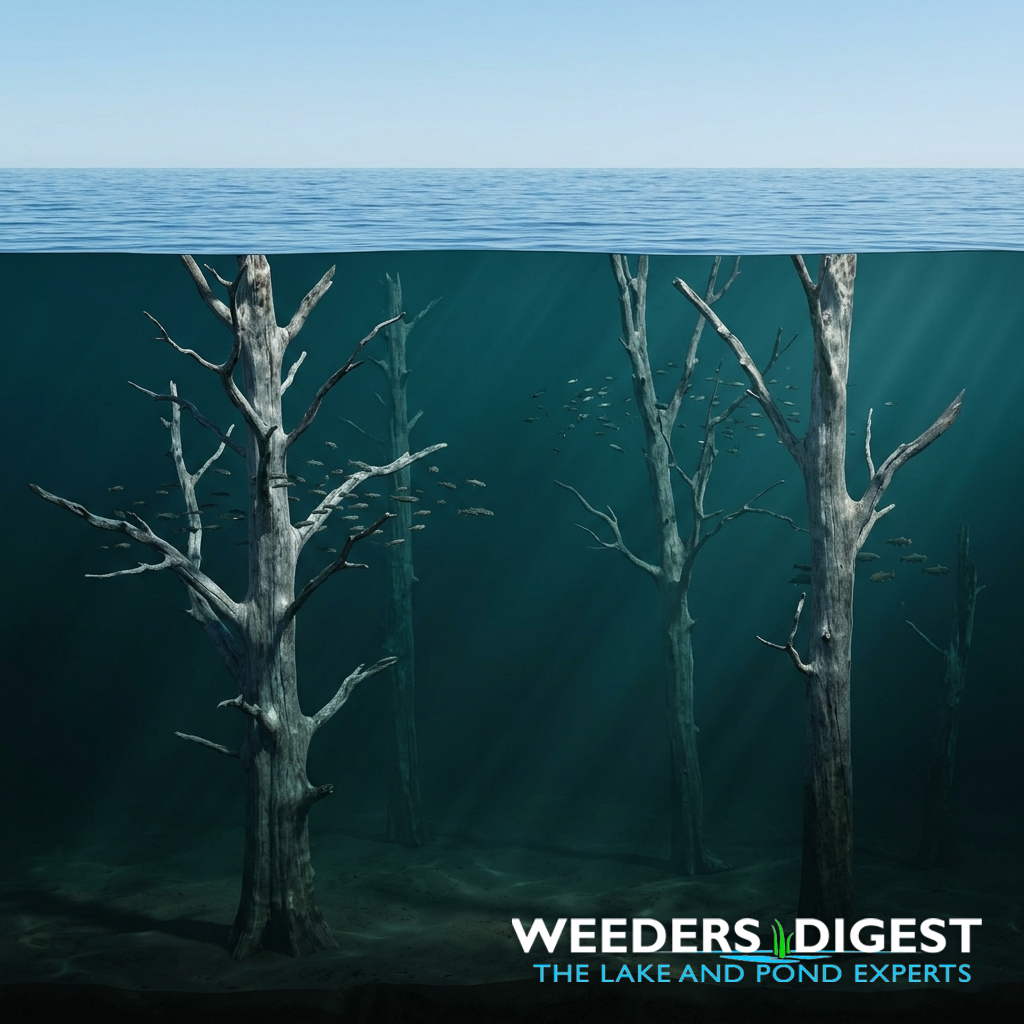
When a valley is flooded to create a reservoir, the trees left standing don't simply rot away and disappear as you might expect. Instead, they often enter a state of remarkable preservation that can last for decades or even centuries. While we often call these "petrified" forests, they aren't actually turned to stone; rather, they are essentially "pickled" by the very water that submerged them. This happens because the deep, cold, and oxygen-poor environment at the bottom of a lake prevents the natural process of decay from taking hold.
In a typical forest, fallen logs are broken down by fungi, insects, and aerobic bacteria that require oxygen to survive. Once a tree is submerged under several dozen feet of water, it is cut off from the atmosphere. Without a steady supply of oxygen, the organisms responsible for decomposition cannot function. The wood remains structurally sound, standing as a silent, skeletal monument to the landscape that existed before the dam was built.
For many homeowners and lake users, these underwater forests are a source of fascination and, occasionally, a navigation hazard. Seeing these silvered branches reaching up toward the surface is a vivid reminder of the transformative power of water. Understanding why they stay intact helps us appreciate the complex chemistry occurring beneath the surface of our managed water bodies.
The Science Behind It:
The preservation of standing timber in flooded reservoirs is primarily a result of anaerobic conditions and suppressed microbial kinetics. According to research published by the University of Florida IFAS, the decomposition of organic matter in aquatic environments is governed by the availability of dissolved oxygen (DO). In deep reservoirs, thermal stratification often leads to a condition known as hypolimnetic hypoxia. In this state, the bottom layer of water becomes severely depleted of oxygen, effectively halting the metabolic processes of aerobic decomposers that would otherwise degrade the cellulose and lignin structures of the wood.
Microbial degradation in these environments is forced to shift from aerobic pathways to much slower anaerobic pathways. Scientific literature from the Journal of Freshwater Ecology indicates that while certain anaerobic bacteria and methanogens can still interact with the submerged timber, their rate of decomposition is orders of magnitude slower than their aerobic counterparts. Furthermore, the high hydrostatic pressure at the base of deep reservoirs can compress the vascular tissues of the wood, further resisting the infiltration of waterborne pathogens and maintaining the structural integrity of the xylem and phloem.
Temperature also plays a critical role in this "pickling" effect. Deep reservoir waters typically remain at a consistent, low temperature (often near 4°C in temperate climates). These cold temperatures significantly reduce the kinetic energy available for chemical reactions and biological activity. This slowdown in enzymatic breakdown, combined with the lack of ultraviolet (UV) radiation—which causes photodegradation in terrestrial environments—ensures that the chemical bonds within the wood fiber remain remarkably stable over long temporal scales.
In some specific geologic contexts, mineral precipitation can further enhance this preservation. As groundwater interacts with the submerged wood, dissolved minerals such as silica or calcium carbonate may begin to permeate the porous structure of the timber. While this is not "petrification" in the traditional paleontological sense (which takes millions of years), it can lead to permineralization, where the internal spaces of the wood are filled with mineral deposits. This process increases the density of the standing trees, making them even more resistant to physical erosion and biological decay.
Sources / References:
- University of Florida IFAS: Role of Dissolved Oxygen in Aquatic Decomposition
- Journal of Freshwater Ecology: Anaerobic Decomposition Rates of Submerged Organic Matter