

Transforming Your Harvested Lake Weeds: My Guide to Managing Post-Harvest Biomass
 |

Summary:
The most effective way to manage post-harvest aquatic plant biomass is to physically relocate it to an upland composting site where it can dehydrate and decompose without leaching nutrients back into the waterbody. Because an aquatic weed cutter doesnt cut the roots, it just cuts them at the roots, the heavy upper canopy of the plant is freed and floats to the surface for collection. Harvesting this material prevents the vegetation from dying back in the fall and contributing to the thick sludge layer on the lake bottom. Fully committing to this process is a big project and does require alot of labor to transport the heavy, water-logged vegetation away from the shoreline, but the ecological payoff for the health of your waterbody is immense.
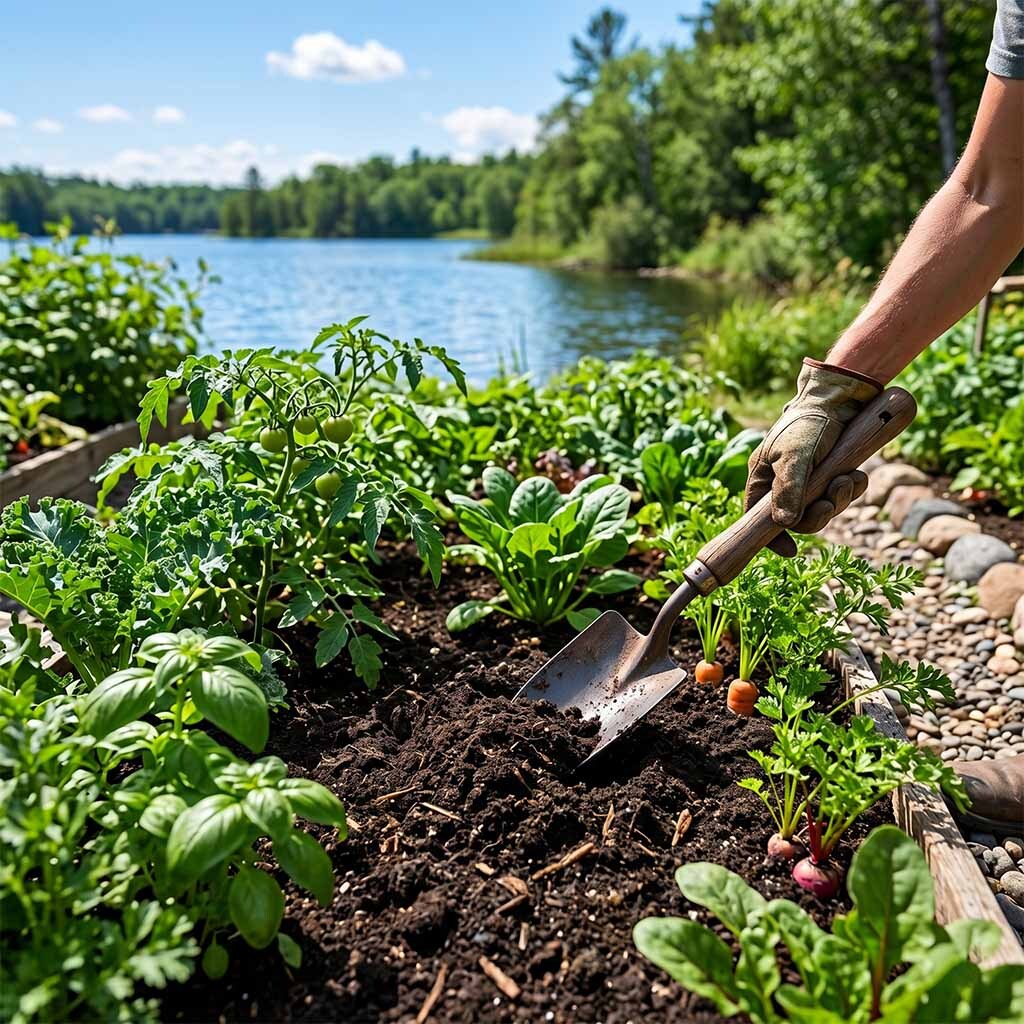
As a Certified Lake Manager, I have seen firsthand how leaving harvested piles on the immediate shoreline allows nutrient-rich leachate to drain straight back into the lake after a rainstorm, entirely defeating the purpose of the harvest. Properly relocating and composting this biomass turns a localized aquatic nuisance into a high-value, nutrient-dense soil amendment for your terrestrial garden beds, closing the nutrient loop while protecting your water quality.
The Science Behind It:
Aquatic macrophytes (large, visible aquatic plants) act as highly efficient biological filters, pulling dissolved phosphorus, nitrogen, and heavy metals out of the water column and benthic (bottom) sediments to fuel their rapid vegetative growth. Research demonstrates the intense phytoremediation (pollutant-absorbing) capabilities of these species; for example, studies on fast-growing aquatic vegetation indicate they can reduce Total Phosphorus (TP) and Total Nitrogen (TN) in surrounding wastewater by 83.5% to 97.5% in just a matter of days (Gaballah et al., 2019; Sutaryo et al., 2022). By physically removing these plants from the lake ecosystem, you are permanently extracting those locked-up nutrients, effectively reversing localized eutrophication (nutrient over-enrichment) and starving out future nuisance algae blooms.
If that harvested plant tissue is left in the water or immediately on the shoreline to decay, the resulting aerobic and anaerobic decomposition processes rapidly consume dissolved oxygen and drop the localized pH of the water. This resulting anoxic (oxygen-depleted) environment is highly detrimental to aquatic life, accelerating the release of toxic hydrogen sulfide gas and triggering the rapid release of soluble phosphorus right back into the water column. Moving the biomass upland halts this cyclical nutrient loading and protects the delicate dissolved oxygen balance required by native fish populations.
Composting on dry land is the scientifically preferred disposal strategy because it biologically stabilizes these volatile nutrients into a usable humus. Freshly harvested aquatic vegetation typically contains upwards of 90% water and is densely packed with nitrogen, meaning it acts as a "green" composting material that breaks down rapidly. However, because of this high moisture and nitrogen content, piling aquatic weeds alone often results in a slimy, putrid, anaerobic mess rather than viable soil.
To successfully compost aquatic biomass, the nitrogen-dense material must be layered with carbon-rich "browns" such as dry leaves, wood chips, or straw. Studies on the aerobic co-composting of biological wastes indicate that achieving an optimal Carbon to Nitrogen (C:N) ratio of approximately 30:1 allows thermophilic (heat-loving) microbial populations to efficiently break down the material, reducing the total residual volume to just 13.6% of its original mass within 28 days (Cerda et al., 2018). Furthermore, advanced vermicomposting (worm composting) studies on aggressive aquatic weeds like Salvinia molesta have shown that this intense biological breakdown quickly destroys allelopathic (plant-toxic) compounds, yielding a safe, stabilized, and highly potent organic fertilizer for terrestrial agriculture (Abbasi et al., 2015).
Sources / References:
- https://pmc.ncbi.nlm.nih.gov/articles/PMC10452623/
- https://bioresources.cnr.ncsu.edu/resources/sustainable-composting-of-vegetable-waste-cow-dung-grasses-and-food-wastes-into-soil-amendment-using-starter-culture-and-growth-characteristics-in-guava-plant/
- https://apirs.plants.ifas.ufl.edu/site/assets/files/381205/381205.pdf