

Understanding Your Water: The Key Differences Between Algaecides and Herbicides
 |

Summary:
Algaecides are specifically formulated to eliminate microscopic algae and filamentous growth, whereas aquatic herbicides are designed to target and manage vascular aquatic plants, such as submerged, floating, or emergent weeds. The primary distinction lies in their biological targets: algaecides disrupt the cellular processes unique to algae, while herbicides interfere with the metabolic pathways or hormonal growth regulators found in higher-order aquatic plants. Because algae are simple organisms and vascular plants are complex, using the correct agent is essential for effective management and for protecting the balance of your waterbody.
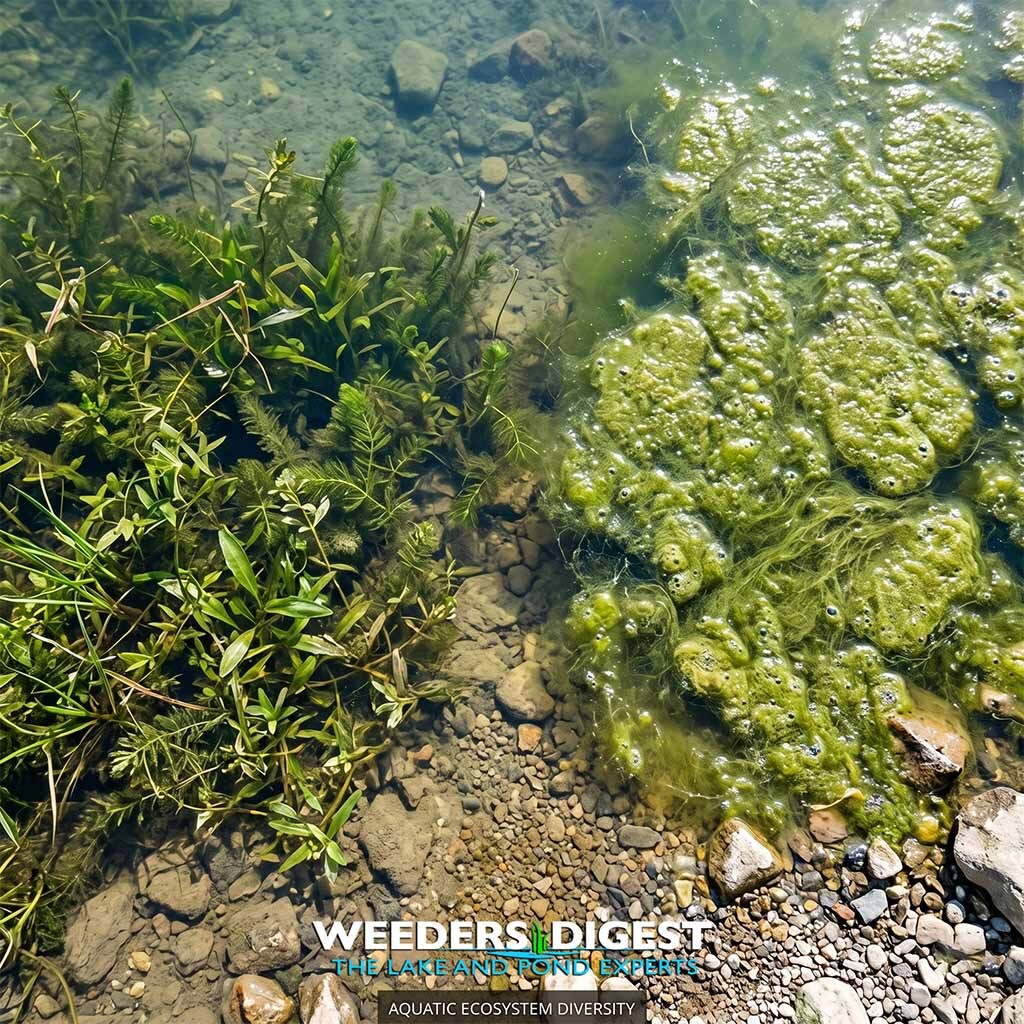
In my years as a lake manager, I’ve often walked up to a shoreline where a homeowner has applied a general "weed killer" to a massive, bubbly mat of filamentous algae. It’s a common mistake—they see green, and they want it gone. However, because that herbicide wasn't designed to penetrate the simple cell walls of algae, the bloom persists, while the native pondweed we actually wanted to keep is left stressed. Proper identification is the difference between a thriving ecosystem and a nutrient-choked basin.
The Science Behind It:
Aquatic herbicides and algaecides operate through distinct physiological modes of action (MOA). Herbicides generally fall into two categories: systemic and contact. Systemic herbicides, such as glyphosate or fluridone, are absorbed by the plant and translocated through the vascular system, inhibiting specific enzymes like EPSP synthase or preventing carotenoid biosynthesis, which ultimately leads to total plant death. Conversely, contact herbicides—like diquat—cause rapid tissue destruction upon physical contact by disrupting cellular membranes or photosystem I, often resulting in visible plant injury within hours.
Algaecides, specifically those containing copper or hydrogen peroxide, function by targeting the less complex, non-vascular cellular structure of algae. Copper-based algaecides act as metabolic inhibitors, interfering with the electron transport chain within the chloroplasts of algal cells, which leads to the collapse of the organism’s ability to generate energy. As noted in research published in Heliyon (2025), the efficacy of chemical control is highly species-dependent, and the concentration addition model often underestimates the toxicity of combined treatments, highlighting the risks of indiscriminate mixing without professional assessment.
The interaction between these chemicals and the environment is governed by the Concentration and Exposure Time (CET) relationship. Research indicates that the effectiveness of these treatments is not merely about the dosage applied, but the duration the target organism remains exposed to a lethal concentration before the chemical degrades or dissipates. For instance, studies on herbicide mixtures have shown that specific combinations can result in "significant antagonism," where the combined effect is actually less than the sum of the individual parts, making strategic, informed application critical to avoid wasting resources or creating resistant populations.
Effective lake management requires a nuanced understanding of these chemical interactions. Proper application relies on identifying the target species—whether it is a complex vascular plant or a simple, colony-forming alga—and calculating the volume of the waterbody to ensure that concentrations are sufficient to be effective without causing collateral damage to the rest of the ecosystem. Improper application, such as treating too much vegetation at once, can lead to a sudden depletion of dissolved oxygen, a phenomenon that occurs as decomposing plant matter consumes oxygen faster than the water can replenish it.
Sources / References:
- Aquatic Herbicide Mode of Action and Use Implications, Southern Regional Aquaculture Center (SRAC), https://aquaculture.mgcafe.uky.edu
- Combination effects of herbicides on plants and algae: Do species and test systems matter?, Heliyon (2025), https://www.researchgate.net/publication/6500177
- Managing Aquatic Weeds, New Mexico State University Extension, https://pubs.nmsu.edu