

WeedersDigest Guide to Slicing vs. Uprooting: The Ecological Impacts of Your Mechanical Weed Tools
 |

Summary:
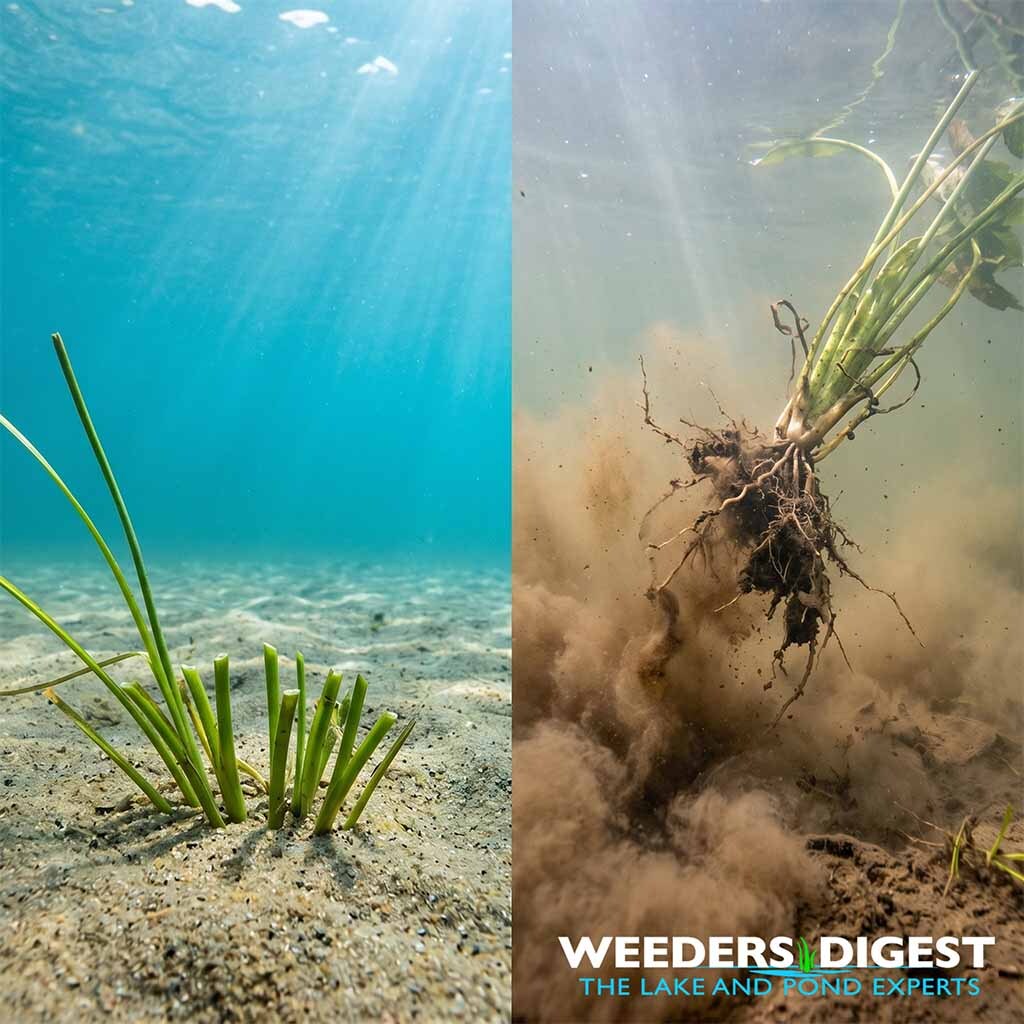
The primary difference between these mechanical control methods is that aquatic weed cutters do not remove roots but rather slice plants at the base, whereas uprooting methods physically extract the entire plant and its root system from the lakebed. When you slice an aquatic plant, you are essentially mowing the underwater lawn, leaving the lowest level of the lake completely intact. In contrast, uprooting pulls the biological anchor right out of the muck, ensuring that specific plant is gone but drastically altering the immediate underwater landscape.
As a Certified Lake Manager, I have seen firsthand how aggressive uprooting in dense milfoil beds can turn a crystal-clear bay into a muddy, turbid mess for days, completely disrupting the local ecosystem. Slicing at the base, on the other hand, clears the water column for boating and swimming while keeping the underlying sediment locked safely in place. This means you avoid the immediate release of trapped nutrients and murky water, even though the roots are left behind to eventually sprout again.
The Science Behind It:
The fundamental ecological divergence between slicing and uprooting lies in the physical disruption of the benthic zone—the ecological region at the lowest level of a body of water. Macrophytes, which are large aquatic plants, utilize extensive root systems and rhizomes to anchor themselves securely within the nutrient-rich sediment. When mechanical uprooting is applied, it induces significant bioturbation, a severe physical disturbance of the lakebed. This action resuspends sediment into the water column, dramatically increasing turbidity (water cloudiness) and releasing legacy phosphorus and nitrogen previously locked in the muck. Uprooting these foundational plants can lead to serious shoreline erosion and long-term degradation of water clarity, fundamentally altering the structural stability of the littoral zone (Lembi, n.d.).
Conversely, utilizing tools that slice macrophytes at the base significantly mitigates immediate benthic disruption. By severing the shoot tissue while leaving the root mass intact, the sediment remains stabilized by the existing root architecture. This prevents the catastrophic release of nutrients into the photic zone—where sunlight penetrates—thereby reducing the risk of secondary phytoplankton (algae) blooms. However, because the perennating organs (structures like roots, tubers, and wintering buds) survive the slicing process, this method serves as temporary vegetative suppression rather than complete eradication. Research demonstrates that submersed aquatic plants exhibit rapid compensatory growth, possessing the capability to regrow to the water's surface in a period of 50 to 70 days following mechanical clipping at typical depths of 5 feet (Sperry et al., n.d.).
Managing the harvested plant tissue is a critical logistical and ecological requirement for either method. Slicing physically removes the photosynthetic canopy, rapidly generating massive quantities of organic material that must be extracted from the aquatic ecosystem. On average, submersed plant fresh weight is approximately 10 to 15 tons per acre when growing densely at the water surface (Sperry et al., n.d.). Allowing this severed biomass to decompose within the waterbody introduces an extreme biological oxygen demand (BOD). As microbial bacteria break down the plant tissue, they rapidly consume dissolved oxygen, potentially leading to hypoxic (low oxygen) or anoxic (zero oxygen) conditions that can trigger large-scale fish kills.
Ultimately, the long-term ecological trajectory of the waterbody depends heavily on the frequency and timing of the mechanical intervention. Normal direct management, such as large-scale cutting, can inadvertently stress the aquatic environment and over time select for the more vigorous, faster-growing surviving members of the plant population (Dawson, 1986). Therefore, integrated aquatic plant management requires a calculated approach: utilizing slicing to maintain immediate water clarity and prevent severe benthic disruption, while accounting for the biological inevitability of regrowth and the absolute necessity of complete biomass removal.
Sources / References:
- Dawson, F. H. (1986). Light reduction techniques for aquatic plant control. Lake and Reservoir Management, 2, 258-262. https://doi.org/10.1080/07438148609354639 (Cited by: 15)
- Lembi, C. A. (n.d.). Aquatic plant management. Purdue Extension. https://www.extension.purdue.edu/extmedia/ws/ws_21.pdf (Cited by: 21)
- Sperry, B. P., Haller, W. T., & Ferrell, J. A. (n.d.). Mechanical harvesting of aquatic plants. https://corpslakes.erdc.dren.mil/employees/invasive/pdfs/MechanicalHarvesting.pdf (Cited by: 4)