

What Is Growing Under My Dock? Your Guide to Identifying Submerged Aquatic Weeds
 |

Summary:
If you have ever looked down into your lake or pond and wondered what exactly is growing beneath the surface, you are not alone. Submerged aquatic weeds are plants that spend their entire life cycle entirely underwater, usually rooted in the muck at the bottom. While they might all look like a tangled green mess at first glance, figuring out exactly what is growing in your water is the crucial first step to managing it effectively and keeping your waterfront pristine.
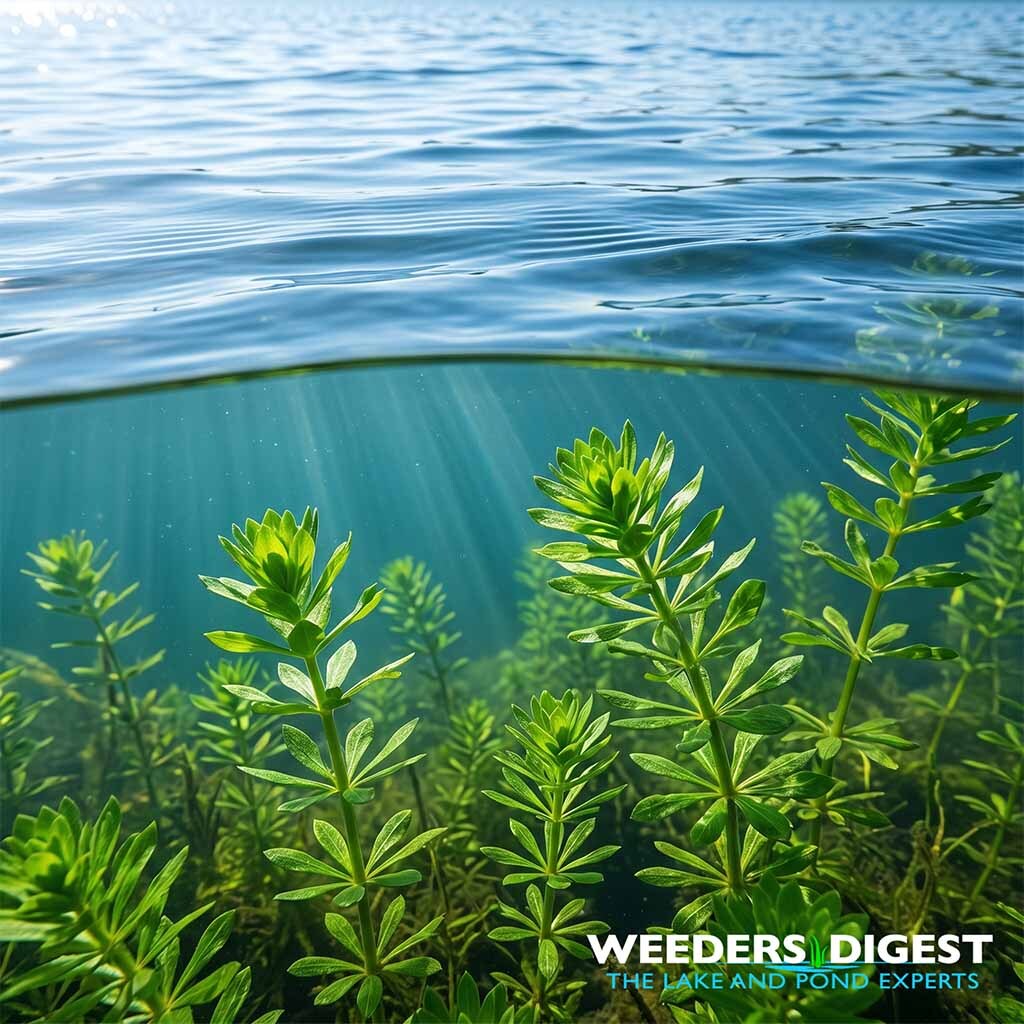
Identifying these underwater plants does not require a biology degree, just a keen eye for a few specific details. The easiest way for a beginner to tell them apart is to pull a sample from the water, place it in a clear container or float it in a white bucket, and look closely at the leaves. You will want to notice if the leaves are broad or look like fine needles, and whether they grow one by one along the stem, in opposite pairs, or in clusters forming little circles around the stem, known as whorls.
Another dead giveaway for many common submerged weeds is how they feel and behave when you handle them. Some might feel distinctly crunchy or brittle due to mineral deposits, while others will be soft, slimy, or completely collapse into a formless pile when taken out of the water. By paying attention to these simple physical traits—leaf shape, stem arrangement, and texture—you can quickly figure out whether you are dealing with a native plant that is great for fish habitat, or an aggressive invader that needs to be addressed.
The Science Behind It:
Submersed macrophytes constitute a highly specialized group of aquatic flora characterized by their complete submergence beneath the water column, relying primarily on dissolved carbon dioxide and bicarbonate for photosynthesis. Taxonomically identifying these species requires an understanding of their unique morphological adaptations to the aquatic environment. Unlike terrestrial plants, submersed species lack heavy structural lignin and a thick waxy cuticle, which allows for the rapid diffusion of nutrients and gases directly through the epidermal layer, but also causes them to lose structural integrity when removed from hydrostatic support.
One of the most complex challenges in limnological taxonomy is morphological plasticity, specifically a phenomenon known as heterophylly. As documented in aquatic plant identification resources by the Penn State Extension and Texas A&M AgriLife, aquatic plants can exhibit drastically different leaf morphologies depending on environmental variables such as water depth, light attenuation, and flow velocity. For instance, a single specimen may produce finely dissected, filiform leaves in deep or rapidly moving water to reduce hydrodynamic drag and maximize surface area for gas exchange, while producing slightly broader, thicker leaves as the plant reaches the photic zone near the surface. This phenotypic plasticity requires ecologists to examine multiple nodes along the stem to ensure accurate identification.
Phyllotaxy, or the specific arrangement of leaves on the stem, serves as the primary diagnostic tool in aquatic plant dichotomous keys. Ecologists categorize these arrangements into alternate, opposite, and whorled classifications. For example, distinguishing between the native Elodea canadensis and the highly invasive Hydrilla verticillata relies almost entirely on observing these whorls. Elodea typically presents leaves in whorls of three, whereas Hydrilla consistently exhibits whorls of four to eight leaves with distinct serrations along the margins and small subterranean tubers attached to the root systems.
Furthermore, the reproductive structures of submersed macrophytes provide definitive diagnostic criteria, though they are highly ephemeral. Many submersed species, such as those in the genus Potamogeton (pondweeds), produce specialized reproductive spikes that emerge just above the water's surface for wind or insect pollination. Analyzing the achenes (fruits) or the stipules (sheath-like structures at the leaf base) under a dissecting microscope is often necessary for distinguishing between closely related hybrids that cannot be differentiated by vegetative morphology alone.
Accurate identification fundamentally dictates the trajectory of integrated aquatic vegetation management plans. As emphasized in aquatic ecology literature, mistaking a native, ecologically beneficial species like Coontail (Ceratophyllum demersum) for an invasive like Eurasian Watermilfoil (Myriophyllum spicatum) can lead to unnecessary interventions that disrupt the benthic habitat and destabilize local food webs. Understanding the precise physiological and anatomical traits of these primary producers allows lake managers to protect biodiversity while accurately assessing the localized ecosystem dynamics.
Sources / References:
- Texas A&M AgriLife Extension - AquaPlant: Plant Identification (https://aquaplant.tamu.edu/plant-identification/)
- Penn State Extension - Identifying Aquatic Plants (https://extension.psu.edu/identifying-aquatic-plants)