

Why My Favorite Weekend Lake is Actually a Man-Made Marvel: The History of Our Reservoirs
 |

Summary:
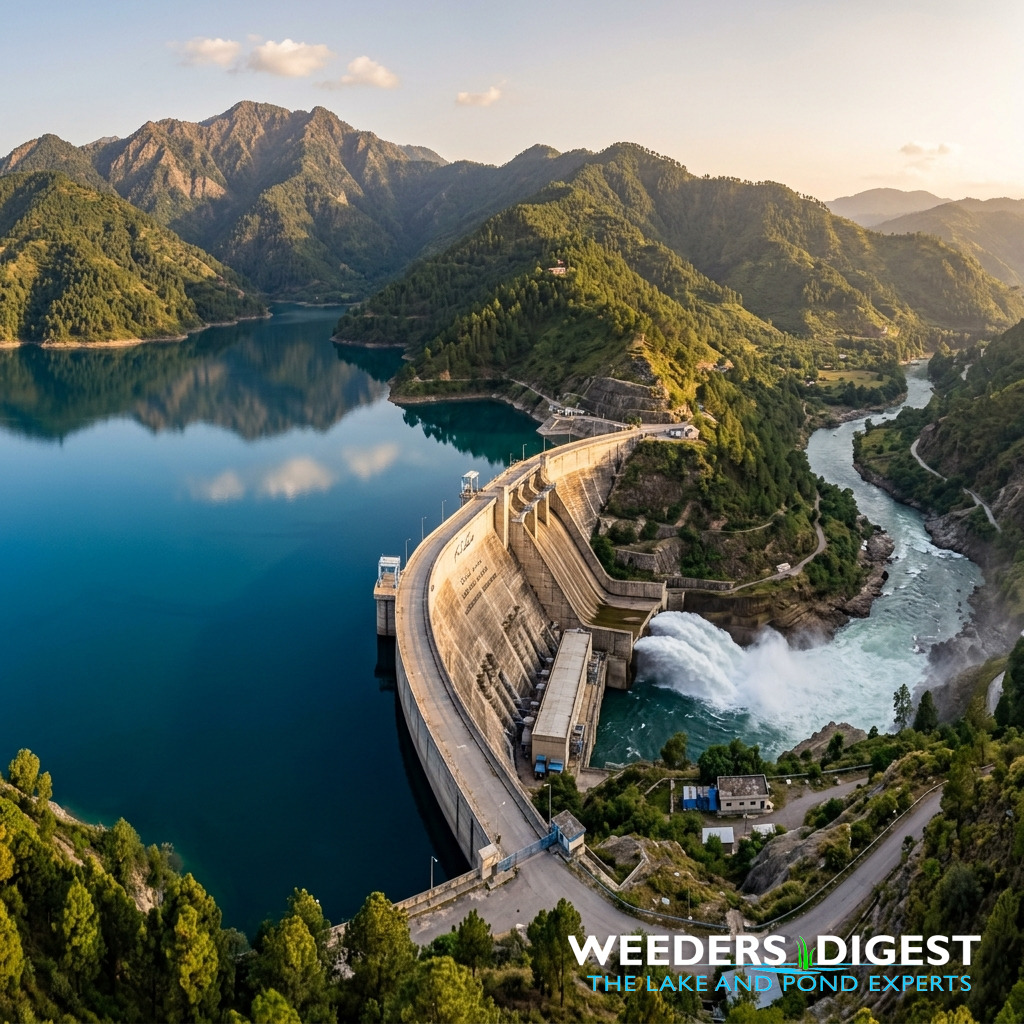
When you look out over a vast, sparkling lake, it is easy to assume that nature spent thousands of years carving it out of the landscape. However, many of the largest and most beloved lakes I enjoy today are actually the result of human ingenuity and massive engineering projects. These are artificial reservoirs, created by damming rivers to hold back millions of gallons of water. While we often think of them as permanent fixtures of our geography, the history behind their creation is a relatively recent saga of industrial ambition and the need to control the natural world.
The story of these "dammed lakes" began long ago with small-scale irrigation, but it exploded into the modern era during the 20th century. Governments and engineers realized that by placing a massive barrier across a moving river, they could solve several problems at once. They could provide a steady supply of drinking water for growing cities, ensure that farmers had water during droughts, and eventually, harness the power of the water to generate electricity. It changed the way our maps look and how we interact with the water.
Of course, creating a lake where one didn’t exist before is a monumental task that comes with a complex legacy. Entire valleys were flooded, and in many cases, small towns and ecosystems were submerged to make way for the rising water. This process transformed local climates and created the recreational havens we use for boating and fishing today. Understanding this history helps me appreciate that these bodies of water are not just natural wonders, but living monuments to our desire to manage the earth's most precious resource.
Today, we view these reservoirs as essential infrastructure, but they are also delicate ecosystems that require constant management. From the way sediment builds up behind the dam to how the water temperature affects local fish, the history of these lakes is still being written. Every time I visit a dammed lake, I am reminded of the incredible balance between human necessity and the ecological shifts that occur when we decide to reshape the flow of a river.
The Science Behind It:
The transition from rudimentary water diversion to the construction of "mega-dams" and large-scale reservoirs represents a significant shift in hydraulic engineering and limnological impact. Historically, the earliest known dam was the Jawa Dam in modern-day Jordan, dating back to approximately 3000 BCE, which utilized gravity-based masonry to divert water for Mediterranean agriculture. However, the modern era of reservoir creation was catalyzed by the "Big Dam Era" of the 1930s to 1960s. According to research published in Water Alternatives, this period was characterized by the deployment of the Tennessee Valley Authority (TVA) model, which integrated multi-purpose damming for flood control, navigation, and hydroelectric power generation. This systemic approach transformed the geomorphology of entire river basins, shifting them from lotic (flowing) to lentic (still) environments.
The engineering of these reservoirs involves a sophisticated understanding of hydrostatic pressure and sediment transport. When a dam is constructed, the immediate reduction in water velocity causes the river to drop its sediment load, creating a "delta" at the headwaters of the new reservoir. This process, as detailed in ecological studies by university extensions such as the University of California, Davis, alters the nutrient cycling within the water column. The thermal stratification of reservoirs often differs significantly from natural lakes, as deep-water release dams can discharge cold, oxygen-poor water into the downstream river reaches, a phenomenon known as "thermal pollution" that disrupts native fish spawning and benthic macroinvertebrate communities.
From a limnological perspective, the creation of an artificial reservoir initiates a "trophic upsurge" period. During the initial flooding of a valley, the decomposition of submerged terrestrial vegetation and soil organic matter releases a massive influx of phosphorus and nitrogen into the water. Research in the Journal of Great Lakes Research indicates that this nutrient spike often leads to high primary productivity and fish yields in the first decade of a reservoir's life, followed by a "trophic depression" as the system stabilizes. This artificial aging process, or cultural eutrophication, is a primary focus for modern lake managers who must mitigate the long-term accumulation of organic muck and nutrient loading.
Furthermore, the global footprint of reservoir creation is staggering in terms of its impact on the hydrological cycle. The International Commission on Large Dams (ICOLD) notes that there are over 58,000 large dams worldwide, which have collectively impounded enough water to slightly alter the Earth's rotation and sea-level rise patterns. These bodies of water now play a critical role in carbon sequestration, though the anaerobic decomposition of flooded biomass in certain climates can lead to the emission of methane, a potent greenhouse gas. The science of reservoir history is therefore not merely a study of construction, but a study of the permanent alteration of the Earth's biogeochemical signatures.
Sources / References:
- University of California, Davis - Center for Watershed Sciences: https://watershed.ucdavis.edu/education/classes/ecogeomorphology-grand-canyon-2015/blog/dams-sediment-and-erosion
- Water Alternatives Journal - The "Big Dam" Era: https://www.water-alternatives.org/index.php/alldoc/articles/vol2/v2issue2/53-a2-2-4/file