

Why My Lake Buoys Don't Drift Away: The Secret to Staying Put in a Storm
 |

Summary:
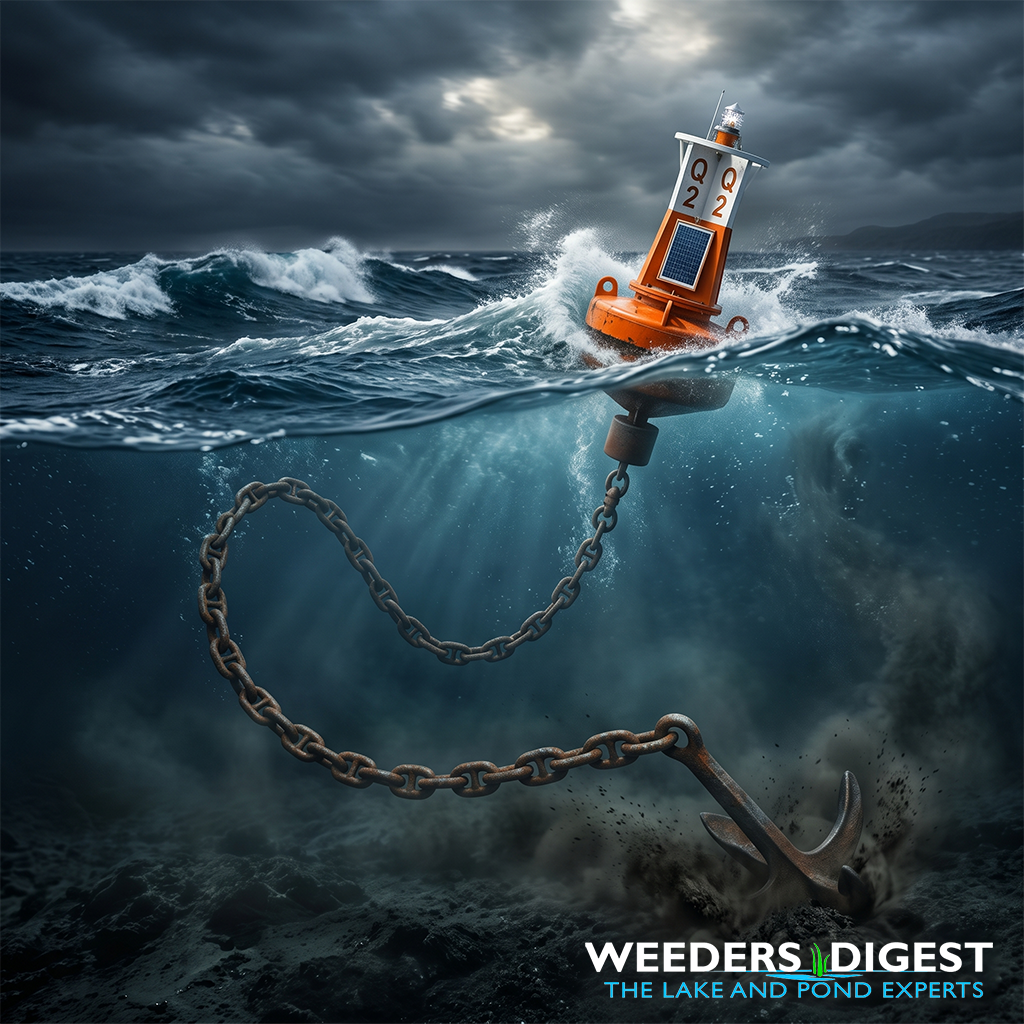
Whenever a massive storm rolls in, I find myself looking out at the water, amazed that my navigational buoys are still exactly where I left them. While the wind is howling and the waves are tossing everything else around, these markers stand their ground like they’re glued to the lakebed. It’s easy to assume they are just tied to a heavy rock, but there is actually a lot more thought put into how they stay anchored so precisely.
The real trick to keeping my buoys in place isn't just about weight; it’s about how the entire system handles the energy of the water. If the rope or chain was tight, a big wave would simply pull the anchor up or snap the line. Instead, we use a specific amount of "slack" and heavy-duty materials that act like a shock absorber. This allows the buoy to ride the crest of a wave without ever putting enough direct upward force on the anchor to budge it.
I've learned that the shape of the anchor matters just as much as how heavy it is. Some are designed to dig deeper into the mud the harder the wind pulls, while others use sheer mass to stay seated. When you combine a heavy base with a calculated length of chain, you get a marker that can handle almost anything nature throws at it. It’s a relief knowing that even after the worst weather, my navigation points will be right where they need to be to keep everyone safe.
The Science Behind It:
The stationary stability of a navigational buoy during high-energy weather events is governed by the principles of marine geotechnics and catenary mooring dynamics. To maintain a "watch circle"—the limited area in which a buoy is permitted to swing—engineers must calculate the appropriate "scope." This is the ratio of the length of the mooring line to the vertical distance from the water's surface to the lake or seafloor. According to research from the Woods Hole Oceanographic Institution, a catenary curve in the mooring chain provides the necessary weight and geometry to ensure that the force applied to the anchor remains horizontal rather than vertical, preventing "breakout" or anchor dragging.
The choice of anchor is determined by the composition of the benthic substrate. In soft, silty environments typical of many inland lakes, Mushroom or Pyramid anchors are utilized because they are designed to become "embedded." Over time, these anchors displace sediment and create a vacuum seal, significantly increasing their holding power beyond their dry weight. As documented in studies by various University Sea Grant extensions, a Mushroom anchor can eventually support ten times its own weight once it has fully burrowed into the cohesive soils of a lakebed.
The physical forces at play during a storm involve buoyancy, drag, and tension. When a wave passes, the buoy experiences a vertical lift force; however, because the mooring chain is heavy and laid partially on the bottom (the "ground leg"), the wave lift primarily serves to straighten the curve of the chain rather than pulling directly on the anchor. This mechanical damping system absorbs the kinetic energy of the waves. Scientific literature on offshore engineering emphasizes that the heavy chain acts as a spring, dissipating energy before it can translate into a dislodging force at the substrate interface.
Furthermore, the hydrodynamic design of the buoy hull itself plays a role in its survival. Most navigational buoys are designed with a low center of gravity and a counterweight at the base of the submerged portion. This ensures that the buoy remains upright (the "righting moment") even when subjected to high-velocity winds and surface currents. By maintaining a vertical orientation, the buoy minimizes its profile against the wind and reduces lateral drag, which further protects the integrity of the anchor's hold during extreme meteorological events.