

Why My Personal Watercraft Choice Actually Protects My Favorite Lake
 |

Summary:
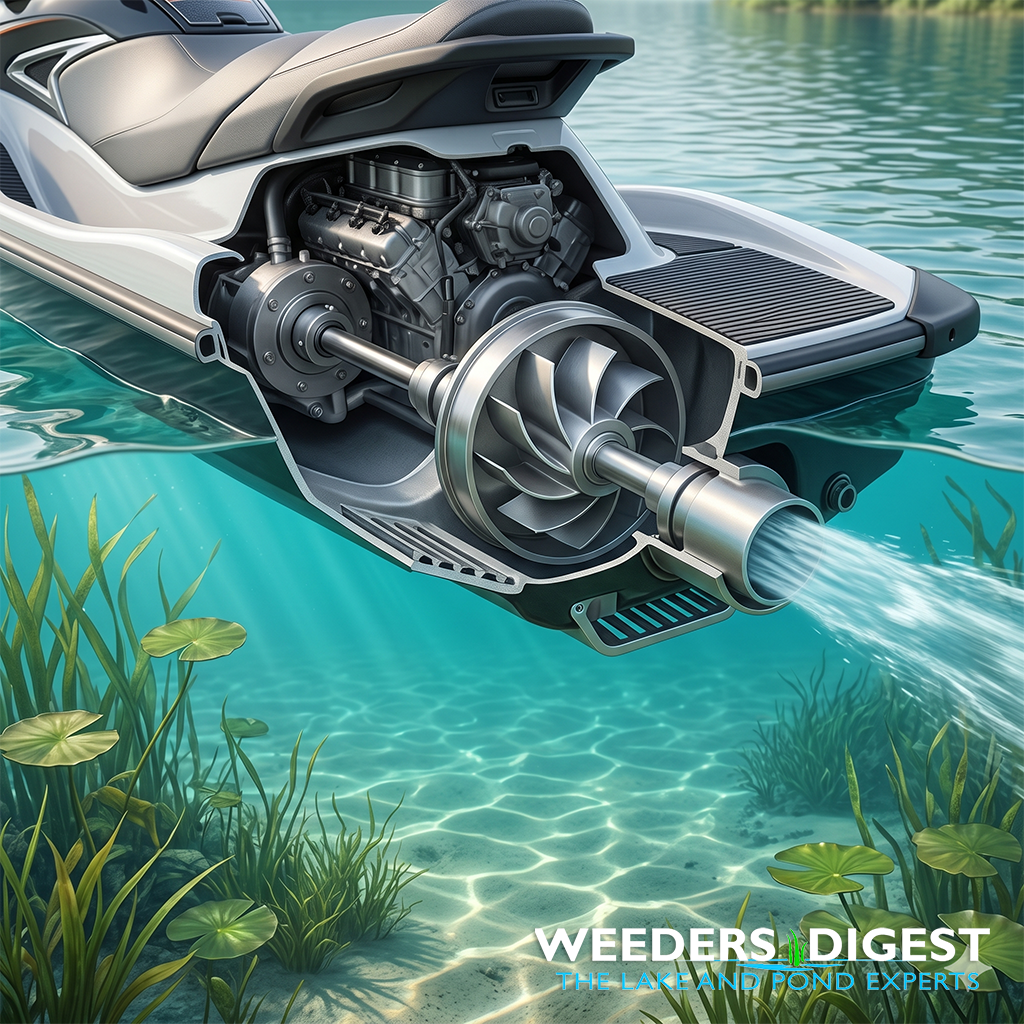
When I take my jet ski out for a ride, I rarely think about the complex engineering beneath the seat, but the decision to use an internal impeller instead of an exposed propeller is a game-changer for the health of our shorelines. Most traditional boats use an open propeller that sits deep in the water, which can easily strike rocks, wildlife, or thick patches of aquatic plants. By tucking the "spinning blades" inside a protective housing, personal watercraft manufacturers have created a system that is significantly safer for both the rider and the environment.
This design, known as water jet propulsion, works by pulling water into an intake grate and forcing it out the back at high speed. Because there are no sharp, exposed blades spinning in the open water, the risk of cutting through lily pads or harming a swimmer is drastically reduced. It allows me to navigate shallower areas of the lake that would be off-limits to a standard outboard motor without worrying about shearing off a prop pin or damaging the lake bed.
Furthermore, this internal setup is a major win for lake conservation. Exposed propellers act like underwater lawnmowers, often shredding invasive aquatic weeds into hundreds of tiny fragments. Many of these species, like Eurasian Watermilfoil, actually use those fragments to sprout new colonies elsewhere in the lake. By keeping the moving parts internal, the water jet system minimizes this "fragmentation" effect, helping me play a small part in keeping our waters cleaner and more manageable.
Ultimately, the choice of an internal impeller is about more than just speed or maneuverability. It is a fundamental design shift that prioritizes the longevity of the machine and the delicate balance of the aquatic ecosystem. Understanding how this system interacts with the water helps every lake lover appreciate the science that keeps our recreational spots thriving year after year.
The Science Behind It:
The mechanical distinction between an exposed propeller and an internal impeller lies in the principles of axial-flow pump dynamics and fluid shroud containment. An exposed propeller functions as a screw within an open fluid medium, where propulsion is generated by creating a pressure differential between the forward and aft surfaces of the blades. According to research from the University of Michigan’s Department of Naval Architecture and Marine Engineering, open propellers are susceptible to significant efficiency losses due to tip vortex formation and are physically vulnerable to "impact loading" when encountering submerged obstacles or dense macrophyte beds (aquatic vegetation).
In contrast, a personal watercraft (PWC) utilizes a duct-enclosed impeller, forming what is known as a pump-jet or water jet. The internal impeller is housed within a cylindrical wear ring, which minimizes "tip loss" by forcing the fluid to move linearly through the pump housing. As water is drawn through the intake grate, the impeller accelerates the fluid mass, and the stator vanes redirect the swirling flow into a concentrated, high-velocity stream. This internal containment protects the rotating components from catastrophic failure caused by entrained debris, which is a common occurrence in shallow-water limnological environments.
From an ecological perspective, the internal impeller design significantly mitigates the biological impact of "vegetative fragmentation." Peer-reviewed studies on the spread of invasive species, such as Myriophyllum spicatum, highlight that exposed propellers are primary vectors for propagation because they mechanically cleave plant stems into viable fragments. These fragments possess the ability to auto-fragment and rapidly re-root in distal areas of a water body. The intake grate of a jet propulsion system acts as a primary filter, and while some vegetation may still enter the pump, the lack of an open "cutting" interface reduces the volume of viable propagules released back into the water column.
Additionally, the hydrodynamics of a water jet provide a distinct advantage regarding benthic disturbance. Standard propellers generate a downward-directed prop-wash that can suspend bottom sediments, a process known as nutrient internal loading. This suspension often releases sequestered phosphorus into the euphotic zone, potentially triggering algal blooms. Because the discharge nozzle of an internal impeller system is located at the waterline and directed horizontally, the vertical turbulence reaching the lake bed is significantly reduced in shallow-water operations compared to traditional propped engines.