

Why Your Kayak Doesn't Just Blow Away: The Secret to Staying on Course
 |

Summary:
If you have ever been out on a lake when the breeze picks up, you know the frustration of feeling like your kayak has a mind of its own. It often feels like the wind is trying to spin you in circles or push you sideways into the reeds. However, you might notice that despite the gusty conditions, a well-designed kayak manages to "track" or maintain a relatively straight line with surprisingly little effort. This isn't magic; it is a clever tug-of-war between the air above the water and the liquid beneath it.
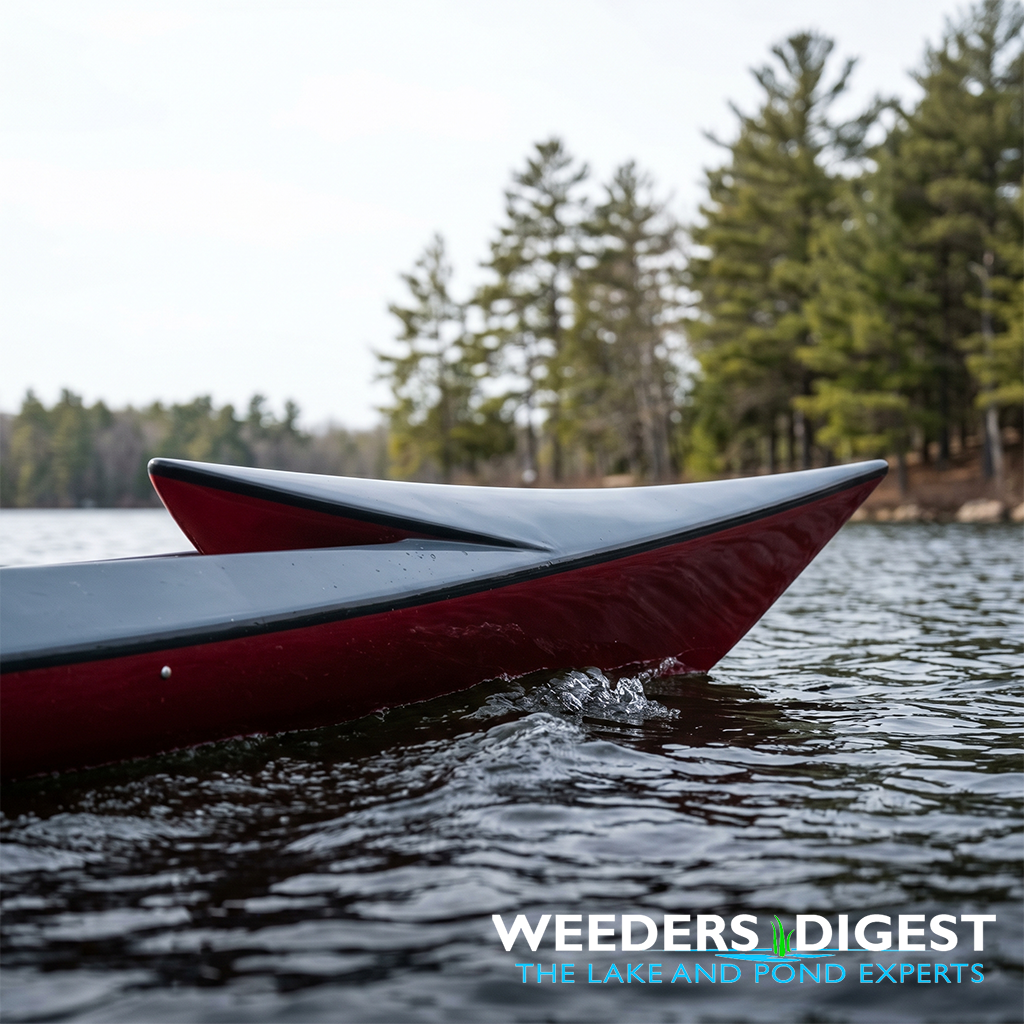
The way your boat behaves in the wind comes down to how much of the kayak is sitting in the water versus how much is exposed to the air. Think of the underwater part of your kayak as an anchor and the part above the water as a sail. When these two forces are balanced correctly, the kayak cuts through the water smoothly. Manufacturers use specific shapes on the bottom of the hull, like long grooves or a sharp "V" shape, to help the boat grip the water and resist being pushed off course by a crosswind.
Another major factor is where you are sitting and how your gear is packed. If the back of your kayak is heavier and sits deeper in the lake, it acts like a pivot point. The wind will catch the lighter front end and swing it around, a phenomenon paddlers call "weathercocking." Understanding this balance is the key to why your boat stays true to your destination even when the elements are working against you. It is all about managing the "lateral resistance" provided by the water to counteract the "windage" felt by the deck.
The Science Behind It:
The directional stability of a kayak in windy conditions is governed by the relationship between the Center of Lateral Resistance (CLR) and the Center of Effort (CE). The CE represents the point where the wind's force is concentrated on the exposed profile of the kayak and the paddler. Conversely, the CLR is the focal point of the hydrodynamic pressure exerted by the water against the submerged portion of the hull. According to fluid dynamics principles, if the CE is located forward of the CLR, the bow will tend to fall away from the wind (lee-cocking); if the CE is aft of the CLR, the bow will turn into the wind (weathercocking).
Longitudinal hull design is the primary mechanical factor in maintaining a straight trajectory, often referred to as tracking. A kayak with a long waterline and a high "fineness ratio" (the ratio of length to width) inherently resists lateral displacement. Research into hull geometry suggests that a deep "V" shaped hull or a prominent keel increases the surface area of the submerged profile, thereby increasing the force required to move the vessel sideways. This resistance is a manifestation of Newton’s First Law, where the water’s density provides a counter-force to the lower-density air movement.
The presence of a skeg or a rudder further manipulates the CLR to ensure straight tracking. By deploying a skeg—a stationary fin located near the stern—the paddler moves the Center of Lateral Resistance further back. This "pins" the tail of the kayak in the water, preventing the wind from pushing the stern leeward. Scientific analysis of small craft stability often cites the "weathervane effect," where the submerged foils (the hull and fins) create enough lift and drag to counteract the aerodynamic drag produced by the wind hitting the paddler's torso and the kayak's deck.
Furthermore, the concept of "trim" plays a critical role in how a kayak interacts with environmental variables. Trim refers to the longitudinal balance of the boat in the water. If a kayak is "trimmed by the stern" (meaning the aft is deeper than the bow), the bow has less submerged surface area and is more susceptible to wind displacement. However, the deeper stern provides a stronger "grip" on the water, acting as a stabilizer that prevents the boat from spinning out. Hydrodynamic studies in journals like Ocean Engineering emphasize that the efficiency of a hull’s tracking is a delicate balance of skin friction, wave-making resistance, and the symmetrical distribution of pressure along the hull’s wetted surface.
Sources / References:
- University of Adelaide: The Physics of Kayaking
- ScienceDirect / Ocean Engineering: Hydrodynamic Performance of Small Displacement Hulls