

The True Cost of Clear Water: Our Guide to Choosing Your Right Aquatic Weed Control Method

Summary:
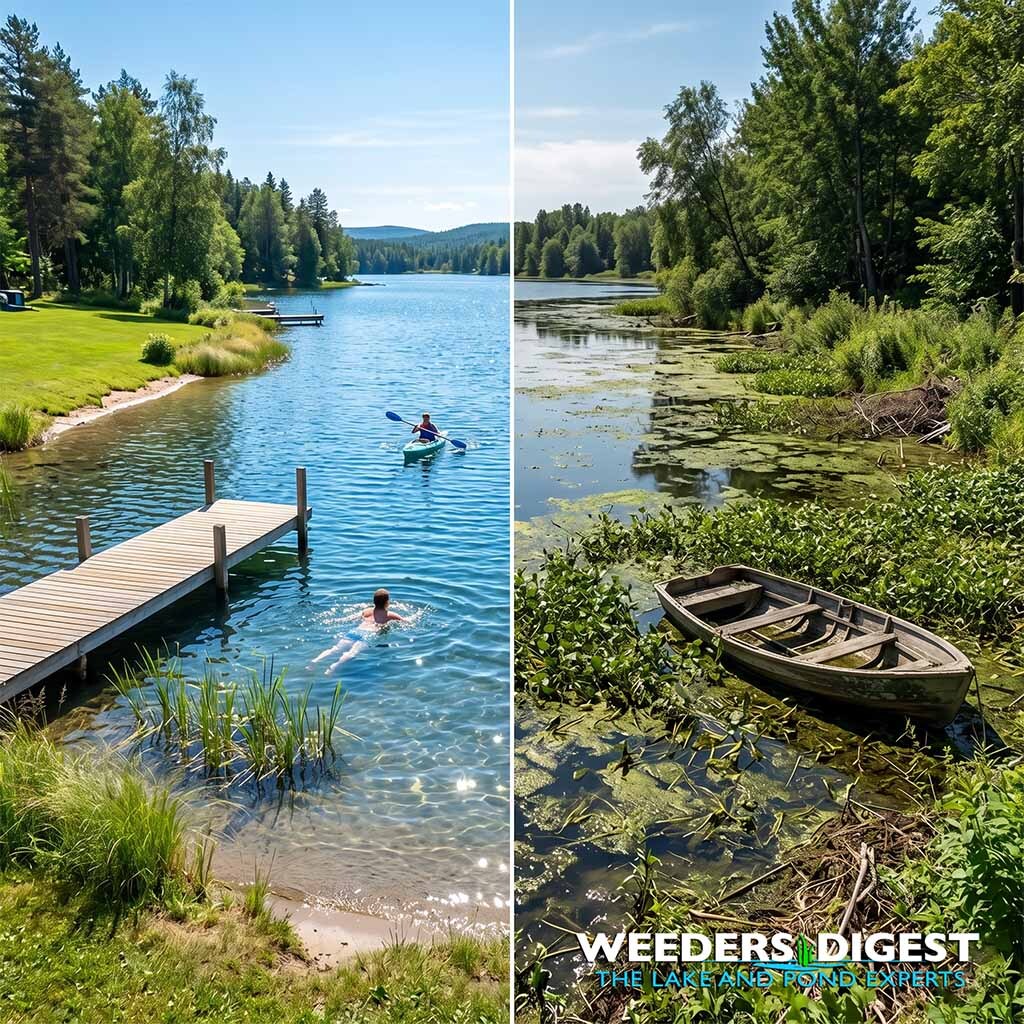
Achieving a pristine lakefront isn’t just about making things look nice; it is about restoring the health of your water and reclaiming your shoreline for swimming, boating, and fishing. But as any property owner knows, getting rid of aquatic weeds is rarely a hassle-free, magical process. It takes real labor, strategic planning, and an understanding of what actually works for your specific waterfront. You have multiple options at your disposal, and picking the right one comes down to balancing the immediate visual results with the long-term investment of your time and money.
When you dive into weed control, you are generally looking at physical tools, biological introduction, or herbicide applications. Mechanical solutions, like underwater weed cutters, are fantastic for immediate relief. It is important to know that these tools are designed to slice through thick vegetation and cut plants at the roots, rather than completely uprooting them from the muck. This means you will see instant improvements on the water's surface, but you will also need to put in the physical effort to gather and remove the floating debris so it doesn't decay and feed next year's growth.
On the other hand, chemical and biological methods offer different trade-offs. Treating your water with aquatic herbicides can target the problem systemically, requiring less back-breaking labor on a sunny Saturday afternoon, but it demands precise timing and a thorough understanding of water flow. Ultimately, finding the right solution means looking beyond the initial price tag. You must weigh the sweat equity you are willing to invest against the recurring costs of your chosen method to create a lasting, swimmable paradise.
The Science Behind It:
Aquatic weed management requires a rigorous economic and physiological evaluation to determine the most cost-effective and ecologically sound strategy. The foundation of many large-scale aquatic weed management programs relies heavily on synthetic herbicides. This reliance is primarily due to the fact that registered chemical treatments are often highly effective, target-specific, and remarkably inexpensive when compared to the intensive labor and equipment costs associated with large-scale mechanical harvesting (Gettys et al., 2021). Systemic herbicides function by translocating active ingredients through the plant's vascular tissue down to the benthic root structures, thereby disrupting metabolic pathways such as photosynthesis or enzyme synthesis. This results in complete plant mortality, though the subsequent decomposition of biomass can temporarily elevate biochemical oxygen demand in the water column.
Conversely, mechanical control methods alter the physical structure of the aquatic plant community without introducing external compounds into the aquatic ecosystem. Underwater cutting mechanisms shear the stems of submerged macrophytes directly above the hydrosoil. Because these devices cut the plants at the roots rather than entirely extracting the root mass, the benthic sediment remains relatively undisturbed. This minimizes the suspension of nutrient-rich muck and prevents the localized release of excessive phosphorus into the water column, which can inadvertently trigger secondary algal blooms. However, mechanical removal necessitates the immediate extraction of the severed biomass to prevent nutrient recycling and the potential vegetative propagation of invasive fragments.
The economic evaluation of these methodologies reveals significant disparities in long-term cost-benefit ratios. While synthetic chemical controls offer a lower initial application cost per acre, there is a growing interest in alternative, non-synthetic chemical controls or strictly mechanical regimens. Recent evaluations of natural herbicide alternatives, such as acetic acid and d-limonene, demonstrated that these organic options lacked the efficacy of synthetic standards and presented a massive 22- to 26-fold increase in product costs alone, rendering them prohibitively expensive for broad-scale deployment (Gettys et al., 2021). Therefore, relying purely on organic chemical suppression is currently not a financially viable alternative to mechanical or standard synthetic chemical management. Furthermore, the economic impact of invasive species extends well beyond direct control costs, as widespread aquatic invasions can significantly depress local recreational values and associated regional economies when preventative or mitigative management is neglected (Born et al., 2005).
Ultimately, the selection of an aquatic weed control method is governed by site-specific ecological parameters, the target species' morphology, and the operational budget. Integrated Pest Management (IPM) frameworks in limnology advocate for a hybrid approach, where mechanical harvesting is utilized for rapid biomass reduction and nutrient extraction, followed by targeted, low-dose systemic herbicide applications to manage regrowth. By integrating mechanical and chemical strategies, water resource managers can optimize their financial expenditures while maintaining the biological integrity and recreational utility of the aquatic ecosystem.
Sources / References:
Gettys, L. A., Thayer, K. L., & Sigmon, J. W. (2021). Evaluating the Effects of Acetic Acid and d-Limonene on Four Aquatic Plants. HortTechnology, 31(2), 225–233. https://doi.org/10.21273/horttech04769-20 (Cited by: 24)
Born, W., Rauschmayer, F., & Bräuer, I. (2005). Economic evaluation of biological invasions—a survey. Ecological Economics, 55(3), 321–336. https://doi.org/10.1016/j.ecolecon.2005.08.014 (Cited by: 328)