


Description
Target Muck, Sludge & Organic Buildup Around Your Dock
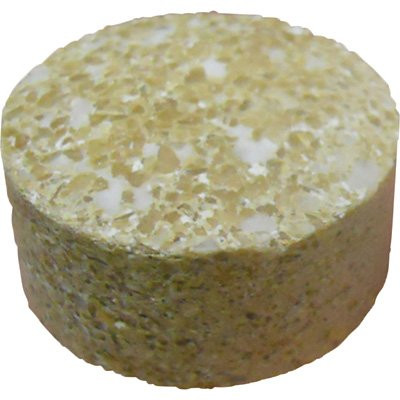
Macro-Zyme Muck Pucks are concentrated beneficial-bacteria tablets designed for targeted treatment of organic muck, sludge, waste and odor around docks, swimming areas, shorelines and other problem spots in lakes and ponds.
Simply toss the pucks into water 55°F or warmer over the areas where soft organic buildup collects. The pucks deliver a concentrated blend of naturally occurring beneficial bacteria and enzymes directly into the treatment area, where biological activity helps digest organic material over time.
Each puck treats up to 10 square feet. One 7 lb pail contains 266 Muck Pucks, making this format especially convenient when you want to focus treatment exactly where muck is deepest instead of treating the entire pond.
For ongoing biological treatment during warm water conditions, reapply approximately every 2–3 weeks.

Toss Them Where the Muck Is
Designed for Organic Muck, Not Sand, Clay or Rock
Macro-Zyme works on organic material such as decomposing leaves, dead grass, fish waste, dead vegetation and other biodegradable debris that contributes to soft bottom muck and foul odors.
The beneficial bacteria and enzymes help accelerate natural biological breakdown. This makes Muck Pucks a good choice for docks, beaches, boat-lift areas and swimming zones where organic material repeatedly settles.
Because the process is biological, results occur over time and depend on water temperature, oxygen, pH, organic load, treatment consistency and other site conditions.
Dead Leaves & Grass
Helps digest biodegradable plant debris that settles and contributes to bottom muck.
Organic Waste
Beneficial bacteria consume biodegradable organic compounds including fish waste and decaying material.
Foul Odors
Reducing decomposing organic material can help reduce odors associated with accumulated muck and sludge.
Pond Scum & Particles
The broader Macro-Zyme probiotic system is designed to help reduce organic pond scum and floating particles.
Need help deciding how many pucks to use? Call Weeders Digest at 877-224-4899 with the length and width of the area you want to treat.
Benefits
Why Use Macro-Zyme Muck Pucks?
Targeted Treatment
Place the pucks directly over muck around docks, swimming areas, boat lifts and other localized problem areas.
Beneficial Bacteria & Enzymes
Uses a concentrated blend of naturally occurring bacteria and enzymes to support biological decomposition.
Organic Muck Reduction
Helps digest biodegradable sludge created by decomposing leaves, vegetation, fish waste and other organic matter.
Odor Management
Helps reduce foul odors associated with decomposing organic waste and accumulated sludge.
Non-Chemical Approach
A biological water-quality treatment rather than an aquatic herbicide or conventional chemical muck remover.
Irrigation Pond Use
Current product information identifies Macro-Zyme as suitable for irrigation ponds with no irrigation restriction listed for the product.
How It Works
How Beneficial Bacteria Help Reduce Organic Muck
- The puck is tossed into the target area.
Place Macro-Zyme Muck Pucks over the portion of the lake or pond bottom where organic buildup is accumulating. - The puck breaks down in the water.
The product releases its beneficial-bacteria and enzyme blend into the surrounding treatment zone. - Biological activity works on organic material.
The bacteria use biodegradable organic compounds as part of the natural decomposition process. - Accumulated organic matter is gradually reduced.
Repeated warm-water applications help manage the continuing input of leaves, waste and decomposing vegetation. - Treatment is repeated during the season.
Reapply approximately every 2–3 weeks while the water remains warm enough for effective biological activity.
Application & Dosing
How Many Muck Pucks Do I Need?
Each Macro-Zyme Muck Puck treats up to approximately 10 square feet. Base your application on the actual square footage of the muck problem area rather than the size of the entire lake or pond.
| Target Area | Approximate Number of Pucks |
|---|---|
| 100 ft² | Up to approximately 10 pucks |
| 250 ft² | Up to approximately 25 pucks |
| 500 ft² | Up to approximately 50 pucks |
| 1,000 ft² | Up to approximately 100 pucks |
| Full 266-Puck Pail | Nominal coverage of up to approximately 2,660 ft² when applied at the published 10 ft²-per-puck coverage |
Application Schedule
Start at 55°F+
Begin treatment once water temperature reaches at least 55°F.
Reapply Every 2–3 Weeks
Continue applications during the warm-water treatment season as needed.
Distribute Across the Problem Area
Spread the required number of pucks across the organic-muck zone rather than concentrating every puck in one small location.
Treat the Muck, Not the Whole Lake
Muck Pucks are intended primarily for targeted spot treatment around docks, swimming areas and localized shoreline zones.
Best Results
Water Conditions for Best Biological Performance
The current Pond Probiotics guidance lists the following water-quality conditions for best performance.
| Water Parameter | Recommended Condition | Why It Matters |
|---|---|---|
| Water Temperature | 55°F–110°F | Beneficial-bacteria activity is temperature dependent. |
| pH | 5.5–8.5 | A suitable pH range supports biological activity. |
| Dissolved Oxygen | Approximately 2.0 ppm or higher | Available oxygen supports effective biological decomposition. |
| Copper Algaecide | Below 0.05 ppm | High copper concentrations can interfere with beneficial bacteria. |
| Salinity | Manufacturer recommends double dose above 7.0 ppm | Use the manufacturer's current dosing guidance when salinity exceeds this level. |
Where to Use
Best Places to Use Muck Pucks
Around Docks
Target the soft organic buildup that collects between dock posts, underneath docks and along frequently used waterfront areas.
Swimming Areas
Apply across designated problem areas where soft organic muck makes the lake or pond bottom unpleasant to walk on.
Boat Lift Areas
Treat localized buildup where leaves, weeds and organic debris settle around lifts and shoreline structures.
Beach & Shoreline Zones
Use along targeted shoreline areas where decomposing organic debris repeatedly accumulates.
Small & Medium Ponds
Use the puck format when localized spot treatment is more practical than treating the entire waterbody.
Irrigation Ponds
Current product information lists the Pond Probiotic system as safe for irrigation ponds.
Pucks vs. Block
Macro-Zyme Pucks vs. Powder vs. Muck Block
| Product Format | Best Use | Published Coverage | Reapplication |
|---|---|---|---|
| Muck Pucks | Spot treatment around docks, swimming areas and localized muck zones | Up to 10 ft² per puck | Every 2–3 weeks |
| Quick-Dissolving Powder | Small to medium ponds and broader water-column treatment | Varies by package size | Every 2–3 weeks |
| Muck Block | Medium to large ponds, larger treatment areas and feeder streams | Up to 6 acre-feet per 6 lb block | Every 30 days |
Aeration & Circulation
Why Aeration Can Improve Biological Muck Treatment
The current product guidance recommends combining Pond Probiotics with aeration or circulation for maximum water-quality results.
Aeration helps move oxygenated water through more of the water column. Because beneficial-bacteria performance is supported by adequate dissolved oxygen, this can create better conditions for biological decomposition.
Increase Water Movement
Circulation helps reduce stagnant pockets and distributes oxygen and biological activity through more of the treatment area.
Support Dissolved Oxygen
The current Pond Probiotics guidance lists approximately 2.0 ppm dissolved oxygen as a preferred minimum condition.
Improve Overall Pond Management
Muck treatment, aeration, leaf management and vegetation removal can work together rather than addressing only one source of organic loading.
Storage & Safety
Macro-Zyme Muck Puck Storage & Handling
The current Safety Data Sheet classifies Macro-Zyme Muck Pucks as not meeting the hazardous criteria of the OSHA Hazard Communication Standard. Normal safe-handling practices should still be followed.
Store Dry
Keep the container tightly closed in a dry, cool and well-ventilated location.
At Least 2-Year Shelf Life
Current product information lists a shelf life of at least two years when appropriately stored.
Avoid Eye Contact
Avoid contact with the eyes and follow the SDS first-aid guidance if exposure occurs.
Avoid Ingestion & Inhalation
Do not ingest the product or intentionally inhale dust or particulate material.
Keep Away From Children
Store the container securely and follow normal product-handling precautions.
Transport Classification
The current SDS lists the product as not regulated for DOT, IATA or IMDG transportation.
Specifications
Macro-Zyme Muck Puck Specifications
| Product | Macro-Zyme Muck Pucks |
|---|---|
| Product Type | Beneficial-bacteria and enzyme pond probiotic tablet |
| Part Number | MZMP7 |
| Container Size | 7 lb pail |
| Quantity | 266 Muck Pucks |
| Published Coverage | Up to 10 ft² per puck |
| Typical Use | Spot treatment around docks, swimming areas and localized muck zones |
| Recommended Water Temperature | 55°F or warmer |
| Current Best-Performance Temperature Range | 55°F–110°F |
| Recommended pH Range | 5.5–8.5 |
| Recommended Dissolved Oxygen | Approximately 2.0 ppm or greater |
| Copper Algaecide Guidance | Below 0.05 ppm for best probiotic performance |
| Reapplication | Approximately every 2–3 weeks during suitable warm-water conditions |
| Shelf Life | At least 2 years |
| Irrigation Pond Use | Listed as safe for irrigation ponds |
| Permit | Current product information states no permit required for use; confirm any unusual local waterbody requirements |
| Primary Organic Targets | Muck, sludge, fish waste, dead grass, leaves and other biodegradable organic material |
| Herbicide | No |
| Algaecide | No |
| Physical Dredging Product | No |
Resources
Macro-Zyme Product Resources
2026 Pond Probiotics Guide
Review current treatment formats, water-quality parameters, coverage and application guidance.
Macro-Zyme Muck Puck SDS
Review current available safety, handling, storage, first-aid and transport information for the puck formulation.
More Muck Reducers
Compare tablets, blocks, powders and other biological lake and pond muck-control products.
FAQs
Macro-Zyme Muck Puck FAQs
What are Macro-Zyme Muck Pucks?
Macro-Zyme Muck Pucks are concentrated beneficial-bacteria and enzyme tablets designed for targeted treatment of biodegradable organic muck and sludge in lakes and ponds.
What do Muck Pucks help break down?
They are intended to help digest biodegradable organic material including dead leaves, dead grass, decaying vegetation, fish waste and other organic compounds that contribute to soft bottom muck and odor.
Do Muck Pucks remove sand or clay?
No. Sand, clay, gravel and rock are mineral materials and cannot be biologically digested by beneficial bacteria.
Will Muck Pucks kill lake weeds?
No. Macro-Zyme Muck Pucks are not an aquatic herbicide. They can help digest dead and decomposing vegetation after it becomes organic waste, but they are not intended to kill living rooted aquatic plants.
Are Muck Pucks an algaecide?
No. They are a beneficial-bacteria treatment. The product is intended to manage organic waste and support water-quality management rather than act as a chemical algaecide.
How many Muck Pucks are in a pail?
The current 7 lb pail contains 266 Muck Pucks.
How much area does one Muck Puck treat?
The current published coverage is up to approximately 10 square feet per puck.
How many pucks do I need for 100 square feet?
Using the published maximum coverage of 10 square feet per puck, approximately 10 pucks would cover 100 square feet.
How many pucks do I need for 500 square feet?
Using the published maximum coverage, approximately 50 pucks would cover 500 square feet.
How much area can a full 266-puck pail treat?
At the published maximum of 10 square feet per puck, 266 pucks represent nominal coverage of up to approximately 2,660 square feet per application.
How do I apply Muck Pucks?
Toss the required number of pucks into the water over the organic-muck problem area and distribute them across the target zone according to the published square-foot coverage.
Where should I put Muck Pucks?
They are particularly useful around docks, swimming areas, boat lifts, beaches and shoreline zones where soft organic muck accumulates.
How often should I apply Muck Pucks?
Current guidance recommends reapplication approximately every 2–3 weeks during suitable warm-water conditions.
How warm does the water need to be?
Begin application when the water reaches at least 55°F. Current best-performance guidance lists a temperature range of approximately 55°F–110°F.
Will Muck Pucks work in cold spring or fall water?
The standard Macro-Zyme guidance calls for water of at least 55°F. Biological activity slows in colder water, so this product should not be treated as a cold-water bacteria formulation.
What pH is best for Macro-Zyme?
Current Pond Probiotics guidance lists a preferred pH range of approximately 5.5–8.5.
Does dissolved oxygen matter?
Yes. Current guidance lists approximately 2.0 ppm dissolved oxygen as a preferred minimum condition for best performance.
Can aeration help Muck Pucks work better?
Yes. Current product guidance states that the probiotic products increase in effectiveness when combined with aeration or circulation.
Can I use Muck Pucks after applying copper algaecide?
Current probiotic guidance recommends copper algaecide concentrations below 0.05 ppm for best performance. Elevated copper can interfere with beneficial bacteria.
Can I use Muck Pucks in salty or brackish water?
Current product guidance says to apply a double dose when salinity is greater than 7.0 ppm. Contact Weeders Digest before treating unusual brackish or high-salinity sites so the application can be reviewed.
Are Muck Pucks safe for fish?
Current product information identifies the Pond Probiotics system as non-toxic to fish, wildlife, people and livestock when used as intended.
Are Muck Pucks safe around pets and livestock?
Current product information identifies the product as safe for people, pets and livestock when used as intended.
Can I use Muck Pucks in an irrigation pond?
Yes. Current product information identifies the Macro-Zyme probiotic system as safe for irrigation ponds and states no irrigation restrictions for the product.
Do I need a permit to use Muck Pucks?
Current product information states that no permit is required for use. Requirements can vary for unusual or regulated water bodies, so confirm local rules when necessary.
How quickly will Muck Pucks remove years of muck?
There is no verified universal time or depth-reduction guarantee. Results depend on the amount and type of organic material, temperature, oxygen, pH, circulation, treatment frequency and how quickly new organic debris enters the area.
Why do I need repeated applications?
Organic loading continues as leaves, weeds, fish waste and other debris enter the water. Repeated warm-season treatment helps maintain biological activity as new material accumulates.
Should I remove leaves and dead weeds too?
Yes. Removing large amounts of debris before it decomposes reduces the amount of new organic material that has to be biologically processed.
What is the difference between Muck Pucks and the Muck Block?
Muck Pucks are designed for localized spot treatment around docks and swimming areas and are reapplied every 2–3 weeks. The 6 lb Muck Block is designed for broader medium-to-large pond treatment and is reapplied approximately every 30 days.
What is the shelf life?
Current product information lists a shelf life of at least two years.
How should I store unused Muck Pucks?
Keep the container tightly closed in a dry, cool and well-ventilated location.
Are Muck Pucks considered hazardous material?
The current available Safety Data Sheet states that the product does not meet the hazardous criteria of the OSHA Hazard Communication Standard and is not regulated for DOT, IATA or IMDG transportation. Normal safe-handling precautions still apply.
Where can I get help planning my application?
Contact Weeders Digest Product Support at 877-224-4899 with the length and width of your muck area, water temperature and a description of the bottom material.
3 Reviews
-
Noticeably better
We have been using muck pucks for years in our beach area and where the boat lifts are. We have vegetation in that area, and have been using the beach roller to try to get most of it out and then using the muck pucks to get rid of the muck. We have been doing this for the past six years, slowly. We use to have muck up to our knees when we walked to end of the boat lift. Now it is at least half if not more. We can at least walk out to the end of the lift without feeling like we will be swallowed up by the muck.
-
Macro zyme muck pucks 5 stars ?
I have used the pellets with some success but these larger pucks seem to work better for me. I live at the end of a channel on a spring fed lake which the previous owners neglected. It has taken 7 years of pulling out leaves and we finally have clear sand and some beneficial weeds for the fish.
-
Muck puck
Fast shipping, Tried muck puck near my shore line and ten feet away from the shoreline they work seeing more stones on the bottom in a week , I have a lake in the cove which collect debris throughout the years so muck build up.up to a foot of muck,I will keep using muck puck maybe the muck block next spring.buy the muck product it’s Works
Related Products


N-Zyme | Eco-friendly Pond & Lake Water Clarifier Powder Bacteria

Shore Tech Muck Reducer Pellets - Lake & Pond Sludge Remover Bacteria