


My Experience with Surface Aeration: Can a Fountain Actually Break Up Your Algae Bloom?
 |

Summary:
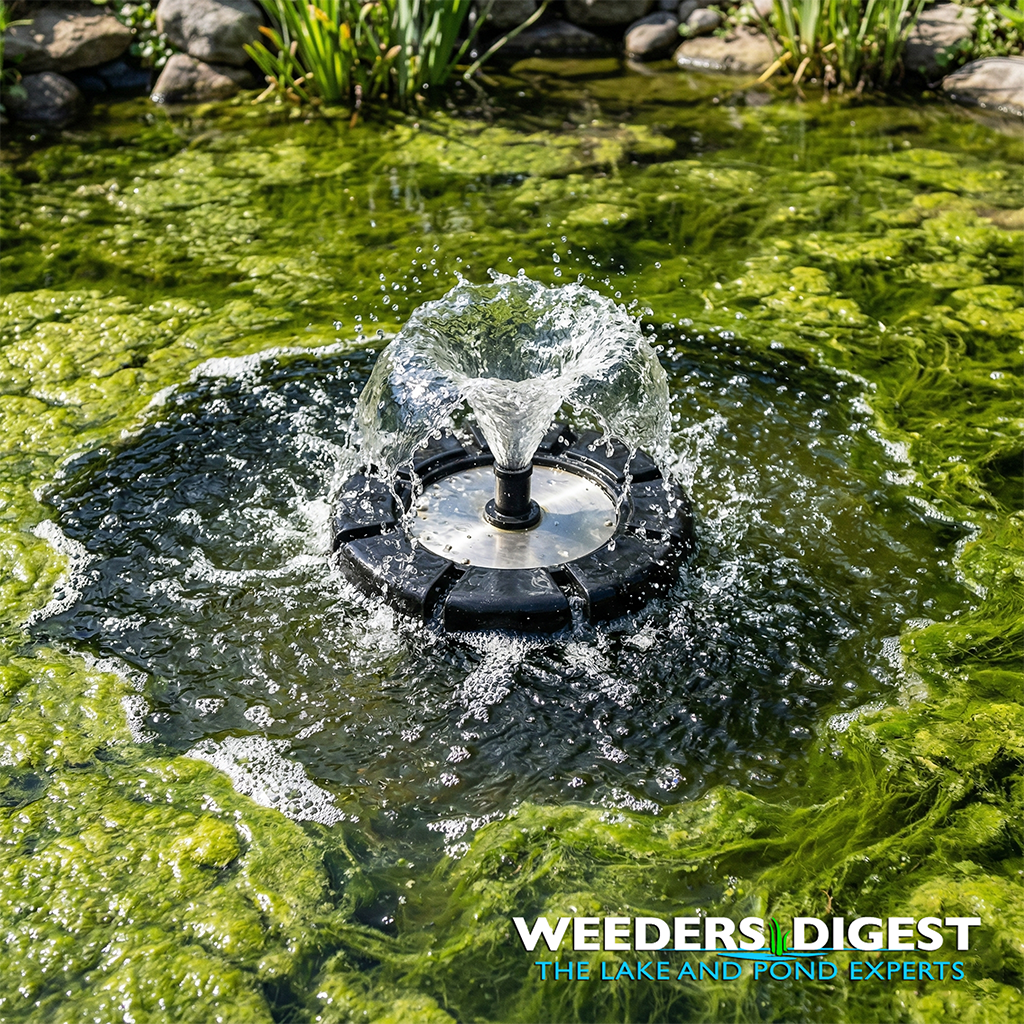
In my years of managing private ponds and public lakes, one of the most frequent questions I receive from homeowners is whether a decorative fountain can physically "smash" algae out of existence. When you see a thick, unsightly mat of green slime on your water’s surface, it is natural to want to use a mechanical force to break it apart. While a fountain or surface aerator provides a beautiful aesthetic and some immediate surface agitation, the answer to whether it physically destroys algae is more nuanced than a simple yes or no.
Surface aerators and fountains work primarily by creating turbulence and increasing dissolved oxygen levels. While the physical impact of falling water can temporarily break up the cohesive mats of filamentous algae or push cyanobacteria beneath the surface, it rarely "kills" the algae through physical force alone. Instead, these devices change the habitat of the pond, making it less hospitable for certain species to thrive and dominate the surface.
If you are looking at a fountain as a "liquid lawnmower" for your algae, you might be disappointed by the immediate physical results. However, if you view it as a tool to disrupt the stagnant conditions that algae love, you are on the right track. My goal is always to help you understand that managing a pond is about managing the environment, not just treating the symptoms you see floating on top.
The Science Behind It:
The efficacy of surface aeration in mitigating algal proliferation is rooted in the disruption of thermal stratification and the alteration of the photic zone. Many nuisance species, particularly Cyanobacteria (blue-green algae), utilize gas vesicles to regulate buoyancy, allowing them to remain in the upper, light-rich layers of the water column. According to research published via the University of Florida’s IFAS Extension, mechanical agitation from surface aerators creates localized turbulence that can physically entrain these buoyant cells, forcing them into deeper, darker aphotic zones where photosynthesis is limited.
Beyond simple physical displacement, the introduction of atmospheric oxygen at the air-water interface significantly alters the nitrogen-to-phosphorus (N:P) ratio. High-velocity surface aeration increases the rate of gas exchange, which helps maintain aerobic conditions at the sediment-water interface. As noted in studies regarding lake management and restoration, maintaining an aerobic "microzone" at the pond bottom prevents the redox-dependent release of phosphorus from benthic sediments. By sequestering phosphorus in the soil, the fountain indirectly starves the algae of the primary limiting nutrient required for bloom formation.
Furthermore, the physical "breaking" of surface tension inhibits the formation of stagnant "scums." Surface aerators induce horizontal and vertical mixing patterns that prevent the coalescence of filamentous algae mats. While the mechanical impact of the water droplets does not typically rupture the cell walls of the algae, the constant motion prevents the specialized conditions required for rapid colonial expansion. The resulting increase in carbon dioxide degassing also shifts the pH balance of the water, which can favor the growth of more desirable green algae over toxic cyanobacteria.
In high-biomass scenarios, relying solely on the physical impact of a fountain may prove insufficient if the nutrient loading is excessive. Ecological data indicates that while surface agitation disrupts the surface film, it does not eliminate the underlying propagules or spores within the water column. Therefore, the role of the fountain is categorized as a preventative and suppressive physical control method rather than a curative biological one. The integration of mechanical aeration remains a cornerstone of Integrated Pest Management (IPM) for aquatic ecosystems due to its ability to stabilize dissolved oxygen levels and prevent the catastrophic "crashes" often associated with untreated blooms.