

My Favorite Fishing Hole is Drying Up: What Happens to the Fish?
 |
Summary:
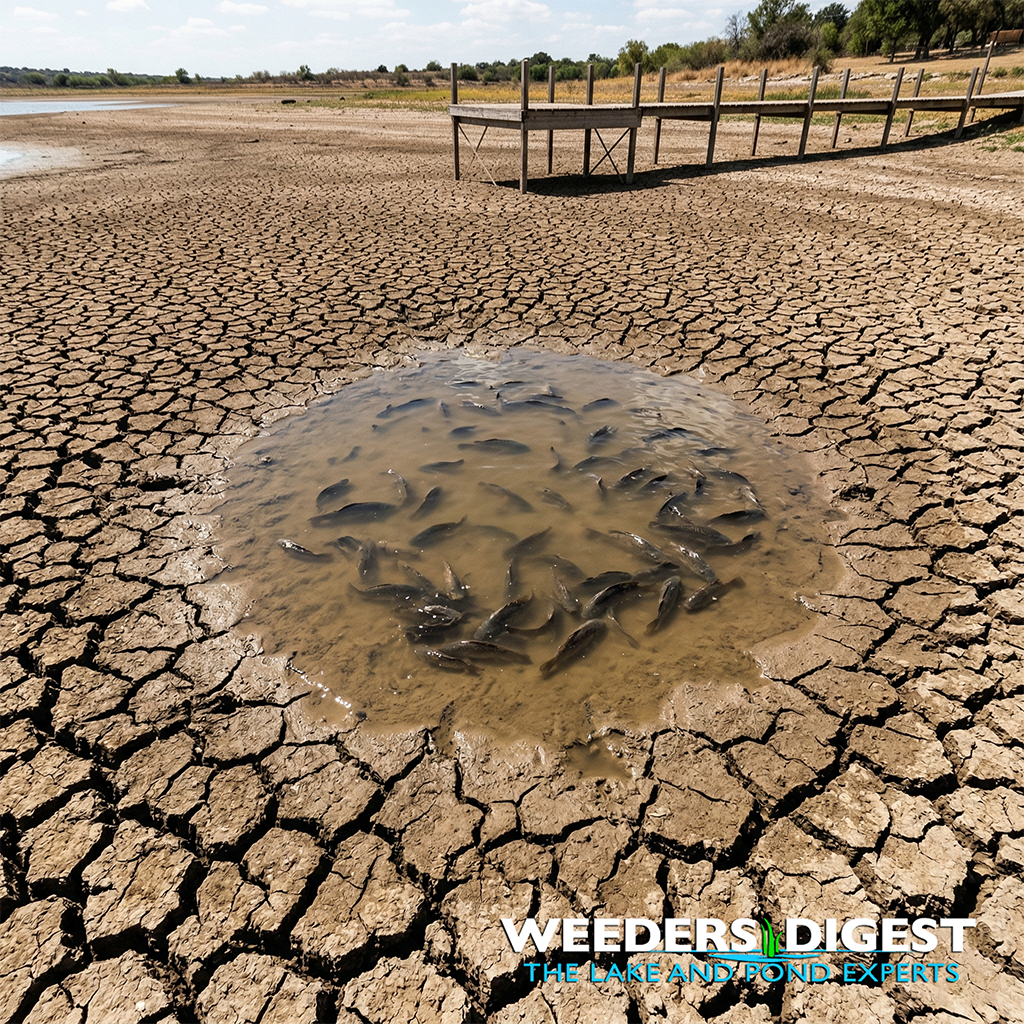
When you see the shoreline of your local lake receding during a drought, it is easy to worry about what is happening beneath the surface. For the fish living there, a drastic drop in water level is a high-stakes game of survival. As the water disappears, their "living room" gets smaller, forcing them into tighter spaces with every other predator and competitor in the lake. This crowded environment makes it much easier for larger fish to find a meal, but it also puts an incredible amount of stress on the entire population.
The biggest threat isn't just the lack of space; it is the change in the water itself. Shallow water heats up much faster in the sun, and warm water cannot hold as much oxygen as cool water. This creates a suffocating environment where fish have to work harder just to breathe. If the water level drops too low, the fish may become trapped in isolated pools that eventually run out of oxygen or dry up entirely, leading to significant die-offs that can take years for a lake to recover from.
Additionally, the underwater structures that fish use for safety—like fallen logs, weed beds, and docks—often end up high and dry. Without these hiding spots, young fish and smaller species are left completely exposed in open water. While a drought can be devastating in the short term, it sometimes acts as a "reset button" for a lake's ecology, though the immediate transition is undoubtedly a difficult period for your local aquatic life.
The Science Behind It:
The physiological and ecological impacts of rapid water level drawdown on teleost fish are governed by a complex interplay of thermal dynamics and dissolved oxygen (DO) concentration. As the volume of a lentic ecosystem decreases, the thermal mass of the water body is reduced, leading to increased diurnal temperature fluctuations and higher peak temperatures. According to research published by the University of Florida’s IFAS Extension, elevated water temperatures increase the metabolic rate of ectothermic organisms, which simultaneously drives an increased demand for oxygen while the physical capacity of the water to retain O2 diminishes.
The reduction in pelagic and littoral habitat area forces a massive consolidation of biomass. This density-dependent stressor increases the frequency of agonistic interactions and facilitates unnaturally high predation rates. Research from the Journal of Freshwater Ecology indicates that as the littoral zone—the shallow, vegetated area near the shore—is dewatered, complex macrophyte beds are lost. These plants serve as essential refugia for juvenile fish and as the primary substrate for macroinvertebrate production. The loss of this structural complexity shifts the trophic balance, often resulting in a temporary boom for apex predators followed by a total population collapse due to the exhaustion of the forage base.
Chemical shifts also pose a significant threat during drastic drawdowns. As water evaporates, the concentration of dissolved solids, nutrients, and potential toxins like ammonia increases. Furthermore, in nutrient-rich (eutrophic) lakes, the crowding of fish combined with decaying organic matter can lead to nocturnal hypoxia. During the night, when photosynthesis ceases, the cumulative respiration of fish and bacteria can deplete DO levels below the critical threshold required for survival, typically <2 mg/L, resulting in large-scale summerkill events.
The long-term recovery of the fishery is dependent on the duration of the hydrological deficit and the timing of the refill. While droughts can expose and mineralize organic sediments—potentially improving spawning substrate for the future—the immediate impact is often a significant loss of species richness. Studies conducted by the American Fisheries Society suggest that "bottleneck" events during droughts can skew age-class distributions for years, as entire cohorts of young-of-year fish are often the first to perish due to their lower tolerance for physiological stress and lack of cover.
Sources / References:
- University of Florida IFAS Extension: Oxygen Depletion in Fresh Water Fishponds
- Journal of Freshwater Ecology / USGS: Impacts of Drought on Freshwater Ecosystems